

Neoclassical Wall Console Table
A neoclassical wall console table brings architectural symmetry and refined surface space to an interior, drawing on classical forms.
Neoclassical Wall Console Table
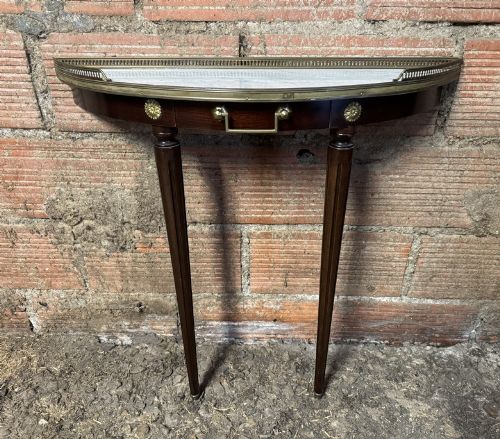
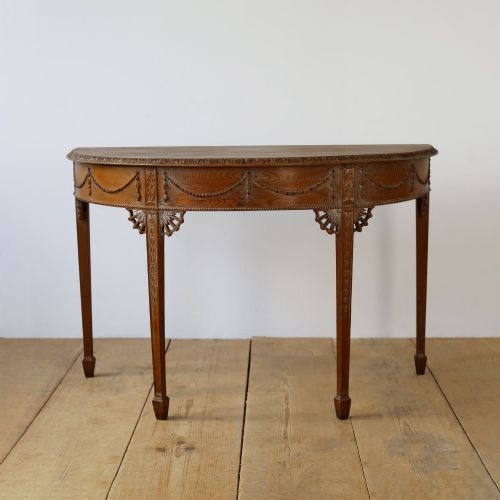
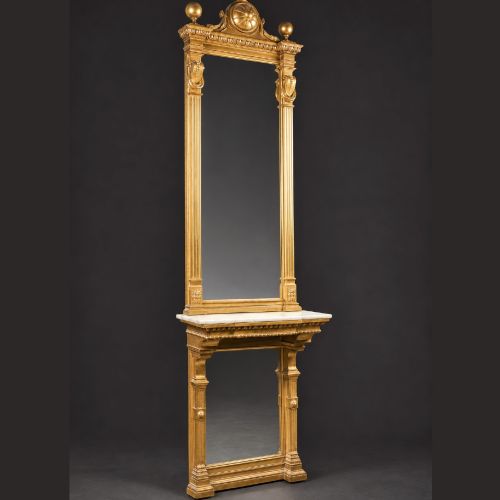
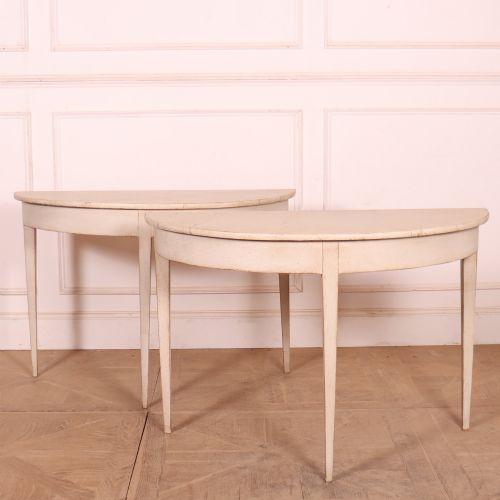
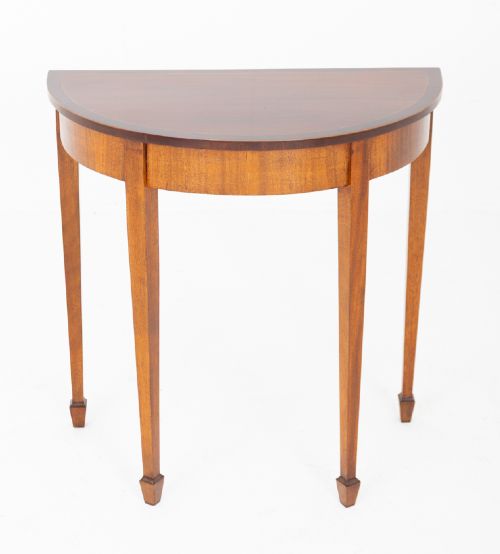
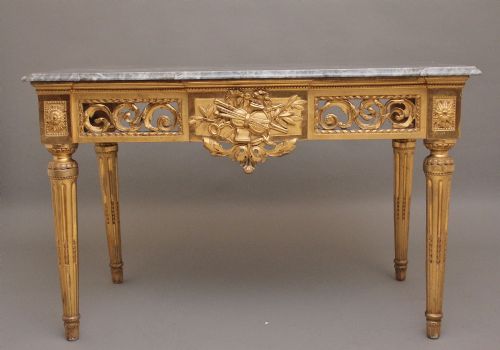
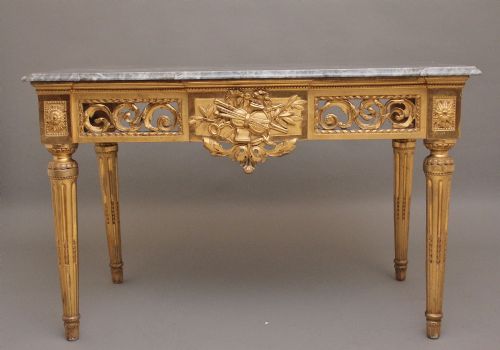
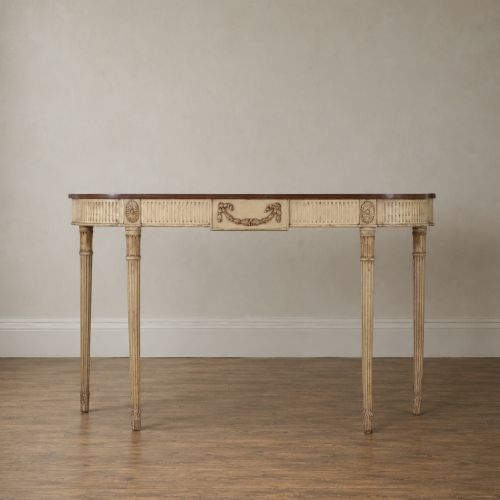
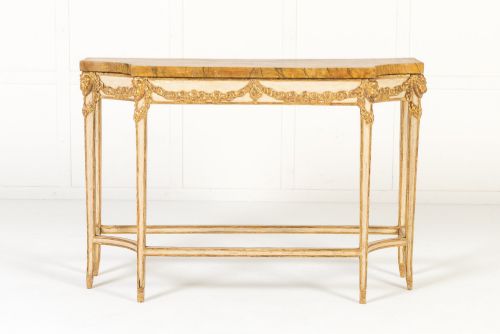
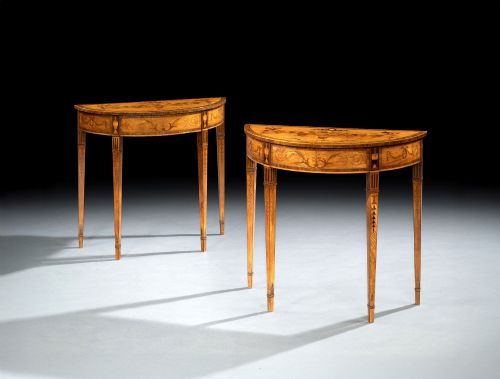
A neoclassical wall console table sits flush against a wall, often accompanied by a matching pier mirror or designed as a demi-lune serving piece. These forms emerge primarily in eighteenth-century and nineteenth-century workshops, drawing upon Italian, French, and English decorative traditions.
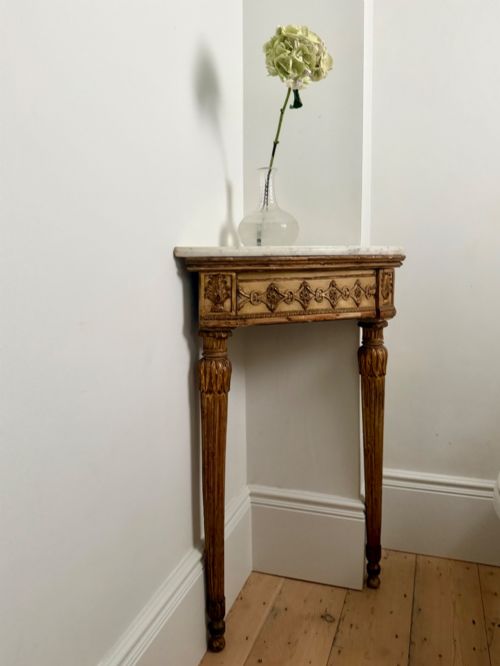
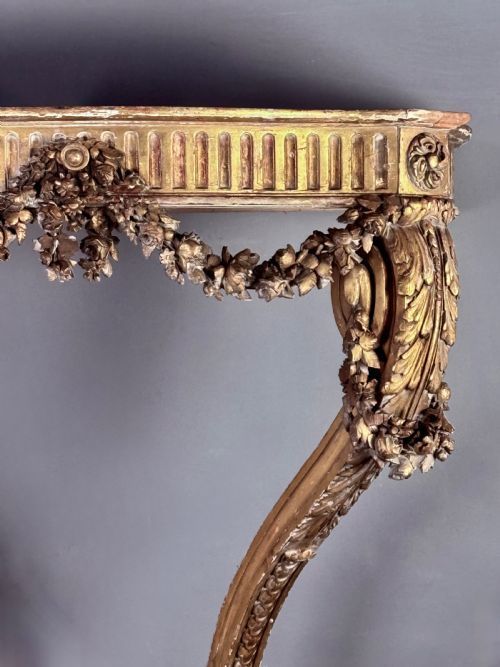
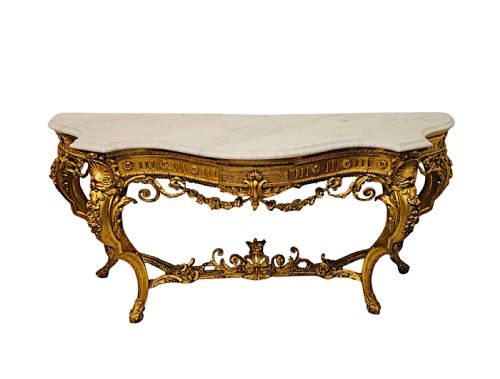
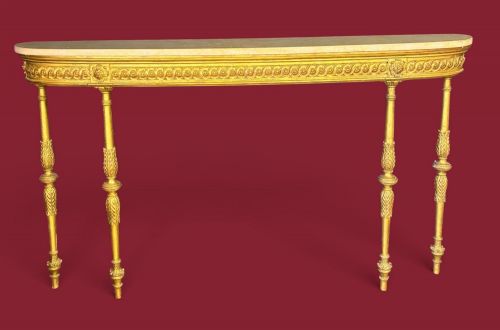
The material vocabulary spans carved giltwood, painted wood, mahogany, satinwood, and kingwood, frequently topped with marble or granite. Pieces appear from periods such as the Georgian era, the Regency period, and later revival decades including Victorian and early twentieth-century interpretations.
Construction and Materials
Carpenters and cabinetmakers utilised dense timbers like mahogany and walnut, alongside softer woods prepared for gesso and paint finishes. Marquetry inlay, parcel gilding, and hand-painted decoration were applied to wooden frames to achieve decorative depth.
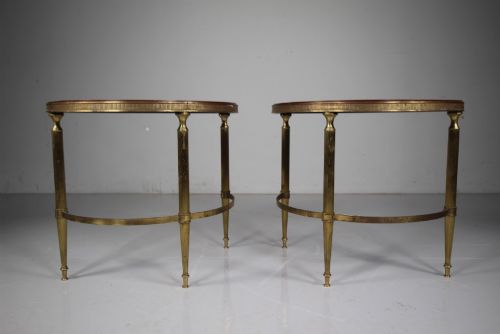
Heavy stone surfaces such as marble, granite, and faux porphyry required precise framing to support the weight atop carved giltwood, brass, or wooden console bases.
Neoclassical Wall Console Table Retail Price Guide 2026
Typical asking prices for neoclassical wall console table among the pieces listed under this phrase on Sellingantiques today, from the lower quarter to the upper quarter. They describe what is for sale here now, not the wider market.
Materials recorded across the inventory include solid mahogany, walnut, satinwood, kingwood, gesso, giltwood, paint, marble, granite, and brass.
Judging Quality
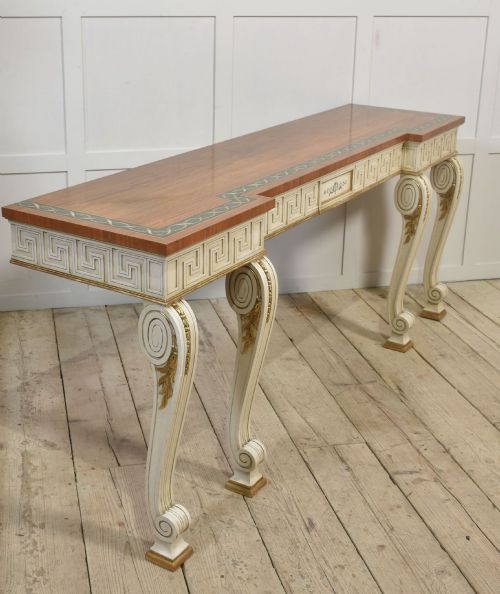
The refinement of hand-carved gesso, the crispness of giltwood details, and the depth of wood marquetry distinguish sophisticated outputs from simpler utilitarian examples. Material integration, such as the snug fit of a specimen marble top within a wooden frame, indicates workshop competence.
Original painted surfaces and untouched patination carry greater material integrity than later decorative overhauls. The structural joinery supporting heavy stone tops dictates the durability and proportional balance of the frame.
Felix-Alfred Ternisien·Jean Joseph Chapuis
The Neoclassical Wall Console Table Glossary
- Demi-lune
- A half-moon shape used for table tops and commodes designed to stand flat against a wall. This profile allows the furniture to occupy minimal depth in a hallway or drawing room.
- Giltwood
- Timber coated with gold leaf or metallic powder applied over a prepared gesso ground. This finish reflects candle and natural light in formal interiors.
- Pier table
- A table designed specifically to fit the wall space between windows, often paired with a matching wall mirror above it. These pieces form an integrated decorative scheme in period reception rooms.
- Porphyry
- An igneous rock with large crystals, replicated in decorative arts as faux porphyry to mimic imperial Roman stone. It appears on table tops to project classical status.
Neoclassical Wall Console Table: Frequently Asked Questions
Where do you put a wall console table?
A wall console table is typically placed in a hallway, reception room, or between windows beneath a matching pier mirror. Because the back of the piece stands flush against the wall, it offers display space without obstructing room thoroughfares.
In period interiors, these tables functioned as serving surfaces or decorative focal points rather than freestanding desks. Their shallow depth suits narrow transitional spaces where standard tables would project too far.
How do I identify an 18th century console table?
Eighteenth-century examples rely on hand-carved timber construction, traditional gesso application, and period joinery methods rather than modern fixings. Examination of the underside and structural framing reveals tool marks and wood ageing consistent with the period.
Stylistic markers such as neoclassical symmetry, hand-applied gilding, and timber choices like satinwood or mahogany help distinguish eighteenth-century production from later nineteenth-century revivals.
Are marble top console tables heavy?
Solid stone surfaces such as marble, granite, or faux porphyry add substantial weight to the overall furniture piece. The wooden or giltwood base must provide robust structural support to bear this load safely.
When positioning or moving these tables, the stone top is frequently lifted separate from the base to prevent strain on the joinery and simplify transport.