
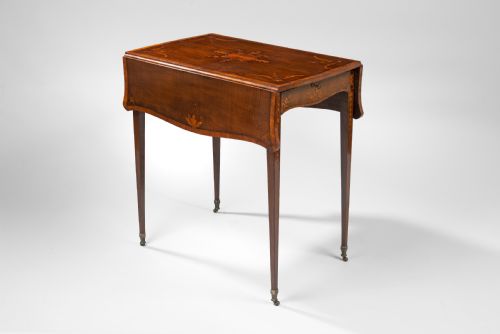


Neoclassical Tea Table
A neoclassical tea table brings refined symmetry and classical ornament into a room, offering a surface designed for both display and formal hospitality.
Neoclassical Tea Table
When you search for a neoclassical tea table, you encounter a selection of pieces spanning the eighteenth, nineteenth, and early twentieth centuries, reflecting enduring classical design principles. These objects appear in various formats, including fold-over card tables, Pembroke tables, and occasional tables that share symmetrical lines and disciplined proportions.
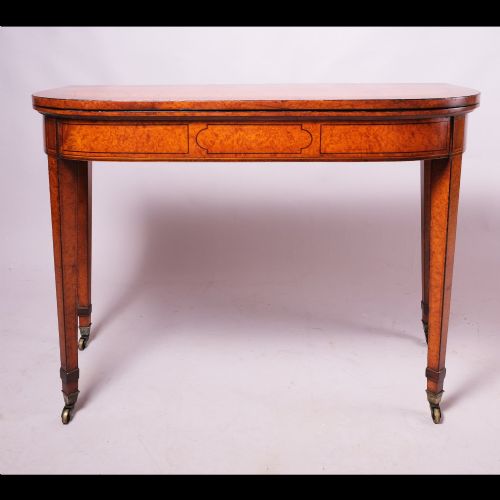
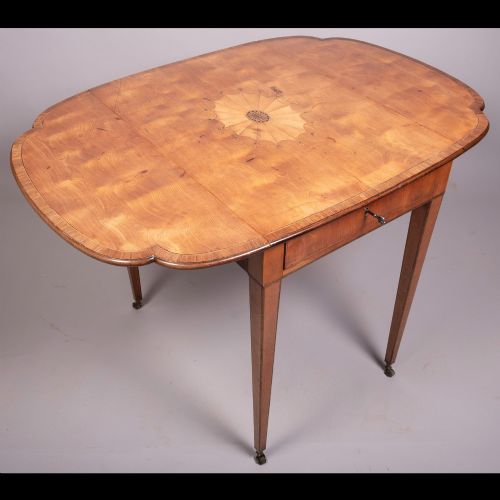
The most common examples on this page date from the eighteenth century and the Georgian period, often showcasing satinwood, mahogany, or rosewood veneers. Many incorporate clever folding mechanisms or drop leaves designed to adapt the surface for tea service or card playing.
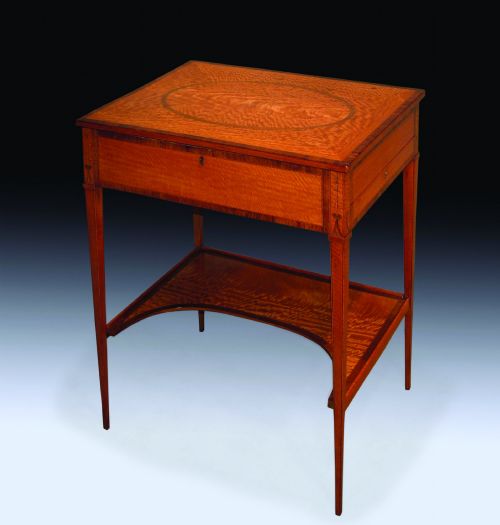
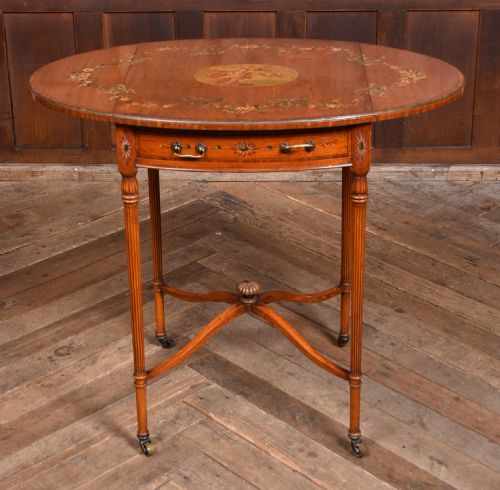
Makers working in the Sheraton and George III idioms dominate the selection, bringing delicate painted motifs and marquetry inlay to light timber foundations. Alongside these, later revivals from the Edwardian era and the early twentieth century continue the vocabulary of urns, swags, and tapered legs.
Materials and Construction
Cabinetmakers built the foundational framework of these tables using dense timbers like mahogany and rosewood, frequently applying contrasting veneers of satinwood, harewood, and boxwood. Intricate marquetry and painted details embellish the top surfaces, executed with fine brushwork or precise wood-inlay techniques.
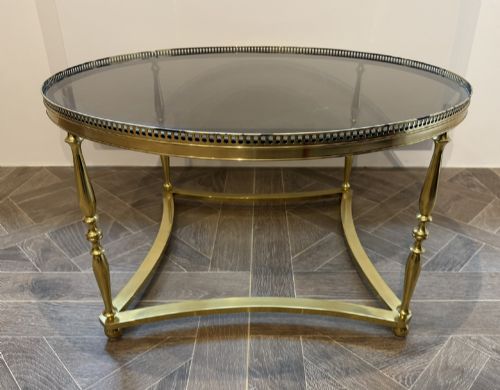
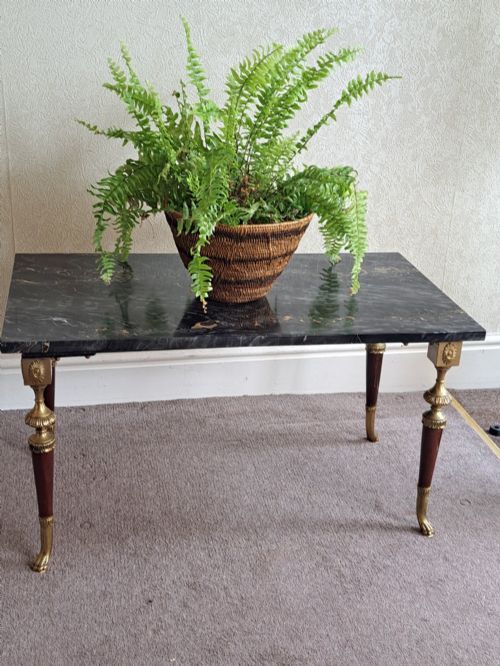
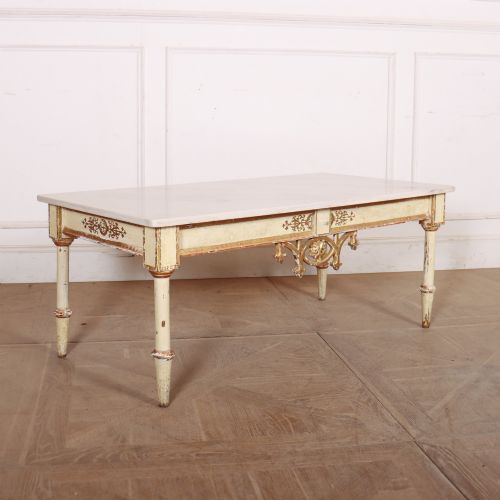
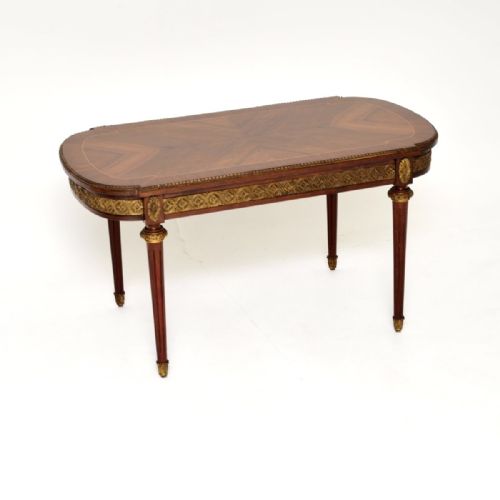
Metal mounts in brass and ormolu often accent the corners, legs, and aprons, adding structural crispness and visual weight to the lighter woods. Marble tops appear on specific later coffee table adaptations, providing a cool, durable stone surface supported by wood or gilded frames.
Hinged leaves and pivoting table tops rely on precision carpentry to ensure a level surface when opened for games or tea. Tapered spade legs and fluted columns distribute weight evenly while maintaining the slender silhouette characteristic of the style.
Listings feature periods spanning from the eighteenth century through the 1930s, encompassing satinwood, mahogany, brass, and marble.
Standards of Execution
The distinction between ordinary and superior pieces rests upon the precision of the marquetry and the choice of timber figure. Finer examples display carefully selected grain patterns, tight boxwood stringing, and hand-painted neoclassical scenes that retain their crisp detail.
Structural integrity in the folding mechanisms and joints separates high-grade workshop production from lesser output. Tables that maintain smooth movement in their fold-over tops and firm seating in their leg joints demonstrate superior joinery.
The refinement of carved details, such as fluted legs or subtle brass mounts, indicates the level of craftsmanship invested by the maker. Subtlety in proportion and restraint in ornament distinguish the finest interpretations of classical design.
HENRY CLAY
The Neoclassical Tea Table Glossary
- Demi-lune
- A half-moon shape characteristic of console and card tables designed to sit flush against a wall. This format allows the piece to occupy minimal space when closed.
- Marquetry
- The art of forming decorative patterns using fitted pieces of wood veneer, often contrasting dark and light timbers. Artisans use this technique to create intricate floral or architectural motifs.
- Pembroke table
- A small rectangular table featuring two hinged drop leaves on opposing sides. It often includes a single drawer and slender tapered legs.
- Ormolu
- Gilded bronze used for decorative mounts and accents on furniture. It provides a bright metallic contrast against dark mahogany or walnut surfaces.
- Satinwood
- A lustrous yellow timber prized for its fine grain and reflective quality. It serves as a primary wood or a decorative veneer in late eighteenth-century furniture.
Neoclassical Tea Table: Frequently Asked Questions
How were these tables used originally?
These tables served primarily for serving tea, holding porcelain, or hosting card games in the formal drawing rooms of large houses. Folding tops and drop leaves allowed the furniture to expand when guests arrived and fold flat against a wall when not in use.
Over time, many of these versatile surfaces adapted to new domestic roles as occasional tables or decorative consoles. Their compact footprints made them suitable for displaying small objects or supporting lamps in sitting rooms.
How do I distinguish eighteenth-century pieces from later revivals?
Examining the construction methods, timber ageing, and secondary woods on the underside reveals the true age of a piece. Eighteenth-century examples typically show hand-cut joints, patinated timber surfaces, and specific structural traits consistent with period workshops.
Later nineteenth-century and Edwardian revivals often utilise standardised machine-cut components and different backing timbers. Stylistic proportions in revivals can also feel slightly heavier or more formulaic compared to original Georgian work.
How should I care for antique veneered furniture?
Keep wooden tables away from direct sunlight and heat sources to prevent the delicate satinwood or mahogany veneers from drying and cracking. Maintaining stable indoor humidity protects both the timber substrate and the glue beneath the marquetry.
Clean surfaces gently with a dry, soft cloth, avoiding harsh chemical polishes that can damage historic finishes. Occasional applications of a quality wax preserve the natural lustre of the wood.
What defines the neoclassical style on these tables?
The neoclassical style draws inspiration from classical Greek and Roman architecture, favouring strict symmetry, straight lines, and balanced proportions over ornate curves. Common motifs include tapered spade legs, fluted columns, urns, swags, and delicate floral wreaths.
Painted scenes and classical medallions frequently appear on satinwood surfaces, replacing the heavier carving of earlier eras. This aesthetic emphasises architectural clarity and refined elegance.