




Neoclassical Storage Commode
A neoclassical storage commode brings architectural restraint and ample drawer space to a room, drawing on eighteenth and nineteenth-century European forms.
Neoclassical Storage Commode
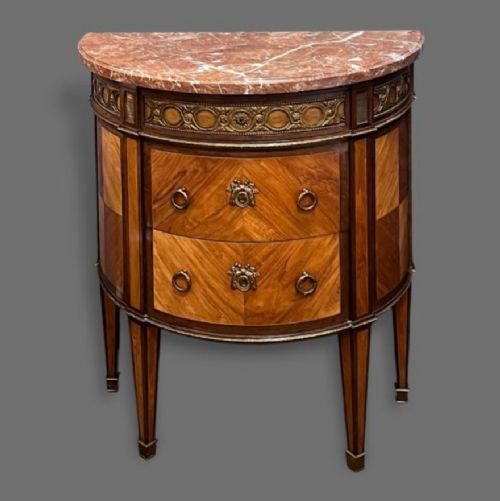
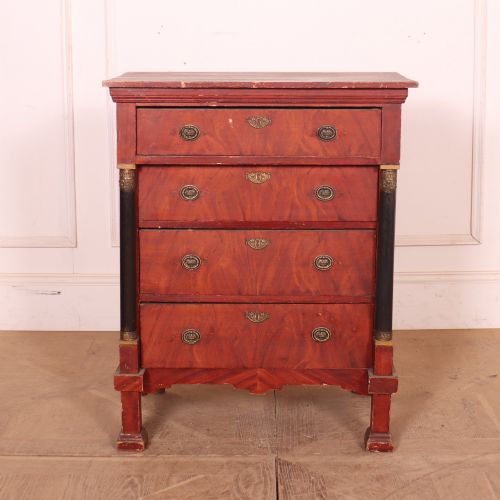
A neoclassical storage commode is primarily a chest of drawers or side cabinet built in continental Europe or Britain during the eighteenth, nineteenth, and early twentieth centuries. These pieces appear in forms such as demi-lune chests, breakfront commodes, and side cabinets bearing regional traits from France, Italy, Sweden, the Netherlands, and Spain.
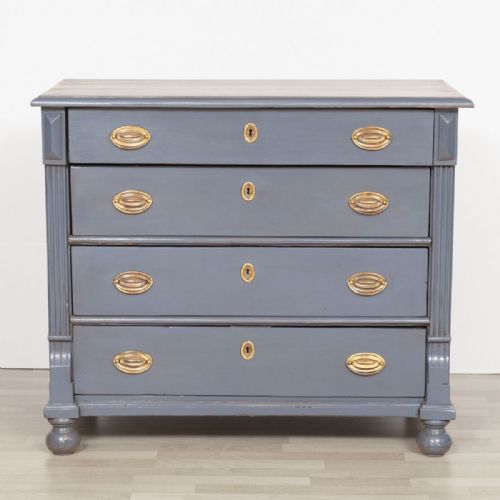
The version most commonly met on this page is the nineteenth-century continental commode, often featuring mahogany, walnut, or painted wood alongside marble tops. Makers from this era drew heavily on French Empire, Louis XVI, and Gustavian styles, resulting in symmetrical facades and restrained geometric lines.
Buyers also encounter revival pieces from the Victorian and Edwardian periods, alongside Georgian items influenced by the Adam style. These storage pieces combine utilitarian drawer capacity with classical details like pilasters, ormolu mounts, and parquetry.
Materials and construction
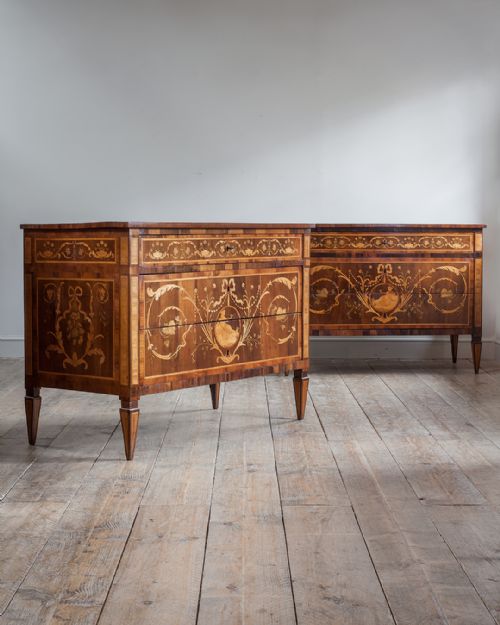
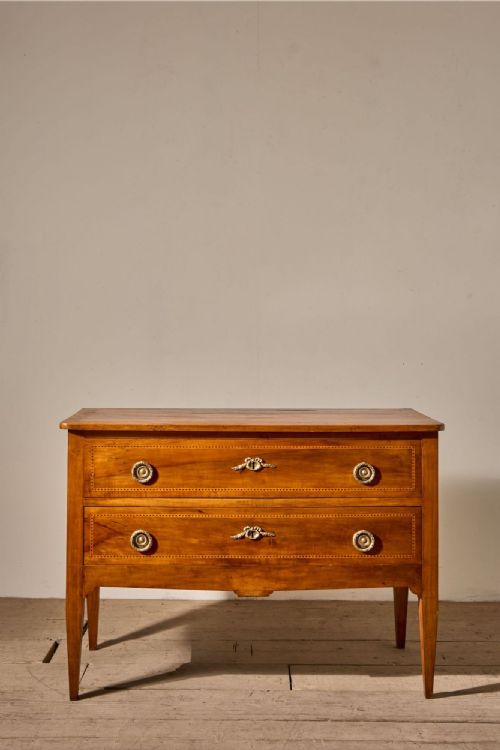
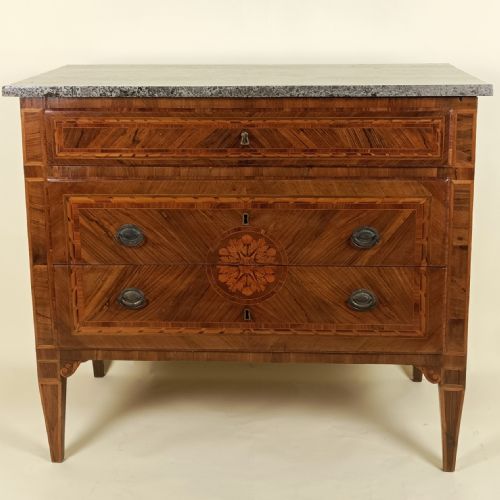
Cabinetmakers constructed these commodes using solid and veneered timbers such as mahogany, walnut, cherrywood, birch, fruitwood, and burr elm. Carcasses were frequently faced with intricate marquetry and parquetry patterns utilising contrasting woods like kingwood and satinwood.
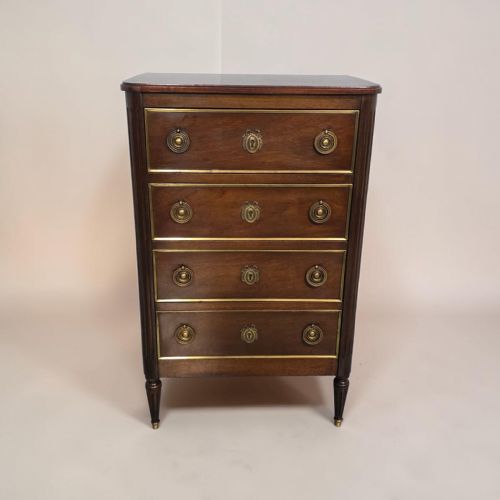
Many examples are finished with cool stone surfaces, incorporating marble tops fitted tightly to the timber frame. Metalwork played a key role, with cast ormolu and brass handles, mounts, and escutcheons accentuating the drawer tiers.
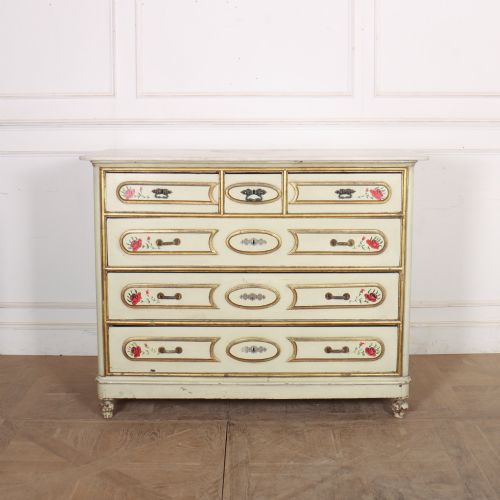
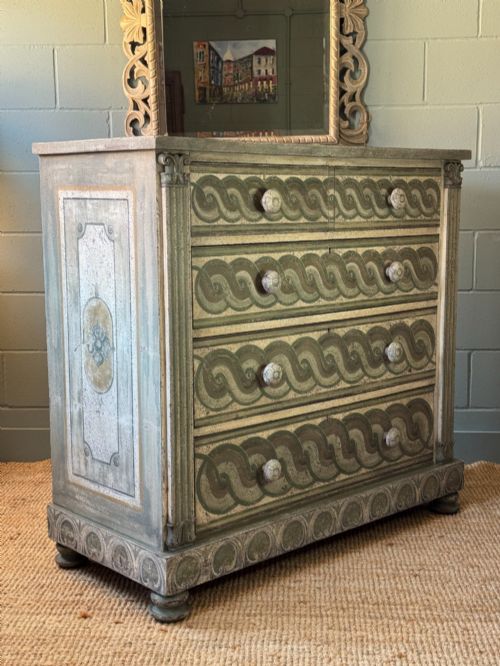
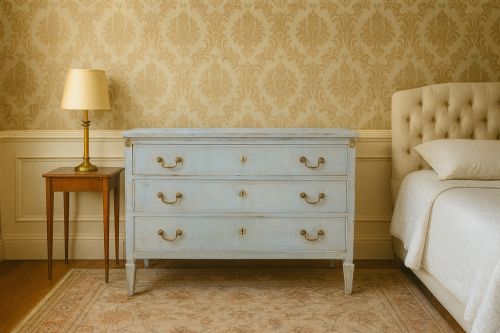
Painted finishes also define a significant portion of these pieces, particularly on Swedish Gustavian and Italian items. Layers of paint applied over oak, pine, or other woods created soft, pale surfaces suited to neoclassical interiors.
The documented periods span from the mid-eighteenth century through the Edwardian revival eras.
Evaluating quality and execution
The upper tier of these commodes is distinguished by the precision of the timber selection and the complexity of the inlay. Finely figured mahogany, matched walnut veneers, and crisp parquetry demonstrate greater technical skill from the workshop.
Structural integrity and the quality of secondary materials mark the division between standard and superior pieces. Heavier, well-fitted marble slabs, substantial cast ormolu mounts, and smoothly operating drawer timbers indicate higher standards of period craftsmanship.
The Neoclassical Storage Commode Glossary
- Ormolu
- Gilded bronze used for decorative mounts, handles, and feet on neoclassical furniture. It provides a bright metallic contrast to dark woods like mahogany and walnut.
- Marquetry
- Inlaid wood veneers arranged in pictorial or geometric patterns across the facade of a cabinet. Craftsmen cut different coloured woods to fit tightly within a design matrix.
- Demi-lune
- A half-moon or semicircular shape common in the design of tabletops and commode fronts. This curved form softens the profile of a storage piece.
- Parquetry
- Geometric wood inlay forming patterns such as cubes, chequers, or herringbone across a surface. It differs from marquetry by focusing on repeating abstract shapes rather than pictures.
- Gustavian
- The Swedish neoclassical style developed during the reign of Gustav III, known for pale painted finishes and simplified classical motifs. It reinterprets French court furniture with Nordic restraint.
Neoclassical Storage Commode: Frequently Asked Questions
What is a neoclassical storage commode?
A neoclassical storage commode is a drawer-based cabinet built during the eighteenth or nineteenth centuries following classical design principles. These pieces emphasise symmetry, straight lines, and architectural proportions derived from antiquity.
They serve primarily as functional bedroom or living room storage while providing a decorative surface topped with wood or marble.
Where were these commodes made?
These commodes originated across Europe, with strong representations from France, Italy, Sweden, the Netherlands, and Britain. Each region imparted local character, such as painted finishes in Sweden or rich mahogany veneers in France.
Workshop traditions varied from provincial centres to major capitals like Paris and London.
How do I style a commode at home?
A commode works effectively as a focal point in a hallway, dining room, or bedroom. Its flat top accommodates lamps, mirrors, or decorative objects, while the drawers offer concealed storage for household items.
Pairing the piece with complementary antique or modern furnishings helps balance its historical weight in a contemporary room.
How do I tell Empire style from Louis XVI?
Louis XVI pieces typically feature lighter proportions, fluted legs, and restrained neoclassical carving inspired by archaeological discoveries. They project an air of refined, domestic elegance.
Empire furniture, by contrast, is heavier and more monumental, incorporating military motifs, denser mahogany, and prominent ormolu mounts influenced by Napoleonic ambitions.