





Neoclassical Stone Lamp
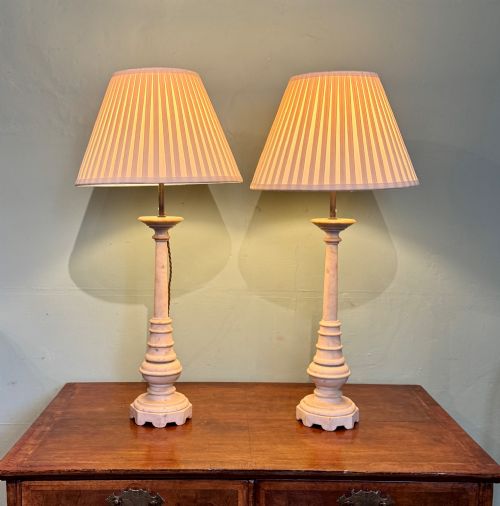
These neoclassical stone lamps bring formal classical proportion and tactile mineral weight into a room.
Neoclassical Stone Lamp
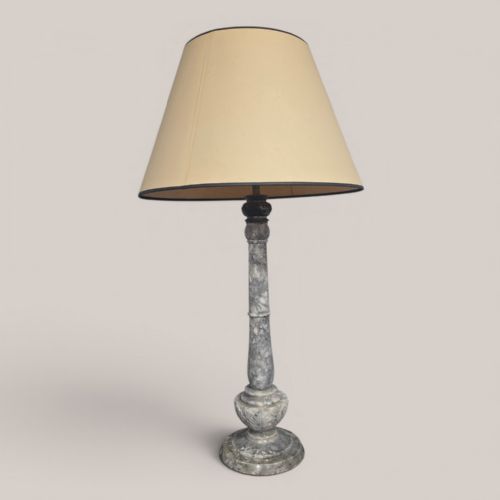
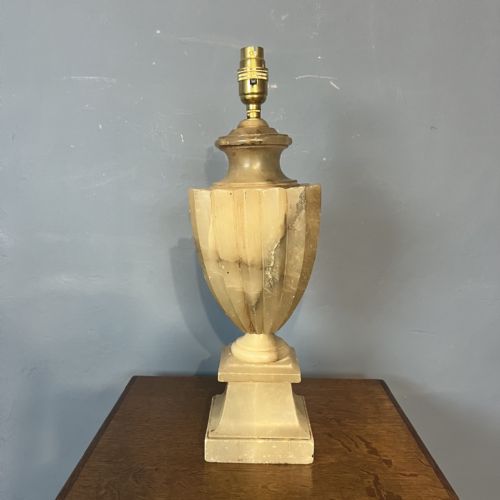
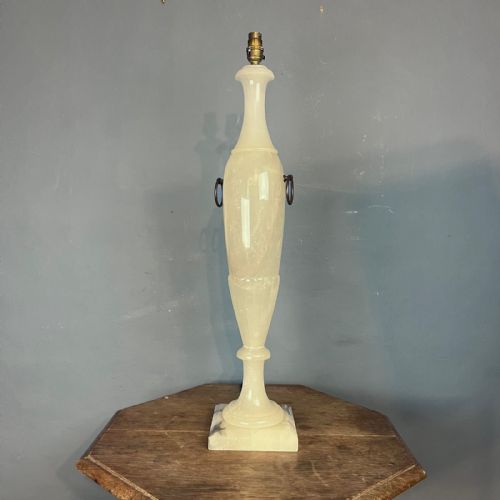
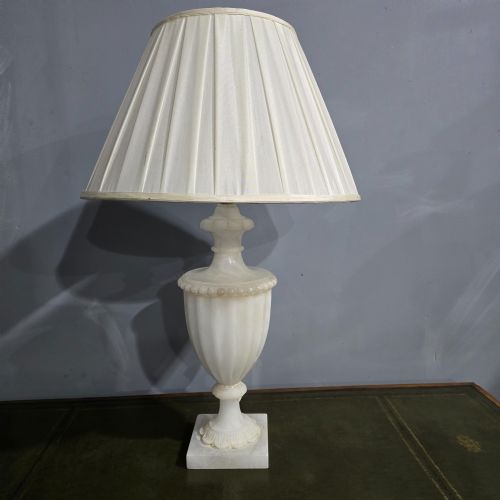
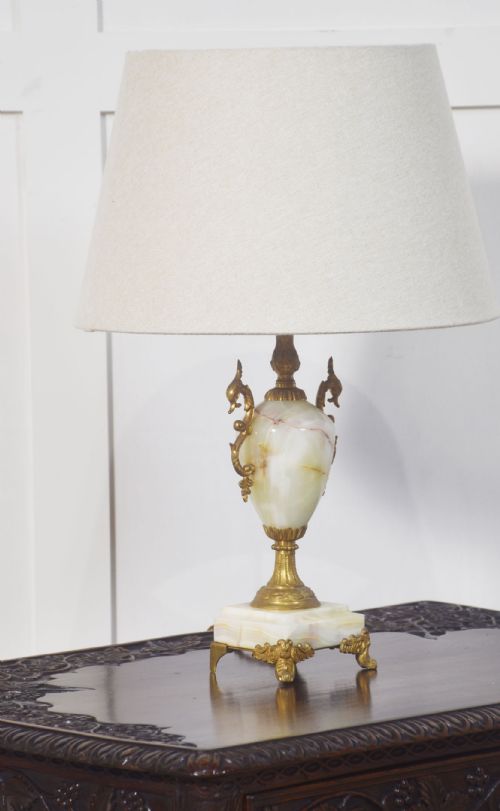
A neoclassical stone lamp brings formal classical proportion and tactile mineral weight into a room, drawing on ancient architectural motifs rendered in solid minerals. When searching for a neoclassical stone lamp, buyers encounter pieces primarily taking the form of table lamps and floor lamps, alongside occasional figural sculptures.
The selection ranges across several periods from the nineteenth century through the early twentieth century, including Edwardian and Victorian classical revival pieces as well as French and Italian examples. These objects adapt classical columns, amphorae, and cassolettes into functional lighting for domestic interiors.
Materials and construction
These lamps rely on substantial natural stone bodies carved from alabaster, marble, and onyx, often utilising grey marble or white marble varieties. The stonework provides a heavy, dense foundation that anchors the form.
Venus sometimes holds the light.
Evaluating quality
Quality rests in the precision of the stone carving and the crispness of the applied metal mounts, whether brass, ormolu, or gilt metal. Finer examples display harmonious proportions between the mineral body and its decorative mountings.
The integrity of the stone, from translucent alabaster to figured onyx and marble, dictates the visual impact of the piece. Matching pairs and substantial floor-standing formats generally command greater presence.
The Neoclassical Stone Lamp Glossary
- Alabaster
- A fine-grained, translucent stone often used for carved vessels and lamp bodies. It allows light to diffuse softly through its surface when polished thin.
- Cassolette
- A decorative vessel, often mounted on a base, designed with a removable lid that can reverse to function as a candleholder or stand as an ornamental urn.
- Ormolu
- Gilt bronze mounted onto furniture, clocks, and lighting fixtures. The technique involves applying a gold amalgam to bronze and firing it to achieve a rich golden finish.
- Amphora
- A classical two-handled jar with a narrow neck, adapted in these pieces to form the central body of a lamp.
Neoclassical Stone Lamp: Frequently Asked Questions
What periods do these lamps come from?
The pieces span the nineteenth century through the early decades of the twentieth century. They encompass Victorian, Edwardian, and Art Deco eras of production.
Design revivals during these decades drew heavily on French and Italian classical forms, reinterpreting ancient architectural styles for period interiors.
How do alabaster and marble lamps differ?
Alabaster is a softer, highly translucent stone that diffuses light through its body, creating a warm glow. Marble is denser and more opaque, prized for its distinct veining and solid weight.
Both materials were turned or carved into classical columns and urn shapes, but alabaster offers a lighter, more luminous appearance.
Where should I place a stone floor lamp?
A floor-standing marble or alabaster lamp suits corners or seating areas where its architectural presence can anchor the room. Ensure the weight of the stone base is supported safely on stable flooring.
These taller pieces function well beside heavy wooden furniture or within traditional libraries and formal reception spaces.
How do I identify French and Italian styles?
French examples often feature refined gilt metal mounts, ormolu paw feet, and amphora shapes reminiscent of classical antiquity. Italian pieces frequently utilise alabaster and white marble in columnar or figural table lamp formats.
Both regional traditions adapt classical vocabulary, but French pieces tend towards ornate metal mounts while Italian works highlight the carved stone body.