





Neoclassical Stone Bust
A neoclassical stone bust brings classical antiquity into a room, drawing on Greek and Roman subjects carved in enduring materials.
Neoclassical Stone Bust
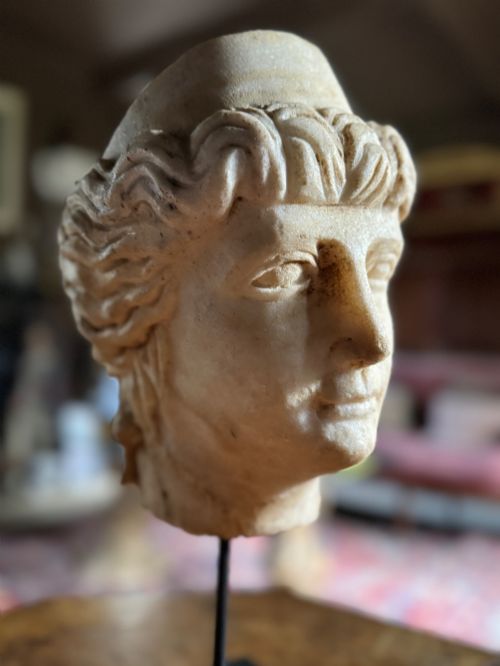
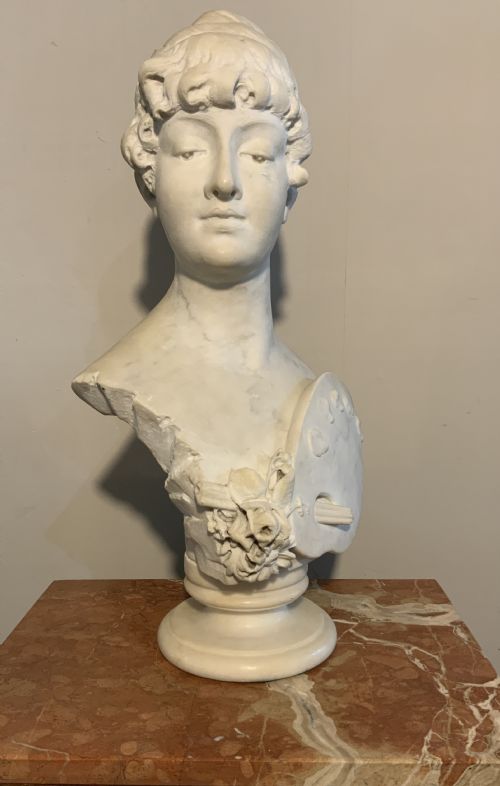
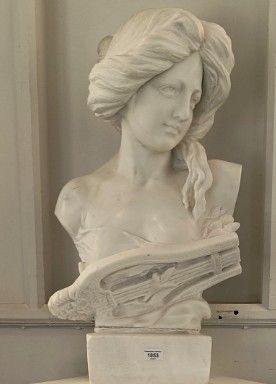
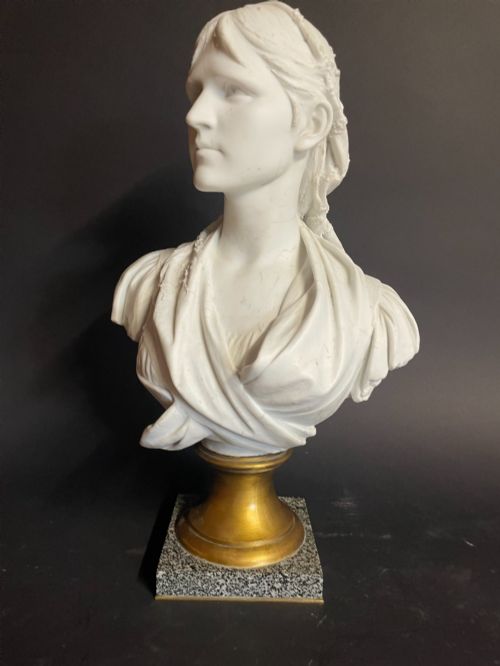
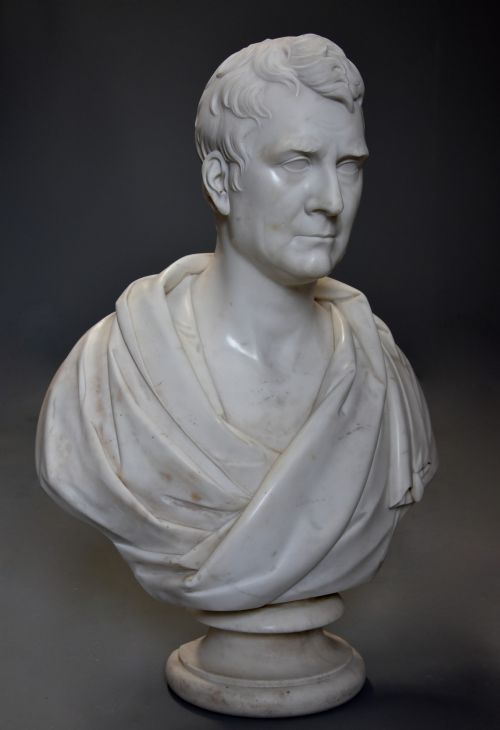
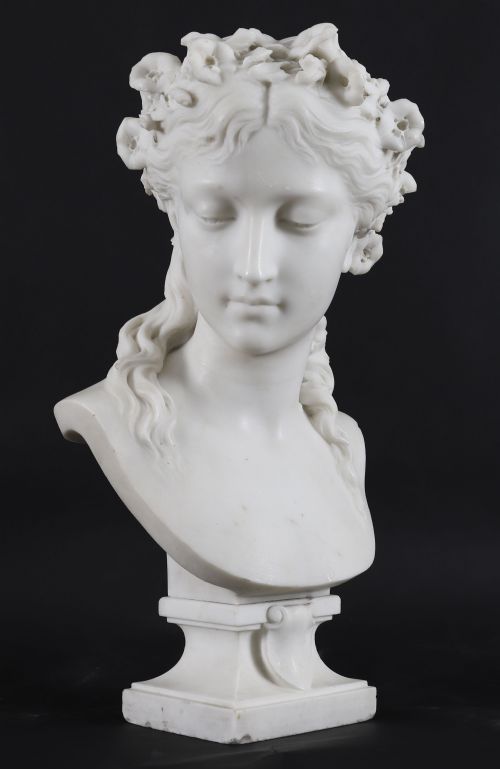
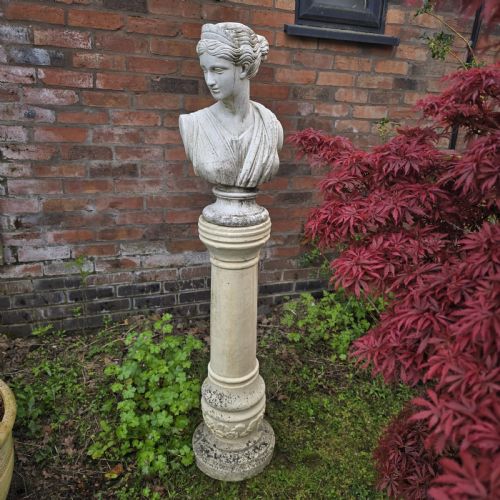
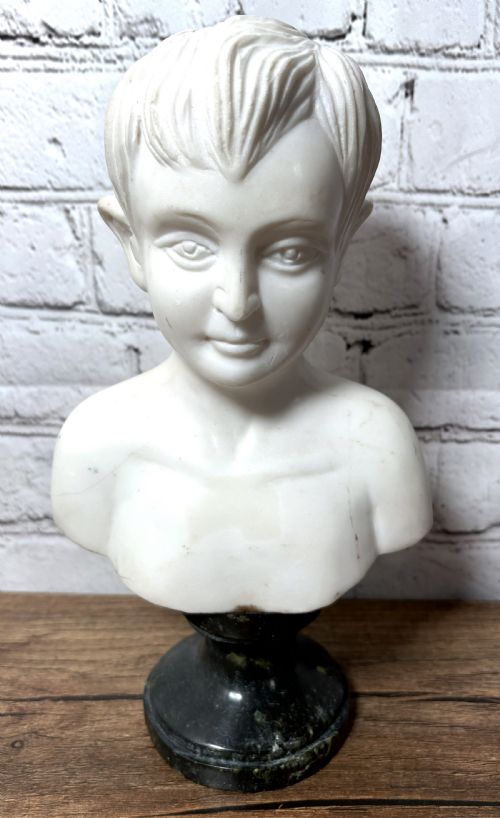
A neoclassical stone bust portrays historical figures, mythological subjects, Roman emperors, or unidentified sitters in the manner of classical antiquity. These pieces draw heavily on subjects from Greek and Roman mythology, philosophy, and history, such as Julius Caesar, Augustus, Diana, and the Muses.
The selections available range from 18th-century grand tour souvenirs and 19th-century carved portraits to later garden statuary and library pieces. Formats span monumental civic portraits, cabinet-sized library busts, and relief plaques.
Originating largely from Italian and French workshops, these sculptures reflect the enduring European fascination with classical sculpture across the 18th, 19th, and early 20th centuries.
Materials and carving techniques
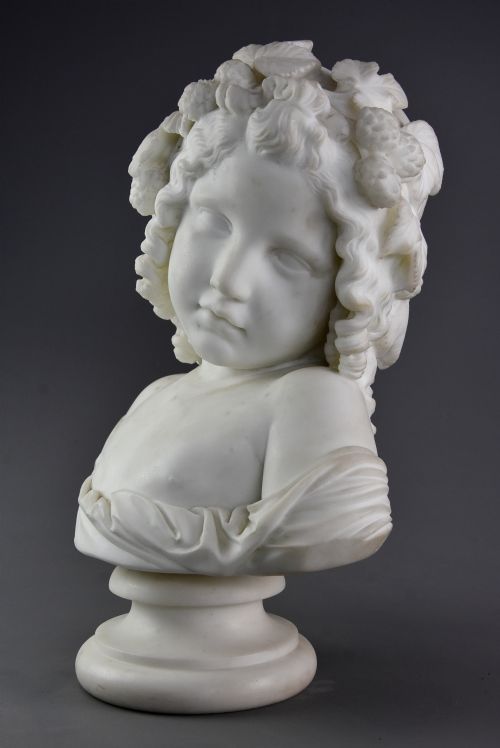
Carvers shaped these pieces primarily from varieties of marble, including Carrara marble, alongside alabaster, stone, and plaster. Sculptors utilised traditional hand-carving techniques to shape stone, capturing fine facial expressions, hair detailing, and drapery.
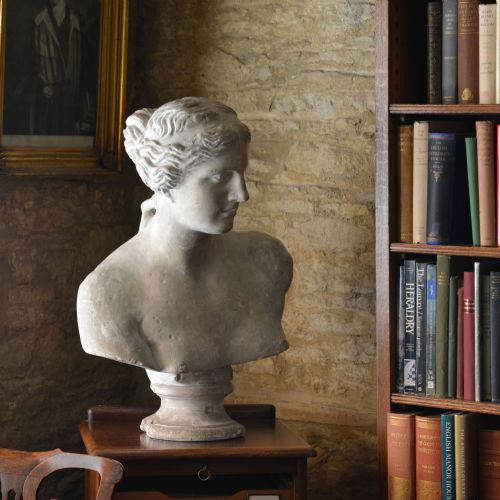
Some works incorporate cast stone, reconstituted stone, or scagliola, allowing makers to replicate the visual weight and finish of natural carved stone. Signatures and inscriptions occasionally appear on the truncation or plinth, recording the hand of the sculptor or studio.
Neoclassical Stone Bust Retail Price Guide 2026
Typical asking prices for neoclassical stone bust among the pieces listed under this phrase on Sellingantiques today, from the lower quarter to the upper quarter. They describe what is for sale here now, not the wider market.
Even Julius Caesar needs a dust now and then, preferably with a very soft brush.
Variations in execution and form
Quality rests in the sensitivity of the carving, particularly in the rendering of flesh, hair texture, and drapery folds. Finer examples display an acute anatomical understanding and crisp facial definition derived from classical prototypes.
The choice of material dictates much of the character, with translucent Carrara marble and finely detailed alabaster sitting at the upper end of the sculptural scale compared to moulded plaster or standard cast stone.
Houdon·Eugene Aizelin·J Francis·R. Mattei·Joseph Gott
The Neoclassical Stone Bust Glossary
- Carrara marble
- A type of white or blue-grey marble from the city of Carrara in Tuscany, Italy, widely utilised for classical sculpture.
- Grand tour
- A cultural tour of Europe undertaken by wealthy young men in the 18th and 19th centuries, resulting in the acquisition of souvenirs like small marble busts and relief plaques.
- Scagliola
- A composite material made from selenite, glue, and pigments,imiterating marble and other hard stones for pedestals and architectural elements.
- Truncation
- The straight-cut lower edge of a bust where the shoulders and chest terminate, often resting on a socle or plinth.
Neoclassical Stone Bust: Frequently Asked Questions
What is a neoclassical stone bust?
A neoclassical stone bust is a carved sculptural portrait depicting a historical figure, deity, or classical subject in the style inspired by ancient Greece and Rome.
These pieces typically represent subjects like Roman emperors, philosophers, or mythological figures and date predominantly from the 18th and 19th centuries.
Where were these busts made?
Many of these sculptures originated in Italy and France, often produced as grand tour souvenirs for travellers collecting classical antiquities.
Italian workshops in centres like Carrara supplied carved marble portraits to collectors across Europe.
How do I display a bust?
Busts are traditionally placed on library tables, mantelpieces, or dedicated stone and marble pedestals and columns.
Matching a bust to a classical pedestal or scagliola column creates a balanced architectural display in a hallway or study.
What materials are used?
Carvers utilised white and Carrara marble, alabaster, stone, and plaster for portrait busts.
Later garden statuary and architectural ornaments frequently employ cast stone or reconstituted stone.