

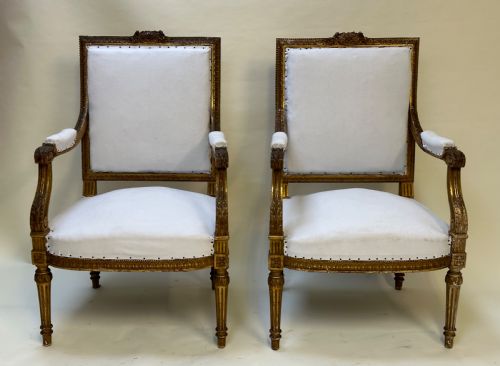
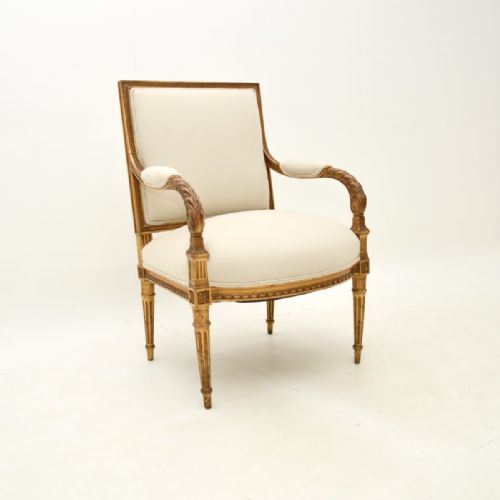
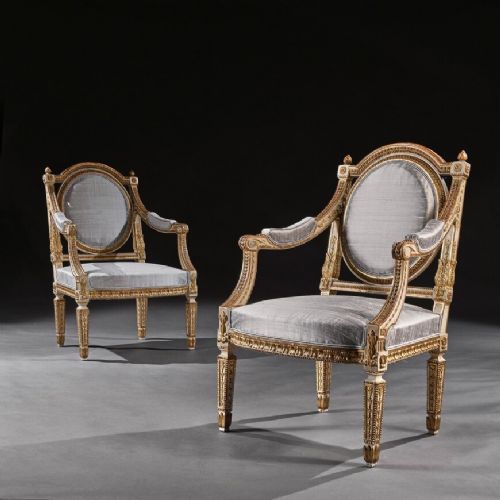

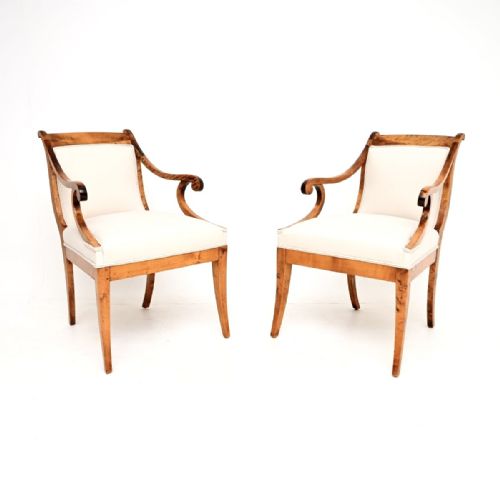


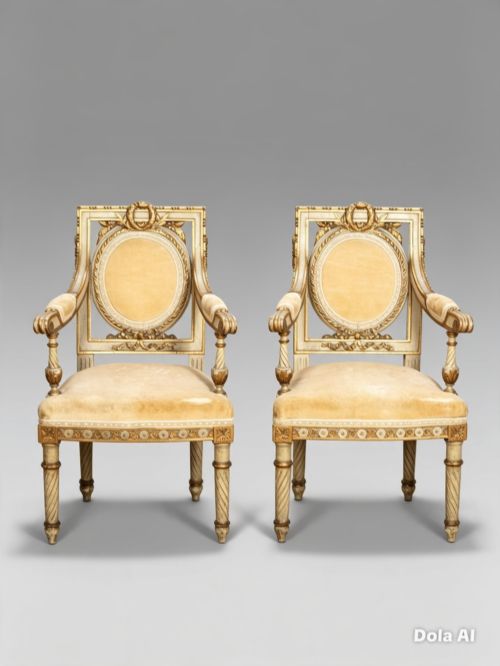


Neoclassical Salon Seating
Neoclassical salon seating brings together formal symmetry and antique upholstery, offering structured refinement for a drawing room.
Neoclassical Salon Seating
Neoclassical salon seating comprises armchairs, settees, and sofas designed with classical restraint and symmetrical lines. Pieces matching this phrase span the eighteenth century through the early twentieth century, drawing on Georgian, French Empire, and Louis XVI styles.
The version most commonly met on this page is the nineteenth-century French revival chair, often rendered in giltwood, painted wood, or mahogany. These items range from single armchairs and pairs to larger parlour suites and multi-piece lounge settings.
Makers and craftsmen of these periods adapted classical motifs such as fluted columns, urns, and laurel wreaths into functional domestic seating. Such furniture served both social display and everyday comfort in formal reception rooms.
Materials and Construction
Construction relies heavily on hardwoods such as mahogany, beech, walnut, and satin birch, chosen for their structural strength in carved frames. Giltwood and painted wood finishes provide decorative surface splendour, often highlighted with parcel gilt or brass ormolu mounts.
Upholstery techniques utilise traditional stuffings enclosed in textiles like silk, velvet, and damask. Frames feature hand-carved details that reflect the stylistic vocabulary of Georgian English joiners or French cabinetmakers.
Neoclassical Salon Seating Retail Price Guide 2026
Typical asking prices for neoclassical salon seating among the pieces listed under this phrase on Sellingantiques today, from the lower quarter to the upper quarter. They describe what is for sale here now, not the wider market.
Listings span the eighteenth century to the early twentieth century, featuring mahogany, giltwood, and painted wood finishes.
Assessing Quality
The distinction between ordinary and exceptional pieces lies in the crispness of the hand-carved ornament and the integrity of the timber frame. Fine examples display deep relief carving in the wood and precise application of the original gilding or paint.
Upholstery materials and the execution of internal webbing and stuffing also determine the calibre of a piece. Suites that retain matching textiles and coherent stylistic proportions command greater authority within this category.
The Neoclassical Salon Seating Glossary
- Giltwood
- Wood carved and coated with gold leaf or a metallic substitute. This finish was favoured for formal salon items designed to catch candlelight.
- Ormolu
- Cast and chased gilt-bronze mounts applied to furniture frames. These decorative elements are typical of French Empire and revival pieces.
- Damask
- A reversible figured fabric woven on a jacquard loom, frequently utilised for traditional upholstery. It provides a subtle pattern through contrasting warp and weft threads.
- Biedermeier
- A Central European style spanning the nineteenth century characterised by utilitarian comfort and clean lines. It prioritises polished veneers and understated wood grains over heavy ornamentation.
- Hepplewhite
- An eighteenth-century English furniture style associated with graceful curves and shield-back chairs. Named after cabinetmaker George Hepplewhite, it heavily influenced Georgian seating design.
Neoclassical Salon Seating: Frequently Asked Questions
How do I clean antique giltwood?
Giltwood requires delicate care because the gold leaf layer can be easily abraded or removed by moisture.
Dust the surface gently with a soft, dry brush and avoid all liquid cleaners or chemical polishes.
Are these chairs comfortable for daily use?
Most salon seating from this period was built for formal entertaining rather than lounging.
The upright backs and structured proportions encourage an upright posture.
How do I date a painted salon chair?
Dating relies on examining the wood species beneath the paint, the tool marks left by the cabinetmaker, and the style of the carved motifs.
Paint layers and craquelure also offer clues regarding the age of the decorative surface.
What is a salon suite?
A salon suite is a matching set of seating furniture, typically comprising a sofa or settee alongside several armchairs.
These suites were designed to furnish a drawing room with visual harmony.