





Neoclassical Painted Sofa
A neoclassical painted sofa brings restrained classical elegance to a room through crisp carved lines and subtle painted surfaces.
Neoclassical Painted Sofa
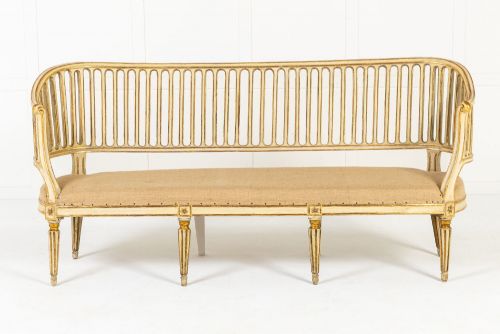
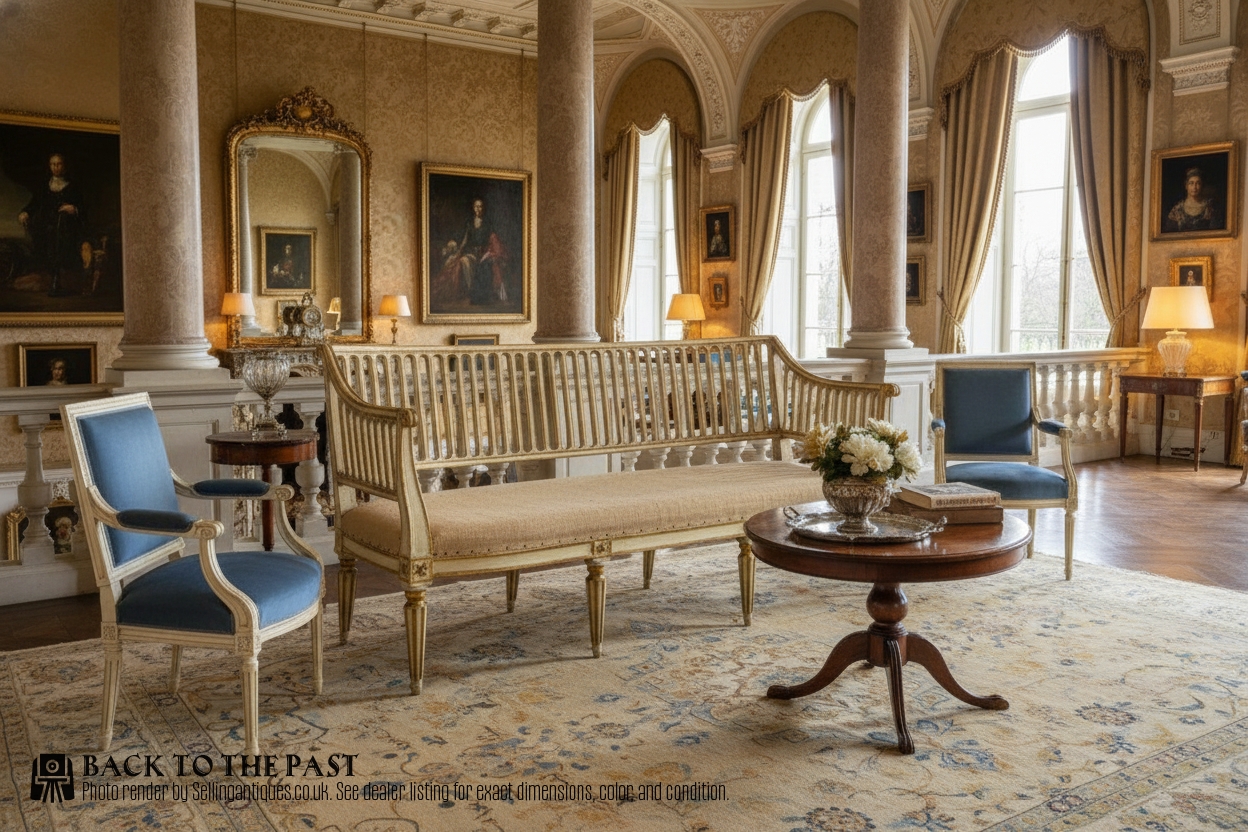
When you search for a neoclassical painted sofa, you are looking at seating furniture defined by classical restraint, symmetry, and pale painted finishes. These pieces originate from various European centres, with French Louis XVI, Swedish Gustavian, and Italian styles appearing frequently alongside English revivals.
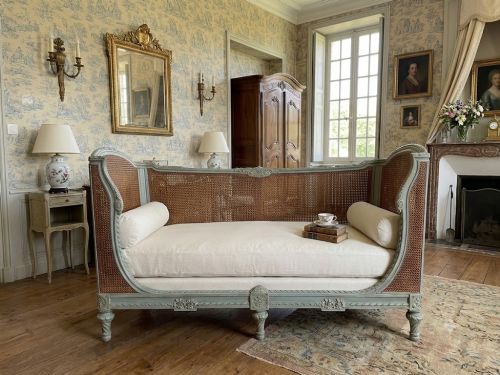
The forms on this page include large settees, caned daybeds, triple-back settees, and compact couches. Makers from the eighteenth century up to the twentieth century adapted these classical idioms, producing both grand salon seating and lighter revived interpretations.
The structural frames are typically fashioned from beech, satinwood, or other timbers that accept paint and gilding. Canework often forms the back or seat panels, paired with upholstered cushions in linen or decorative fabric.
Materials and construction methods
Carpenters shaped the timber frames from beech and other hardwoods, employing traditional joinery to support the long spans of settees and daybeds. Painted wood surfaces received multiple layers of pigment, sometimes accented with gold leaf to highlight carved details like fluting and rosettes.
Caning was woven by hand into the open frames of backs and seats, creating a resilient and decorative mesh. Upholstered sections relied on traditional stuffing methods within linen and decorative fabric coverings to provide comfortable support.
Neoclassical Painted Sofa Retail Price Guide 2026
Typical asking prices for neoclassical painted sofa among the pieces listed under this phrase on Sellingantiques today, from the lower quarter to the upper quarter. They describe what is for sale here now, not the wider market.
Some nineteenth-century makers could not resist adding three backrests in a row just to be thoroughly polite.
Qualities of execution and design
The refinement of the carved ornament separates sophisticated examples from simpler vernacular pieces. Crisp detailing on the wooden frames shows the hand of a skilled maker.
The application of the paint finish and any gold leaf influences the visual harmony of the piece. Subtle layering and well-preserved surface textures indicate superior historical craftsmanship.
The Neoclassical Painted Sofa Glossary
- Canapé
- A French upholstered sofa or settee. These seating forms often feature exposed wooden frames with painted or gilt finishes.
- Gustavian
- The Swedish interpretation of neoclassical design, characterised by pale painted surfaces and restrained ornamentation. This style emerged during the late eighteenth century.
- Louis XVI style
- A French design period associated with straight lines, classical symmetry, and architectural motifs. Pieces from this aesthetic frequently utilise fluted legs and carved rosettes.
- Satinwood
- A dense hardwood with a lustrous golden appearance. Cabinetmakers utilised this timber for fine painted furniture and decorative veneers.
Neoclassical Painted Sofa: Frequently Asked Questions
How do I clean a painted sofa?
Dust the wooden frame regularly with a soft, dry cloth to prevent dirt accumulation on the painted surface.
Avoid using harsh chemical cleaners or excess moisture, which can damage the historic paint and gold leaf details.
Are these sofas comfortable for daily use?
Many pieces feature traditional upholstery or caned seats that provide firm support for sitting.
Adding scatter cushions can adjust the depth and comfort to suit modern lounging habits.
What is a Gustavian settee?
A Gustavian settee is a Swedish neoclassical seating form known for its pale monochromatic paintwork and simplified classical motifs.
These pieces reflect Scandinavian interpretations of French court styles from the late eighteenth century.
How do I identify a Louis XVI style sofa?
Look for straight tapered legs, fluted columns, and geometric symmetry derived from classical architecture.
Exposed wooden frames are typically painted in cream or pale tones, occasionally highlighted with gilding.