




Neoclassical Painted Bench
These neoclassical painted bench pieces bring classical symmetry and muted elegance to a room.
Neoclassical Painted Bench
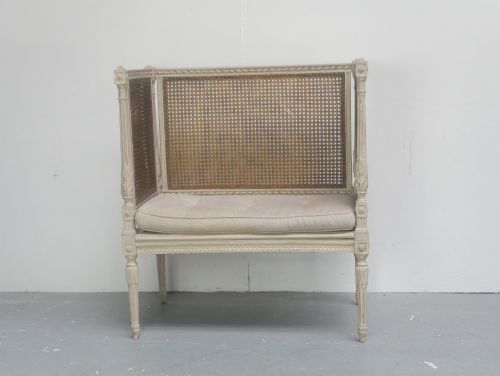
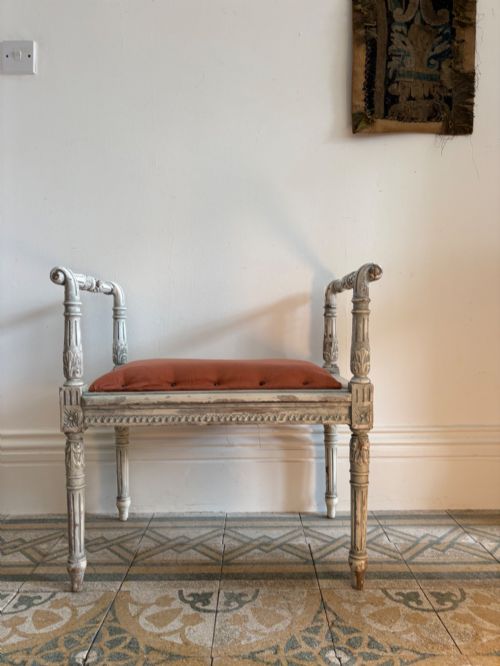
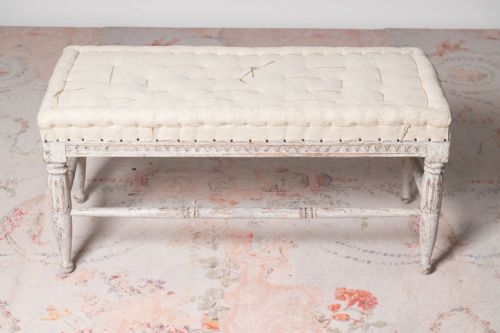
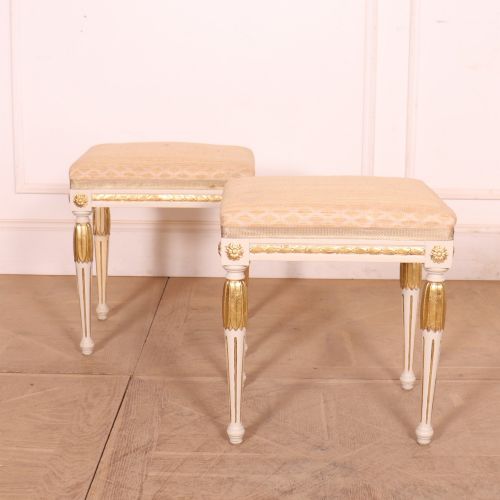
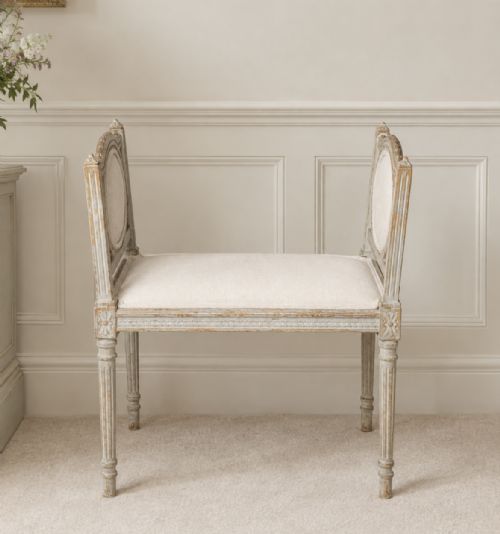
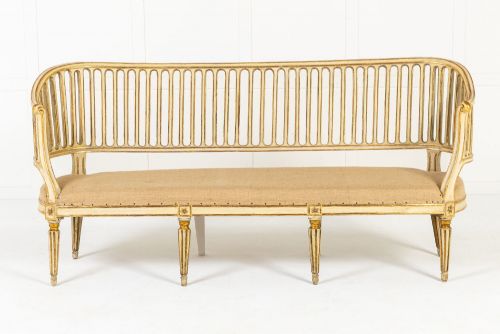
A neoclassical painted bench embodies the restrained ornamentation and classical proportions of the late eighteenth and nineteenth centuries. When searching for a neoclassical painted bench, buyers encounter a variety of seating forms including settees, daybeds, window seats, and stools. These pieces originate from Swedish Gustavian, French Louis XVI, and Italian neoclassical traditions.
The most common examples on this page are Swedish Gustavian stools and settees, alongside French Louis XVI style daybeds and window seats. Painted wood surfaces, often in white or cream, define the aesthetic of these regional interpretations. Makers drew inspiration from ancient Roman and Greek motifs, adapting them into practical domestic furniture.
What varies in quality
Quality in these pieces rests upon the crispness of the hand-carved details and the proportion of the frame. Finer examples display deeply carved classical motifs rather than shallow stampwork, maintaining balanced symmetry across the arms and legs.
The integrity of the original timber frame and the application of traditional painted finishes distinguish superior items. Secondary elements such as woven canework or integrated upholstery show varying degrees of finesse and material selection.
Several pieces double as window seats, proving that eighteenth-century makers understood the enduring appeal of sitting by the glass to watch the street.
The Neoclassical Painted Bench Glossary
- Gustavian
- The Swedish interpretation of Louis XVI and neoclassical design, known for pale painted finishes and restrained classical carving. This style dominates the Scandinavian pieces found in this category.
- Canework
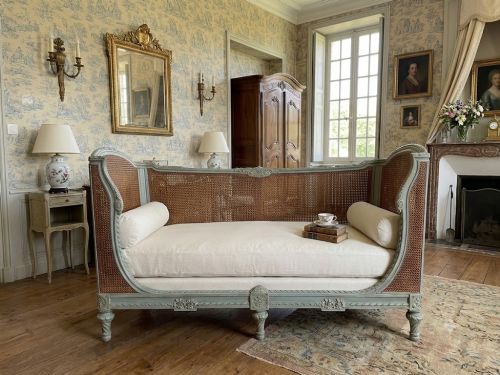
- Woven cane or rattan panels utilised for seat bases and backrests to provide lightweight support. This technique appears frequently on French and Swedish daybeds and settees.
- Settee
- A medium-length upholstered or wooden seat designed for multiple occupants, often featuring a decorative backrest. These forms range from double-back settees to triple-back variations.
- Bergère
- An enclosed upholstered armchair or sofa style with upholstered panels filling the sides beneath the armrests. These pieces provide a solid yet comfortable seating profile.
Neoclassical Painted Bench: Frequently Asked Questions
Where do these painted benches come from?
The pieces originate primarily from Sweden, France, and Italy, reflecting distinct regional interpretations of the neoclassical movement. Swedish makers favoured pale Gustavian finishes, while French and Italian craftsmen produced ornate Louis XVI and neoclassical variants.
Craftsmen in each country adapted classical architectural motifs into domestic seating, resulting in a diverse selection of window seats, settees, and stools.
How do I style a painted bench at home?
These seating pieces suit entrance halls, bedrooms, or living spaces where their pale painted finishes and classical lines complement neutral interiors. Pair a long settee with a low wooden coffee table or place a small stool beneath a window.
Consider the upholstery fabric, which often includes silk, linen, or needlework, when coordinating the piece with existing room textiles and colour schemes.
What is the difference between a settee and a daybed?
A settee functions primarily as an upright seat for multiple people, featuring a defined backrest and often multiple chair-back sections. Examples on this page include triple-back settees and window seats designed for extended seating.
A daybed, such as a canapé corbeille, incorporates extended proportions intended for reclining or resting. Both forms utilise painted wooden frames and classical carved details.
Are these benches made of solid wood?
The structural frames are constructed from solid timbers including beech and satinwood, which provided the necessary strength for intricate hand-carving. Wood surfaces were then smoothed and coated with paint finishes.
Some examples also incorporate applied gold leaf to highlight specific decorative mouldings and architectural carvings across the frame.