


Neoclassical Ormolu Clock
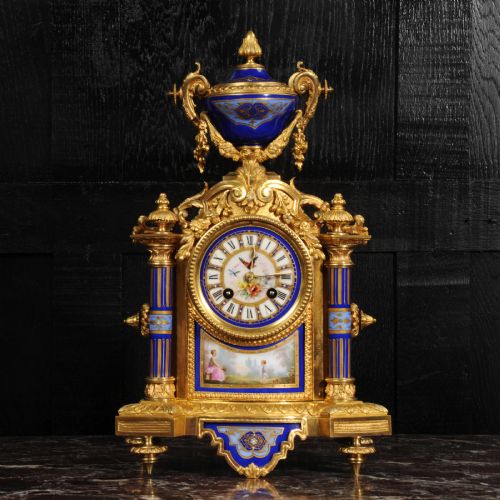
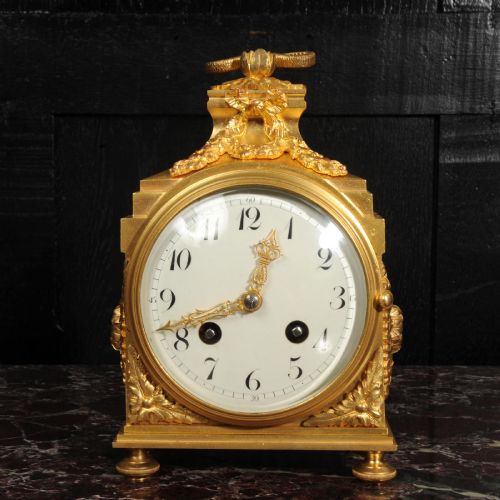
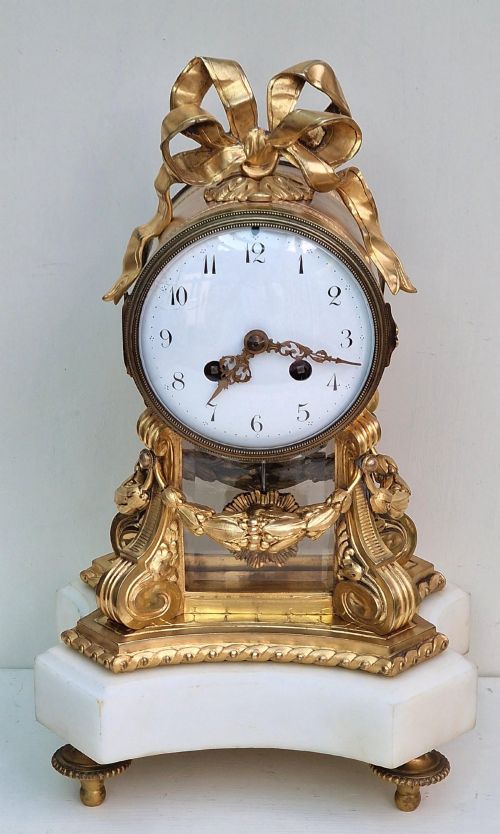
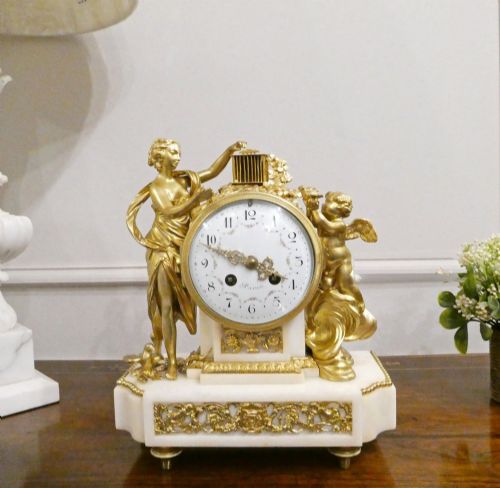
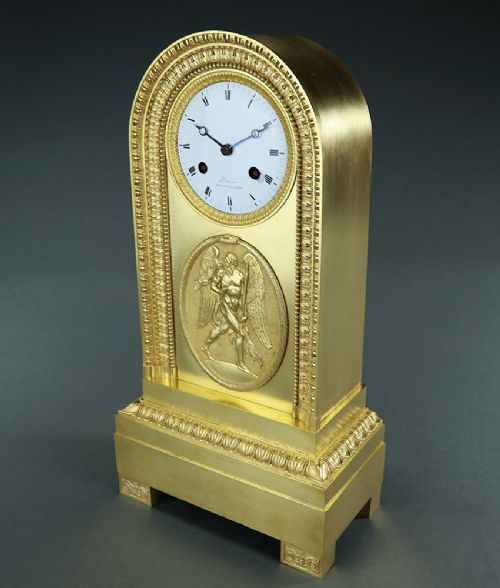
A neoclassical ormolu clock brings the discipline and balance of classical antiquity onto the mantelpiece, combining gilded bronze with marble for a striking architectural presence.

Neoclassical Ormolu Clock
A neoclassical ormolu clock stands as a formal centrepiece, most frequently encountered in nineteenth-century French interpretations of earlier Louis XVI and Empire designs.
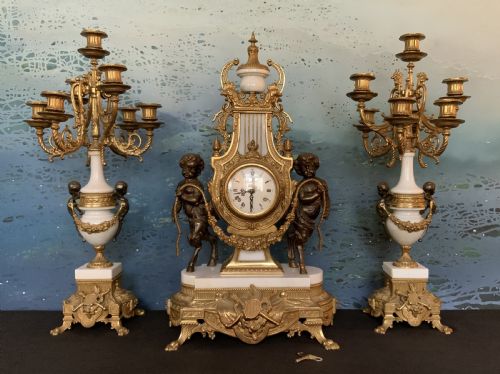
The selection ranges from elaborate mantel clock sets with matching candelabra and portico clocks with suspended movements to wall-hanging cartel clocks framed in cast bronze.
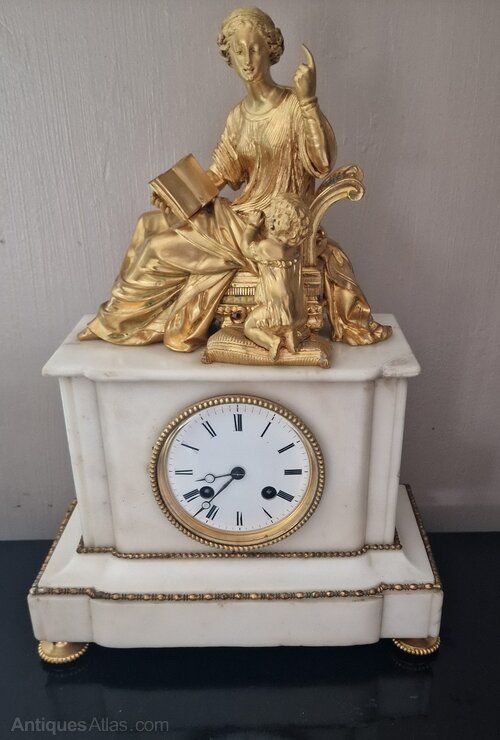
Buyers encounter white and rouge marble bodies paired with gilt bronze mounts, often taking specific allegorical forms such as lyres or drum heads.
Materials and construction
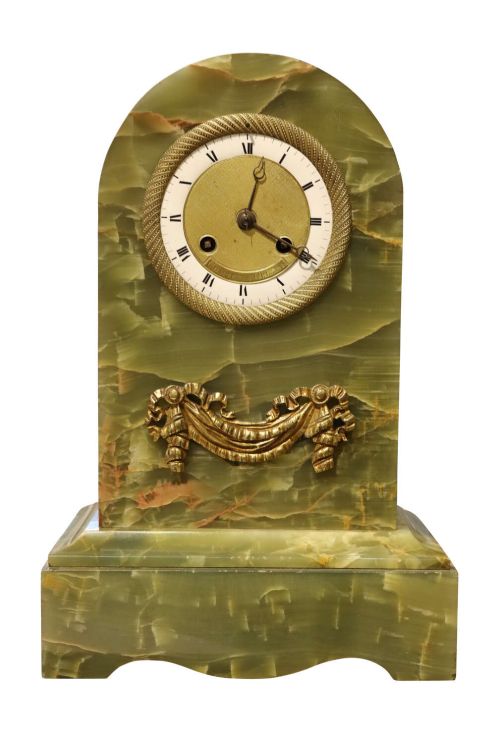
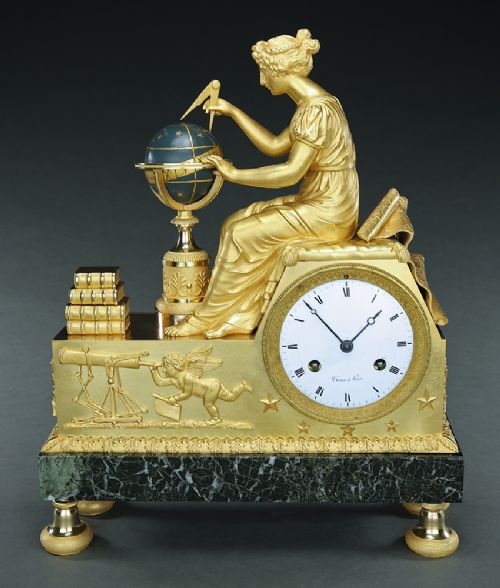
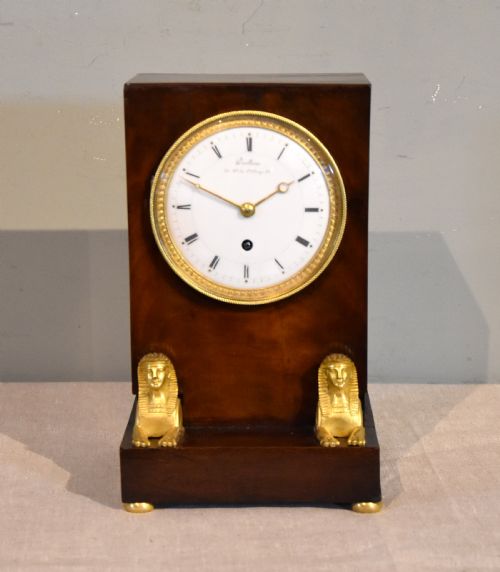
Makers utilised cast bronze, finished with mercury gilding to produce the bright ormolu surface, alongside structural elements of white marble, rouge marble, and occasionally green onyx or mahogany.
Clockmakers incorporated enamel dials and intricate mechanical movements, sometimes driven by chain fusee systems or eight-day escapements, housed within the heavy metal and stone chassis.
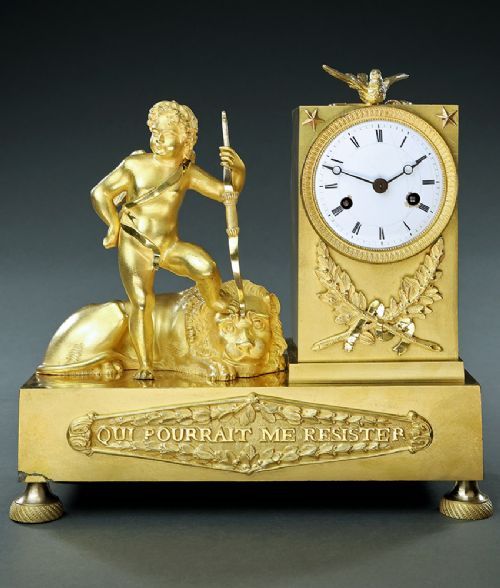
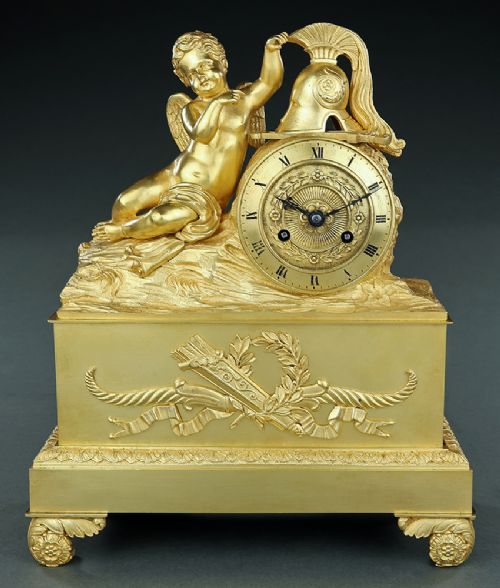
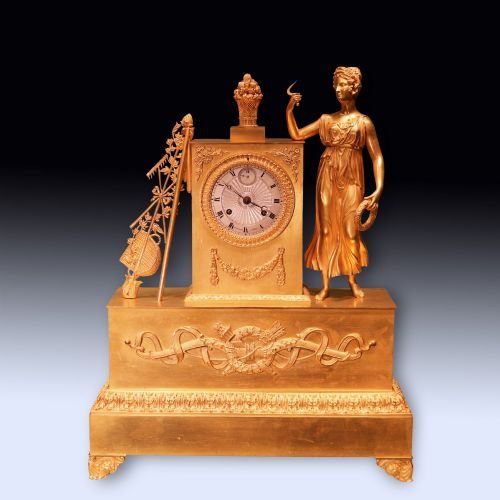
Several models depict abstract virtues and triumphs, including allegories of love conquering all and fidelity watching over the hours.
Distinctions in craftsmanship
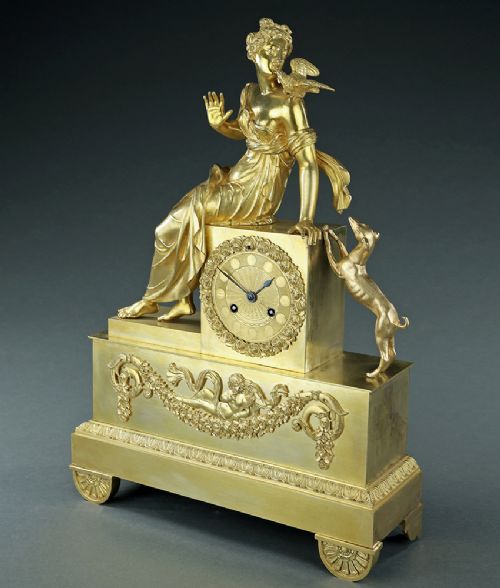
Quality rests in the crispness of the bronze chasing and the depth of the gilding, where sharper tool work defines drapery, foliage, and figurative elements without softness.
The integration of the movement with the case, the choice of unblemished marble, and the inclusion of signed dials by known makers elevate individual pieces above standard production.
Japy Freres·Le Roy, Paris·Berger, Paris·Louis Goret·Canaillor of Paris·Charles a Orleans
The Neoclassical Ormolu Clock Glossary
- Ormolu
- Gilded bronze, produced by applying a mercury and gold amalgam to a cast bronze object and heating it to drive off the mercury. This technique creates a distinctive, durable surface lustre.
- Cartel clock
- A wall-mounted clock featuring an ornamental frame made of bronze or gilt metal. These pieces sit flat against panelled walls.
- Garniture
- A set of matching decorative objects, typically comprising a central clock flanked by matching candelabra or vases. They create a symmetrical arrangement on a fireplace mantel.
- Portico clock
- A mantel clock structured like a classical temple, with side pillars supporting the central movement housing. This architectural style emerged during the Directoire and Charles X periods.
- Fusee
- A conical pulley used in clock movements to maintain an even pull on the gear train as the mainspring unwinds. This mechanism improves timekeeping accuracy.
Neoclassical Ormolu Clock: Frequently Asked Questions
What is an ormolu clock?
An ormolu clock is a timepiece housed in a gilded bronze case, created using a mercury gilding process. These objects combine metalwork with marble and enamel dials.
They reflect classical architectural and sculptural motifs popularised during the eighteenth and nineteenth centuries in France.
How do I identify a Louis XVI style clock?
Louis XVI style clocks rely on symmetry, straight architectural lines, and classical motifs such as urns, garlands, and ribbons. They frequently pair white marble with bright gilt bronze mounts.
Later nineteenth-century revival pieces often replicate these exact proportions and decorative vocabularies.
What is a clock garniture set?
A clock garniture set consists of a central mantel clock accompanied by matching side pieces such as candelabra or decorative vases. These sets were designed to create a balanced display across a fireplace.
Makers cast these matching components from bronze and marble to share identical decorative themes.
How do portico clocks differ from standard mantel clocks?
Portico clocks feature an architectural frame modelled on classical temples, with vertical columns supporting the entablature that contains the clock movement. This open structure distinguishes them from solid box-form mantel clocks.
They often incorporate a visible pendulum swinging freely between the supporting pillars.