



Neoclassical Nightstand
These neoclassical nightstand pieces combine clean classical lines with practical bedside storage, offering an elegant addition to a traditional bedroom scheme.
Neoclassical Nightstand
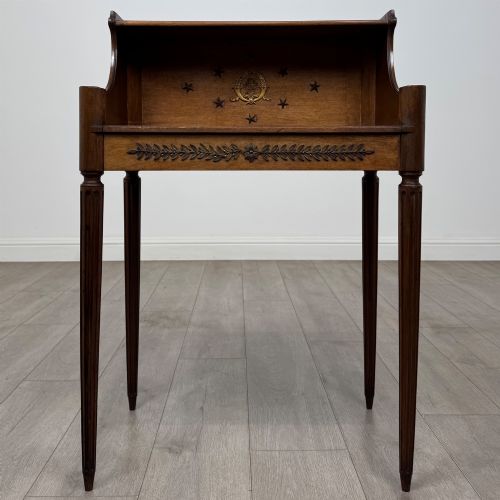
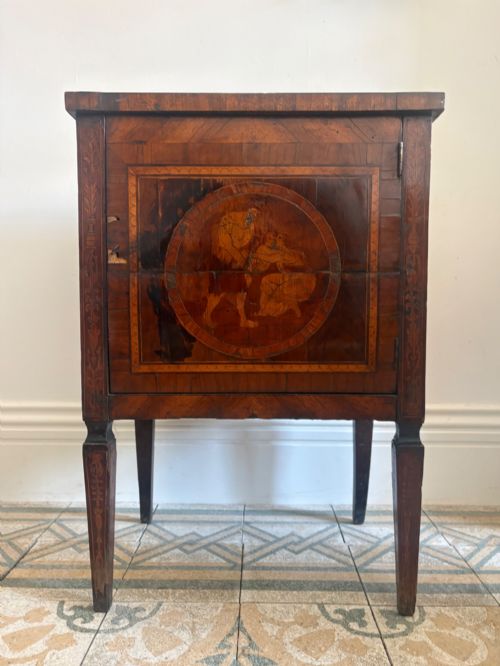
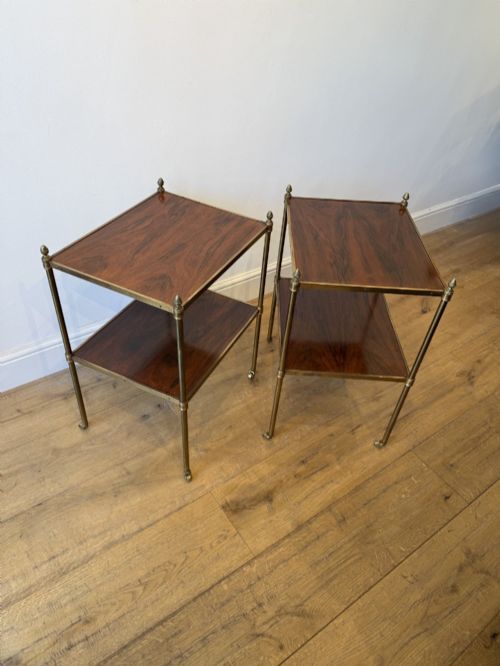
A neoclassical nightstand takes various forms across this selection, appearing as bedside cabinets, bedside tables, commodes, and side tables. These pieces emerge from periods spanning the eighteenth century through to the early twentieth century.
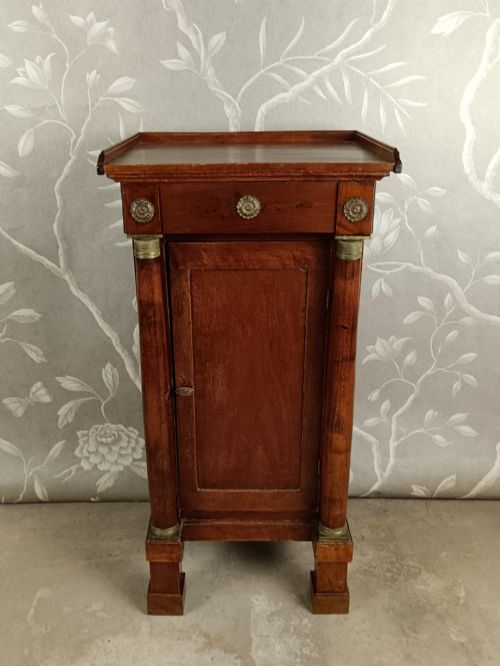
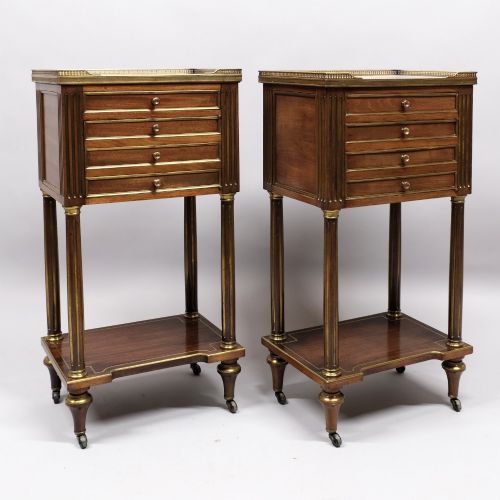
The most likely version to encounter on this page is a French or Italian bedside cabinet, often rendered in mahogany or walnut with distinct classical proportions. Alongside these, Swedish Gustavian chests and occasional tables frequently appear.
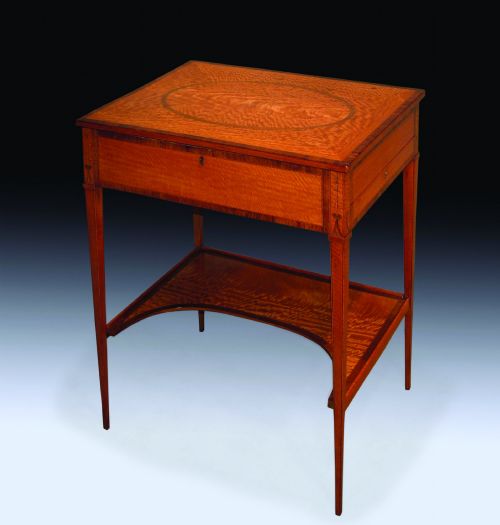
Originating largely from continental workshops and British traditions influenced by Sheraton design, these items serve as functional surfaces and decorative storage beside a bed. The range includes single cabinets and matched pairs dating from the Georgian era to the Edwardian period.
Materials and construction
Cabinet makers utilised dense hardwoods such as mahogany, walnut, satinwood, and rosewood for the structural carcasses and tabletops. These timbers often receive decorative inlay, marquetry, or painted finishes.
Ormolu mounts, brass fittings, and inset marble tops provide the characteristic metallic and stone accents seen across French Empire and Louis XVI examples. Boxwood stringing and fine marquetry further define the decorative surface work on Sheraton and Italian pieces.
Listings span the 18th, 19th, and early 20th centuries, featuring mahogany, walnut, satinwood, marble, and ormolu.
Distinguishing quality
The distinction between tiers rests upon the precision of the cabinet work, the integration of ormolu mounts, and the choice of timber veneers. Superior examples display crisp inlay, substantial marble slabs, and finely cast brass ornamentation.
Simpler interpretations rely on proportion and painted finishes rather than intricate marquetry or heavy bronze mounts. The pedigree of the workshop and the crispness of the carving determine where a piece sits within the range.
The Neoclassical Nightstand Glossary
- Ormolu
- Gilt bronze mounts applied to furniture. This technique creates decorative highlights on French Empire and neoclassical pieces.
- Marquetry
- Fitted wood veneers forming decorative patterns. Craftsmen use contrasting timbers like satinwood and walnut to build pictorial or geometric designs.
- Commodes
- Low chests of drawers functioning as storage units. Italian and Swedish examples in this category often double as bedside cabinets.
- Gustavian
- The Swedish interpretation of French neoclassical design. These pieces feature lighter painted finishes and restrained classical detailing.
- Sheraton
- An English neoclassical furniture style associated with the late eighteenth century. It employs straight lines, satinwood veneers, and delicate inlay.
Neoclassical Nightstand: Frequently Asked Questions
What is a neoclassical nightstand?
A neoclassical nightstand is a small bedside cabinet or table reflecting classical architectural motifs. They provide surface space and enclosed storage while maintaining balanced, symmetrical proportions.
These pieces draw on eighteenth and nineteenth-century design vocabulary, incorporating columns, restrained carving, and quality timber veneers.
How do I identify French Empire style?
French Empire pieces rely on dark mahogany timbers combined with prominent ormolu mounts and sometimes marble tops. The silhouettes are bold and architectural.
They reflect the neoclassical revival and Napoleonic tastes, often featuring symmetrical layouts and military or classical motifs.
Are Swedish Gustavian nightstands different?
Swedish Gustavian furniture trades dark tropical hardwoods for lighter painted surfaces and softer neoclassical carving. These pieces feel brighter and more restrained.
They emerged from Scandinavian interpretations of French court styles during the eighteenth and nineteenth centuries.
How do I care for marble tops?
Marble surfaces require regular wiping with a soft, damp cloth and neutral soap to prevent staining from liquids. Avoid acidic cleaners that etch the stone.
Using coasters and placemats protects the polished finish from rings and scratches over years of daily bedside use.