



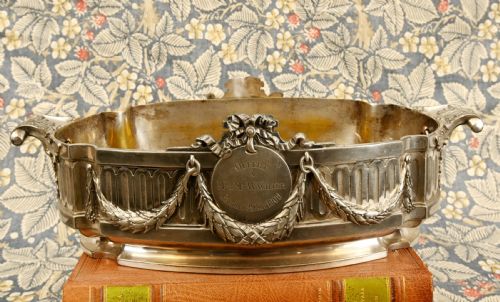


Neoclassical Metal Bowl
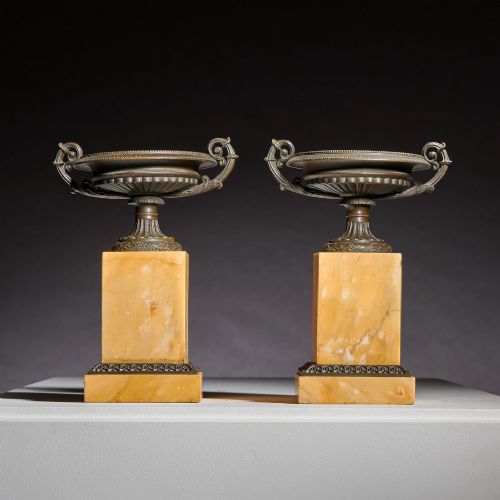
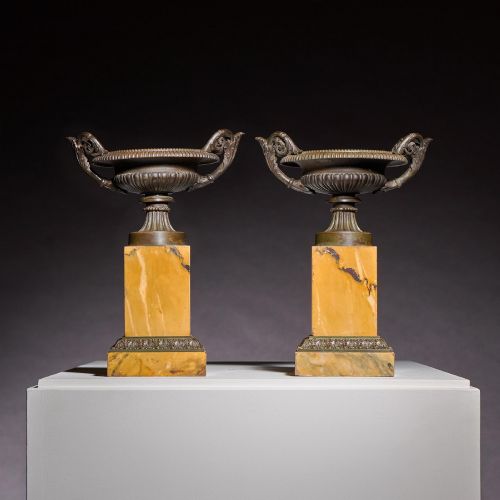
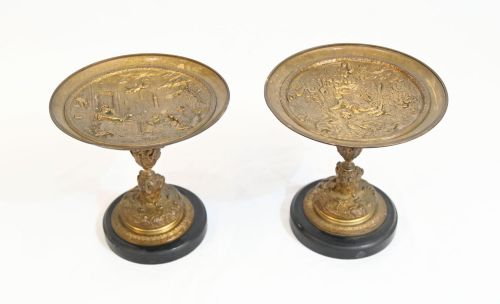
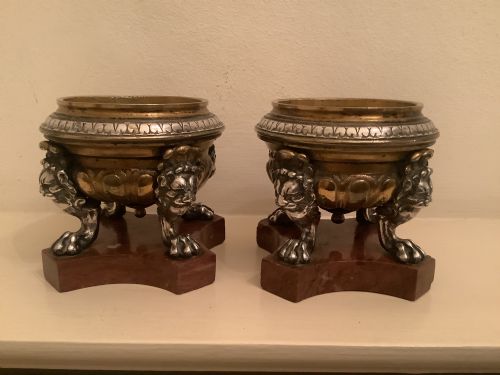
These neoclassical metal bowl examples bring classical bronze, marble, and ormolu into a room with genuine period presence.
Neoclassical Metal Bowl
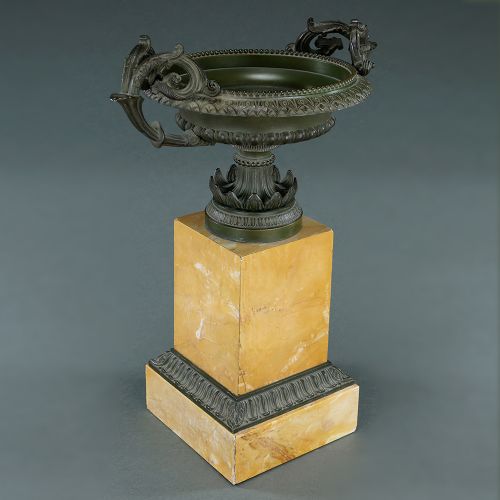
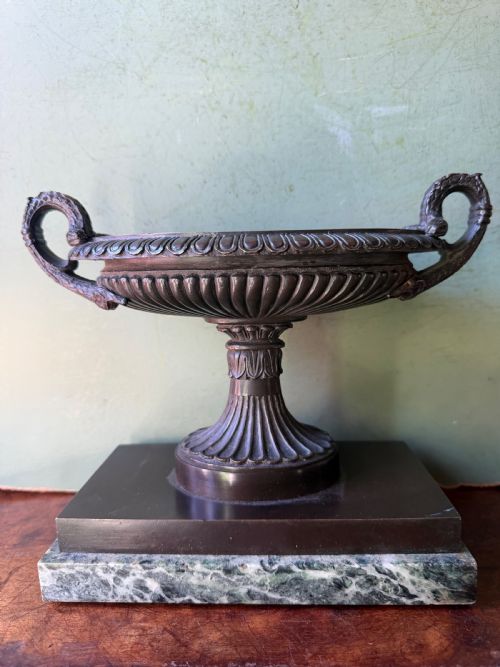
A neoclassical metal bowl typically takes the form of a tazza, coupe, or decorative vessel rooted in classical antiquity. These pieces draw upon French Empire, Grand Tour, and Victorian revivals, channelling ancient forms into domestic display objects.
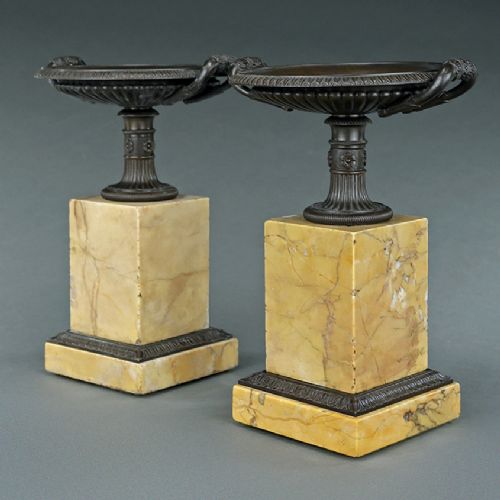
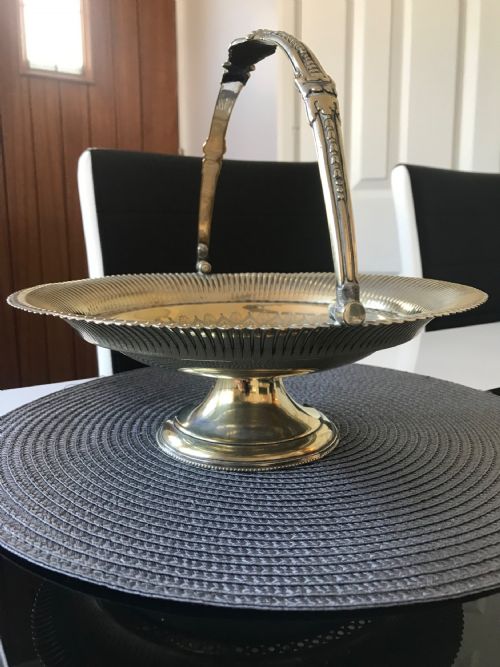
The versions most commonly found here are bronze and ormolu tazzas mounted on marble bases, alongside silver plated baskets and brass vessels. Many originate from nineteenth-century French workshops catering to travellers on the Grand Tour.
Makers often looked directly to classical sculpture and architecture for inspiration, translating ancient motifs into table ornaments and centrepieces. The resulting objects range from intimate library dishes to large pairs of grand proportions.
How they were made
Bronze casting and ormolu gilding form the primary construction methods for the sculptural elements of these vessels. Founders poured molten metal into detailed moulds before chasing the surface by hand to sharpen the cast definition.
Stonemasonry provides the heavy supporting elements, utilising turned Siena marble, red marble, and rouge griotte for bases and plinths. Craftsmen then pinned or screwed the metal bowls securely onto these stone foundations.
Electroplating and silver plating appear on later nineteenth-century fruit baskets and planters over base metals like brass and copper. This technique allowed workshops to produce bright, reflective surfaces without the cost of solid silver.
Neoclassical Metal Bowl Retail Price Guide 2026
Typical asking prices for neoclassical metal bowl among the pieces listed under this phrase on Sellingantiques today, from the lower quarter to the upper quarter. They describe what is for sale here now, not the wider market.
Diana the Huntress occasionally watches over your fruit from a pressed copper plaque bowl.
What varies in quality
The crispness of the bronze chasing and the weight of the cast determine the upper tier of these pieces. Superior examples exhibit deep, clean relief work where classical figures and leaf motifs retain sharp edges.
The selection and turning of the marble base separate standard production from exceptional work. Denser, richly coloured stones with harmonious veining elevate the architectural presence of the vessel.
The integration between the metal bowl and its stone base reveals the maker's care. High-grade assemblies fit flush without excess adhesive or awkward gaps.
The Neoclassical Metal Bowl Glossary
- Tazza
- A shallow bowl or cup mounted on a stem and foot, originating in classical antiquity. These vessels were frequently produced in pairs during the nineteenth century for display.
- Ormolu
- Gilded bronze achieved by applying a mercury and gold amalgam to the metal surface and firing it. This technique imparts a rich, warm golden lustre that resists tarnishing.
- Grand Tour
- A cultural journey undertaken by wealthy Europeans through France and Italy to study classical antiquities. Souvenirs from these travels included bronze tazzas cast after ancient models.
- Siena marble
- A yellow decorative limestone with dark grey or purple veining quarried in Italy. It provides a striking, colourful contrast to dark patinated bronze.
- Rouge griotte
- A deep red mottled limestone with white fossil inclusions, often used for nineteenth-century architectural bases. It adds substantial visual weight to smaller bronze vessels.
Neoclassical Metal Bowl: Frequently Asked Questions
What is a neoclassical metal bowl used for?
These vessels functioned primarily as decorative centerpieces, fruit baskets, or library ornaments in nineteenth-century interiors. Today they serve as striking display objects on tables, consoles, or mantelpieces.
Their classical proportions and rich materials make them natural focal points within a room. They require no special utility to hold attention.
How do I identify a Grand Tour piece?
Grand Tour pieces typically combine dark patinated bronze with turned Italian marble bases, referencing ancient archaeological finds. They often date from the nineteenth century and reflect classical motifs seen in Roman and Greek art.
Look for souvenirs brought back by travellers who visited classical sites in Italy. The craftsmanship often mimics excavated antiquities.
What is the difference between ormolu and bronze?
Bronze is an alloy of copper and tin used to cast the structural body of the vessel. Ormolu refers specifically to the application of gold gilding over that bronze surface.
Ungilded bronze retains a dark or patinated metallic finish. Ormolu provides a bright, golden decorative highlight.
How should I care for marble and bronze?
Dust bronze surfaces gently with a soft dry cloth to protect the patination or gilding. Avoid using abrasive cleaners or polishes that can strip the finish.
Marble bases require simple wiping with a damp cloth followed by immediate drying. Protect the stone from acidic spills if fruit is placed inside the bowl.