


Neoclassical Marble Lamps Pair
Neoclassical marble lamps pair pieces bring classical symmetry to a room, valued for their stone and metal mounts.
Neoclassical Marble Lamps Pair
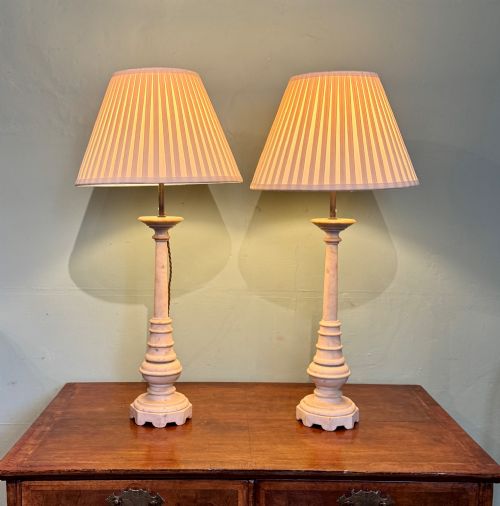
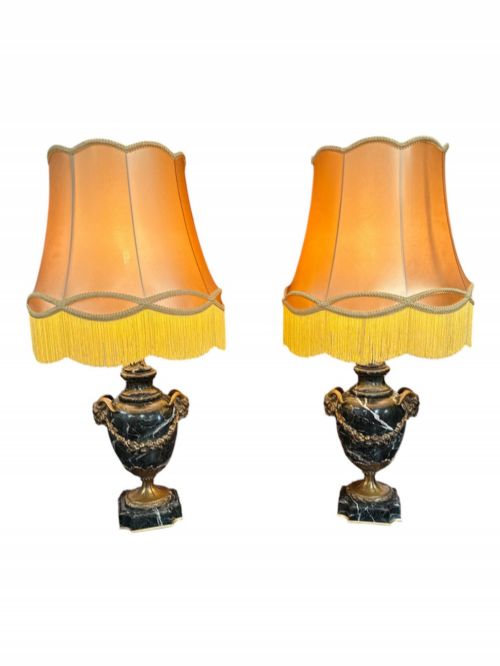
A neoclassical marble lamps pair consists of matching light fittings built from natural stone and metal mounts, following classical design rules. Buyers searching for neoclassical marble lamps pair items will regularly find table lamps and urn-form lights dating from the nineteenth century into the twentieth century. French interpretations dominate the selections, often reflecting Louis XVI style or Empire taste with disciplined proportions and symmetrical detailing.
The forms frequently adapt earlier decorative objects into functional lighting, transforming cassolettes, vases, and classical urns into table lamps. Alongside standard table heights, the evidence records occasional floor lamps, torcheres, and side tables incorporating marble elements. Origin points span France and Italy, with nineteenth-century and early twentieth-century examples appearing frequently across the inventory.
Materials and Construction
Makers shaped solid blocks of marble - including white, rouge, pink, and Siena varieties - to form the main body of each lamp. Turners and stonemasons polished the stone to highlight natural veining before mounting the components on weighted bases.
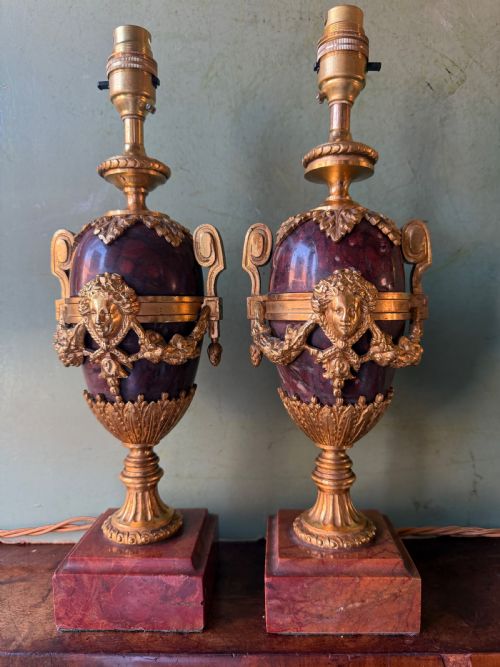
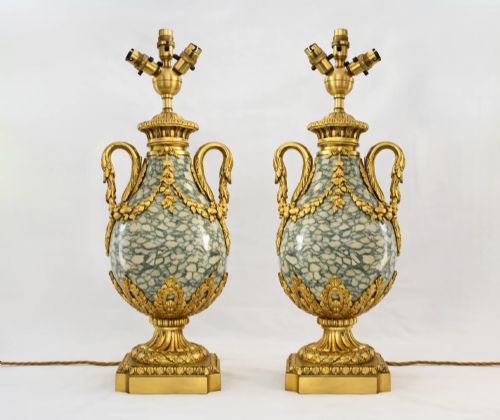
Metalwork played a defining structural and decorative role, utilising cast brass, bronze, gilt bronze, and ormolu. Artisans chased these metal mounts by hand to create crisp leaf motifs, beaded collars, and classical handles before securing them directly to the marble sections.
Listings feature marble, brass, gilt bronze, and ormolu across nineteenth and twentieth-century periods.
Assessing Quality
Quality rests upon the weight and selection of the marble itself, alongside the crispness of the cast metal mounts. Finer examples display deeply chased ormolu or gilt bronze details that retain sharp definition rather than soft, rounded edges.
Proportion and the integration of metal to stone dictate the upper tier of pieces. Superior pairs show careful turning of the marble body and secure, precise mechanical joinery between the stone components and the metal bases.
F. De Luca
The Neoclassical Marble Lamps Pair Glossary
- Ormolu
- Gilt bronze created by applying a mercury and gold amalgam to cast bronze. This technique produces a durable, rich golden surface finish found on nineteenth-century French mounts.
- Cassolette
- A decorative vessel featuring a reversible lid that functions either as a closed vase or an incense burner. These forms frequently convert into table lamps.
- Rouge Marble
- A rich red ornamental limestone characterised by white or grey calcite veining. It was widely utilised in French interior decoration during the eighteenth and nineteenth centuries.
- Siena Marble
- A distinctive yellow-gold Italian marble featuring dark grey or brownish brecciated veins. It provides a warm, striking ground for ormolu mounts.
- Louis XVI Style
- A neoclassical design movement marked by straight lines, symmetry, and classical architectural motifs such as fluting and acanthus leaves.
Neoclassical Marble Lamps Pair: Frequently Asked Questions
What periods do these lamps come from?
The available pieces span the nineteenth century and the early decades of the twentieth century, including items from the 1880s through the 1930s.
Many pieces adopt earlier eighteenth-century Louis XVI and neoclassical design vocabularies while being manufactured during later revival periods.
How do I identify French styles?
French neoclassical and Louis XVI examples typically feature disciplined symmetry, bronze or ormolu mounts, and classical architectural elements like columns or urn bodies.
Italian pieces in the selection show distinct regional stone choices, such as Siena marble, paired with simpler brass or bronze fittings.
What marbles are used in these lamps?
Stones recorded in the inventory include standard white marble, pink marble, Siena marble, and rouge marble.
Some twentieth-century interpretations also utilise alternative stone effects or alabaster alongside traditional quarried varieties.
Were these originally made as lamps?
Many nineteenth-century examples began as decorative cassolettes, vases, or urns before later conversion into functional lighting fixtures.
Others were produced specifically as table lamps or torcheres to incorporate classical stone elements into domestic interiors.