





Neoclassical Mantle Urns
Neoclassical mantle urns bring formal proportion and classical dignity to a room, drawing on ancient forms for ornamental effect.
Neoclassical Mantle Urns
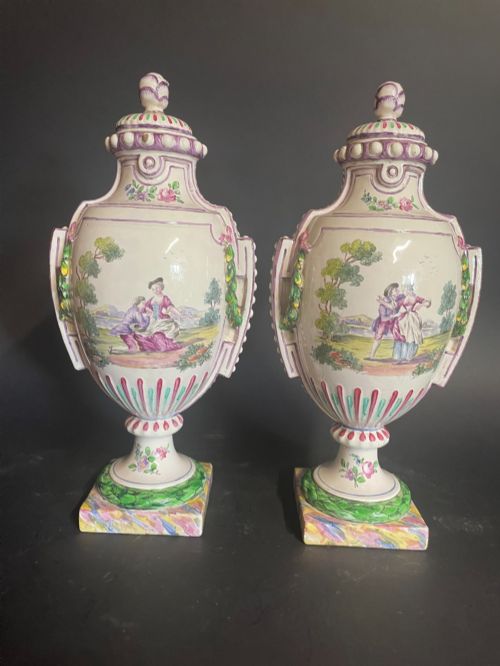
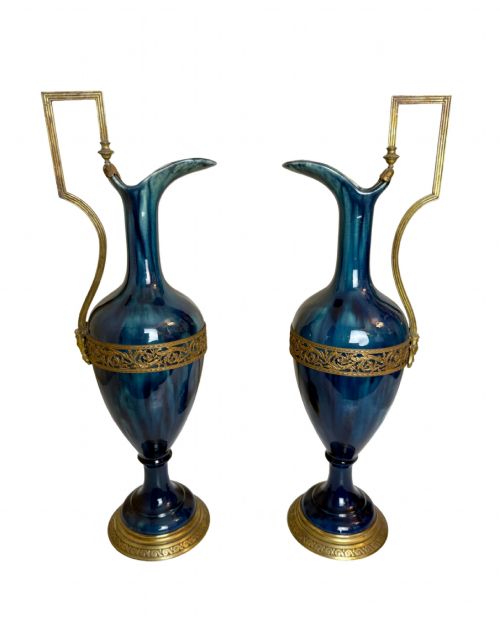
When you search for neoclassical mantle urns, you encounter decorative vessels, vases, and garniture pieces that reflect the classical revival movements of the nineteenth century. These objects draw inspiration from Greek and Roman antiquity, often taking the form of handled urns or decorative vases placed upon mantels and side tables.
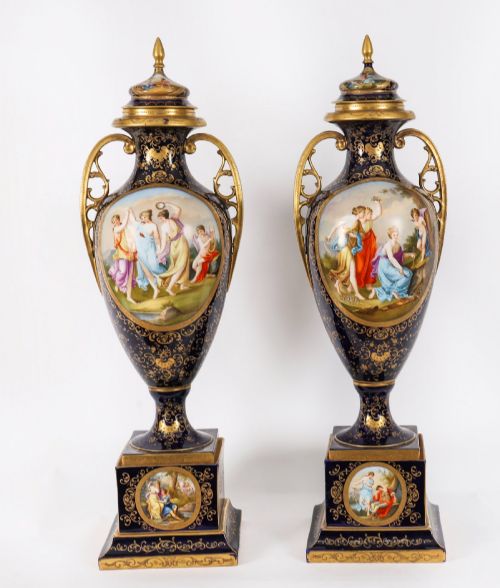
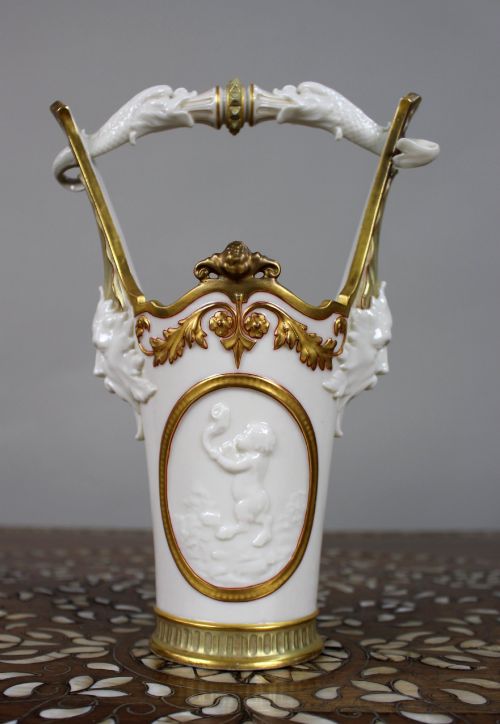
Makers and manufacturers represented in the wider selection include Royal Vienna and Royal Worcester, alongside French workshops producing alabaster and gilt bronze. These decorative objects served primarily to ornament principal rooms in domestic interiors, anchoring the symmetry of a chimneypiece.
What varies in quality
Quality in these decorative pieces rests upon the crispness of the casting in metal mounts and the finesse of the hand-painting on porcelain surfaces. Finer examples display meticulous brushwork, vibrant enamel colours, and securely fitted bronze or brass mounts without visible gaps.
The choice of raw materials also dictates the grade of the piece, with high-grade items utilising genuine Sienna marble, heavy porphyry, or finely detailed French porcelain rather than simpler earthenwares or painted timber substitutes.
Neoclassical Mantle Urns Retail Price Guide 2026
Typical asking prices for neoclassical mantle urns among the pieces listed under this phrase on Sellingantiques today, from the lower quarter to the upper quarter. They describe what is for sale here now, not the wider market.
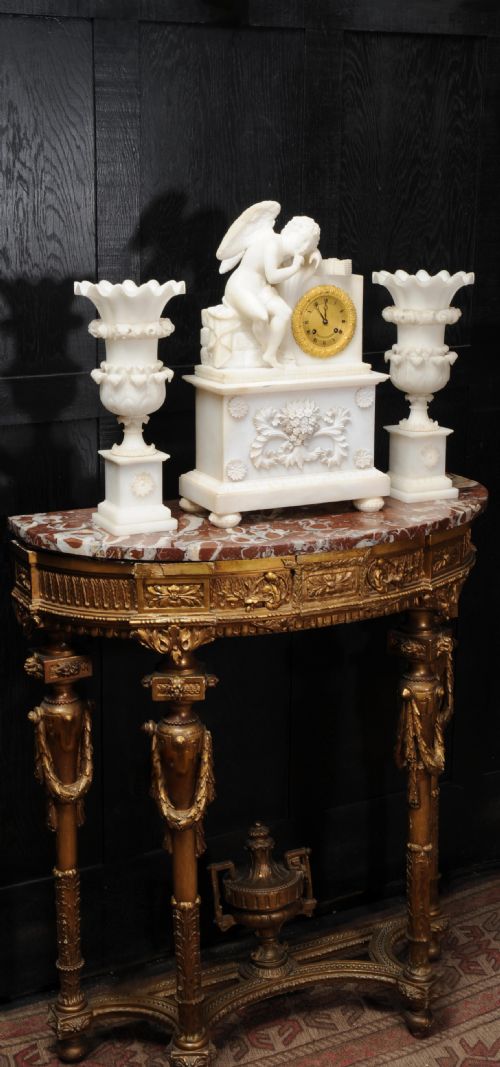
Cupid occasionally oversees your mantelpiece, captured in alabaster by French hands while keeping watch over the parlour clock.
Royal Vienna·Royal Worcester·Etienne Maurice Falconet
The Neoclassical Mantle Urns Glossary
- Garniture
- A set of matching decorative objects, typically consisting of a central clock flanked by two matching urns or vases, designed to sit on a mantelpiece.
- Pediment
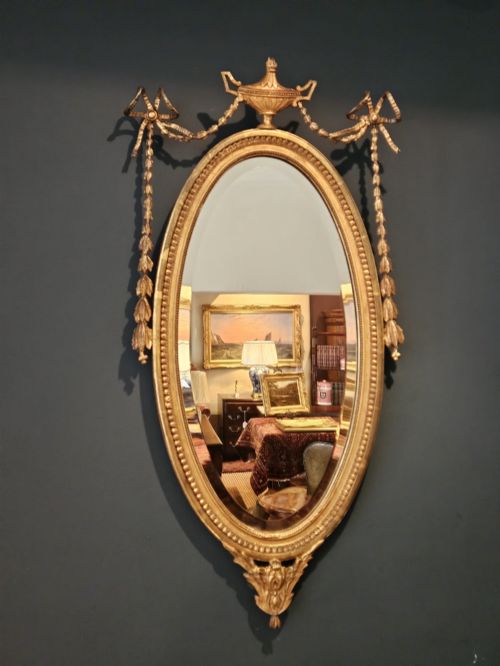
- The triangular or decorative architectural crowning feature above a mirror frame, upon which carved urn motifs are frequently mounted.
- Porphyry
- A hard igneous rock with large crystals, valued in decorative urns for its rich purple or reddish colour and speckled texture.
- Ormolu
- A metallic technique used for applying finely ground high-carat gold to bronze objects, commonly seen on nineteenth-century French clock trims.
Neoclassical Mantle Urns: Frequently Asked Questions
Where should I place these urns?
These decorative vessels sit naturally upon a mantelpiece, sideboard, or console table where their vertical proportions can be fully appreciated.
Pairs look balanced when placed at either end of a mirror or framing a central clock in a garniture arrangement.
How do I identify nineteenth-century pieces?
Nineteenth-century items often display specific material combinations, such as hand-painted porcelain with gilt bronze trim or Sienna marble bodies.
Examining the underside of ceramic bases or the casting quality of metal mounts helps reveal the period manufacturing methods.
Are these urns waterproof?
Most mantle urns and decorative vases from this period were designed strictly for display rather than holding water and fresh flowers.
Using them for floral displays risks damaging delicate interior glazes, painted enamel surfaces, or porous stone bodies.
What is a clock garniture?
A clock garniture is a matching decorative set comprising a central mantel clock accompanied by two side urns or vases.
This arrangement creates a cohesive symmetrical display designed to unify the decor of a formal nineteenth-century room.