


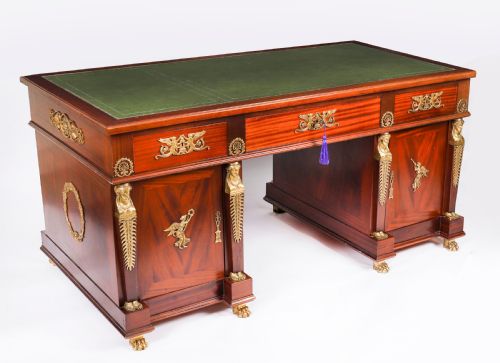
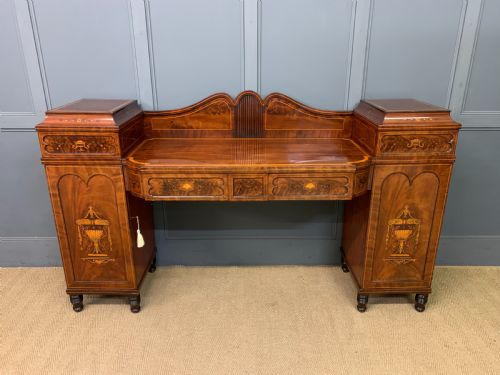


Neoclassical Mahogany Pedestal
These neoclassical mahogany pedestal pieces combine classical dignity with rich timber, offering a grounded classical presence for your interior.
Neoclassical Mahogany Pedestal
A neoclassical mahogany pedestal brings formal architectural balance and rich timber grain to an interior space. These furnishings emerge from periods spanning the Georgian era, the Regency epoch, and the nineteenth and early twentieth centuries.
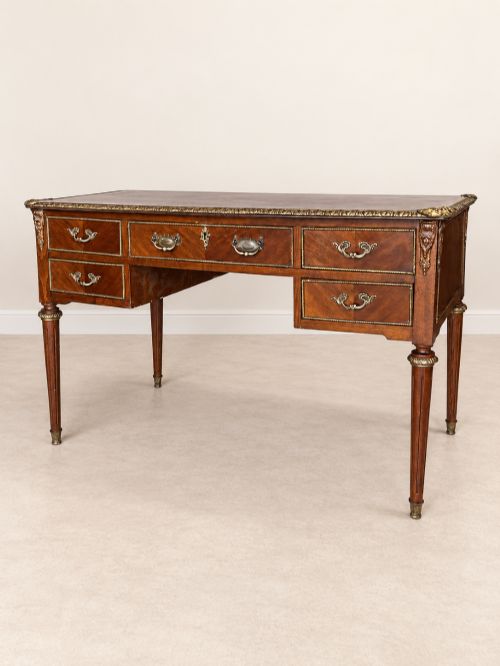
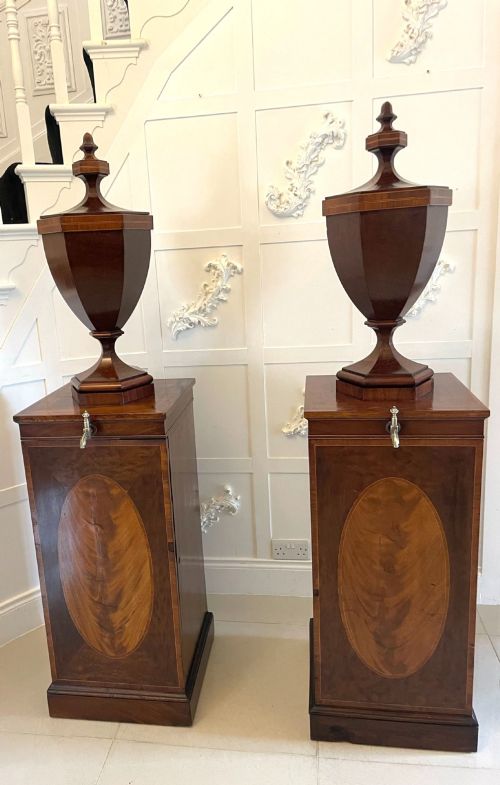
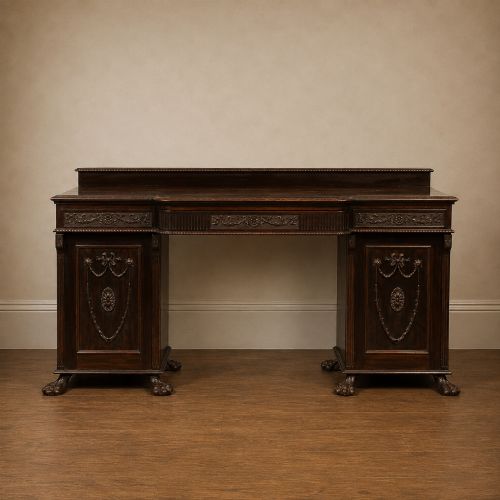
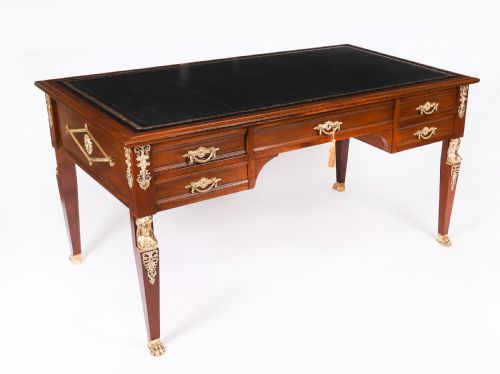
The selections on this page encompass specific pedestal forms alongside related neoclassical sideboards, desks, bedside cabinets, and tables. Buyers will frequently encounter nineteenth century French Empire examples alongside George III and Edwardian pieces.
Cabinet makers constructed these items to anchor a room, serving functional roles as display supports, storage cabinets, or writing surfaces. Their forms draw directly on classical Greek and Roman motifs executed in rich timbers.
How they were made
Craftsmen built these furnishings primarily using solid and veneered mahogany, often embellished with satinwood and boxwood inlay. Cabinet makers selected timber figures carefully to create balanced grain patterns across panels and table tops.
Metal enrichment played a central role in neoclassical design, utilising cast brass and ormolu mounts to accent structural lines. Workshops also incorporated white and black marble tops, leather writing surfaces, and carved wooden details such as paw feet and animal heads.
Listings feature mahogany timber paired with marble, ormolu, brass, and satinwood across eighteenth, nineteenth, and twentieth century periods.
What varies in quality
The refinement of the cast bronze and ormolu mounts separates standard joinery from superior atelier production. Crisp chasing in the metalwork and tight, precise wood marquetry indicate a higher tier of manufacture.
Proportion and architectural harmony dictate the distinction between simpler domestic items and pieces designed for grand townhouses. Original mounts, intact marble slabs, and retaining hardware elevate the standing of any pedestal or cabinet.
The Neoclassical Mahogany Pedestal Glossary
- Ormolu
- Gilded bronze applied as a decorative mount on furniture. This technique gained widespread use during the French Empire period to highlight structural corners and friezes.
- Guéridon
- A small circular table supported by a single central column or pedestal. French makers produced these frequently in mahogany during the nineteenth century.
- Inlay
- A technique where pieces of contrasting timber such as satinwood or boxwood are inserted into the main mahogany surface. This method creates geometric patterns and decorative borders.
- Breakfront
- A cabinet or sideboard construction where the central section projects forward from the flanking sides. This architectural arrangement creates depth and shadow within large furniture forms.
- Torchere
- A tall, slender stand designed to hold a light or decorative object. These pieces often feature carved wooden shafts and stable pedestal bases.
Neoclassical Mahogany Pedestal: Frequently Asked Questions
What is a neoclassical mahogany pedestal?
A neoclassical mahogany pedestal is a formal display or support stand constructed from mahogany timber using classical architectural proportions and ornament. These items draw inspiration from ancient Greek and Roman design.
They appear across Georgian, Regency, and later nineteenth century periods, often incorporating brass mounts or inlaid satinwood details.
How do I date a neoclassical pedestal?
Dating relies on examining timber preparation methods, secondary woods used in construction, and the style of decorative mounts. Georgian and Regency pieces show specific joinery traits distinct from later Edwardian or twentieth century revivals.
Cabinet makers of different eras applied distinct carving techniques and brass casting standards which help anchor the period of origin.
Are these pedestals purely decorative?
While many serve to elevate decorative objects or urns, certain pedestal forms incorporate enclosed cupboards, secret compartments, or drawers for practical storage. Bedside versions and pedestal cabinets offer concealed utility alongside classical dignity.
The inclusion of internal shelving or compartments varied according to the specific domestic function required by the original owner.