


Curved Door Cupboard
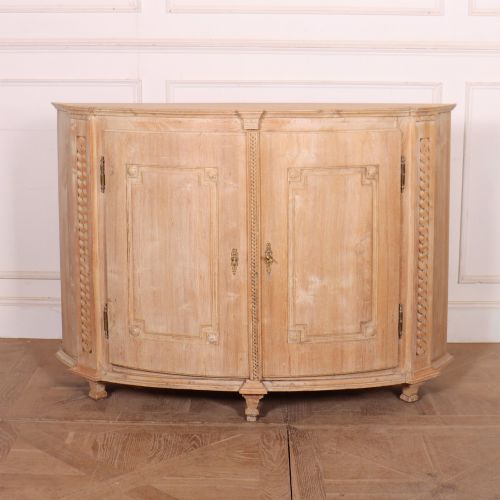
These curved door cupboard pieces bring clever corner engineering and smooth rounded profiles into rooms that need warm wood.
Curved Door Cupboard
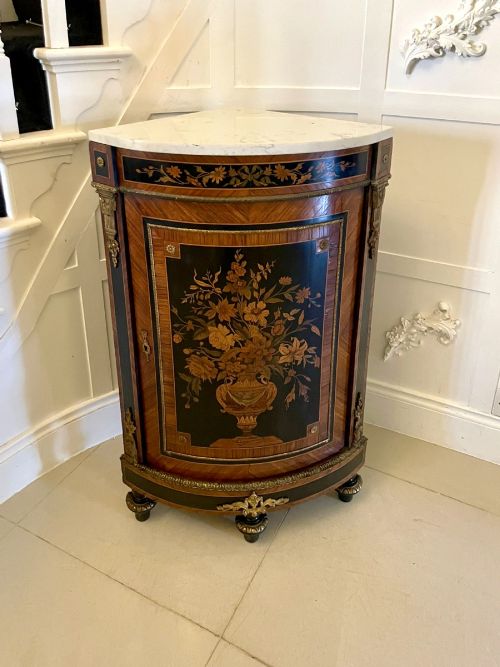
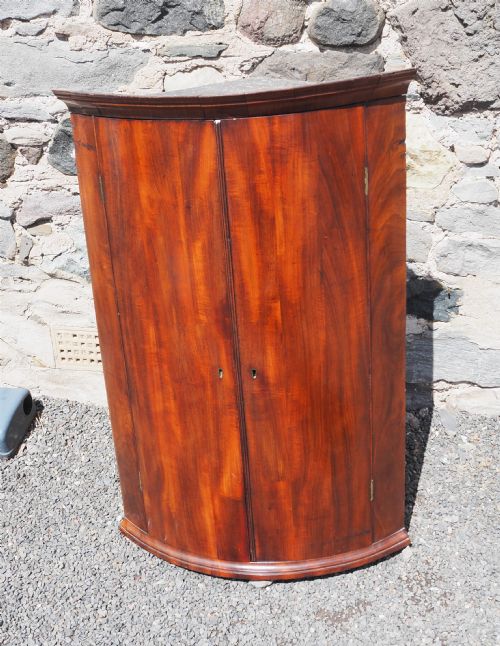
A curved door cupboard solves difficult angles and tight corners by offering rounded storage in formats ranging from tall wardrobes down to compact bedside cabinets. When searching for a curved door cupboard, buyers encounter forms that hug corners or present sweeping bow fronts and demi-lune shapes.
The pieces appearing here span centuries from the eighteenth century through the Victorian and Edwardian eras up to the Art Deco period. Origins stretch across Britain, France, Scandinavia, and the Netherlands, bringing varied regional timber choices and decorative treatments to the category.
Corner cupboards and bedside cabinets dominate the smaller formats, while triple wardrobes and extensive sideboards provide larger storage solutions. Each version uses its curved geometry to soften room layouts while concealing interior shelving or hanging space.
How they were made
Cabinet makers relied heavily on rich hardwoods like mahogany, walnut, oak, and birch, often applying fine veneer surfaces over solid carcases to achieve sweeping curves. Tambour construction allowed flexible wooden slats to slide smoothly around rounded tracks on specialised pieces.
Decorative detailing incorporates marquetry inlay work alongside functional bronze and brass hardware such as fitted feet and hinges. Marble tops frequently crown French style cabinets to provide durable, polished upper surfaces.
Secret tambour tracks let stubborn wooden strips glide around corners with the silent satisfaction of a well-oiled drawer.
What varies in quality
The sophistication of the curving timber work dictates the refinement of each piece, distinguishing simple bent panels from complex tambour mechanisms or intricate marquetry scenes. Selecting timber with rich grain patterns elevates the visual weight of the curved doors.
Integration of original hardware like brass feet, handles, and hinges separates standard production from finer workshop execution. The precision with which marble slabs fit flush against wooden shoulders marks the standard of upper tier examples.
The Curved Door Cupboard Glossary
- Bow front
- A convex curved cabinet front that projects outward from the centre. This shape softens room angles while increasing interior volume.
- Demi-lune
- A half moon shape describing furniture with a curved front and flat back designed to sit against walls. The form suits smaller halls and reception rooms.
- Tambour
- Slats of wood glued to a fabric backing allowing doors to slide around curved corners. The technique requires precise joinery to operate smoothly.
- Marquetry
- Inlays of different coloured woods arranged to form decorative pictures or geometric patterns on cabinet doors. Artisans cut veneers meticulously to achieve tight joints.
- Compactum
- A large fitted wardrobe combining hanging space, drawers, and shelving within one multi-door unit. Victorian makers popularised the form for efficient bedroom storage.
Curved Door Cupboard: Frequently Asked Questions
Where should I place a curved corner cupboard?
These cabinets fit neatly into empty 90 degree room angles where standard square furniture leaves dead space. Their rounded profiles draw the eye smoothly around corners.
They work particularly well in dining rooms for glassware or hallways needing compact storage.
How do tambour doors operate?
Tambour doors consist of narrow vertical wooden strips attached to a flexible backing fabric that slides along a curved track. This allows access in tight spots where swinging doors would hit nearby walls.
Regular gentle use keeps the tracks clear and functioning correctly.
What is the difference between bow front and concave?
A bow front curves outward into the room, adding presence and depth to the cabinet face. A concave shape curves inward away from the room.
Both styles break up rigid rectangular lines in traditional interiors.
How do I identify a Georgian piece?
Georgian cabinets often feature solid mahogany or oak construction with understated classical proportions and minimal exterior ornamentation. Look for pegged joinery and traditional brass cabinet hardware.
Inspect the interior timber for age related wear and construction methods typical of the eighteenth century.