



Neoclassical Lidded Vessel
A neoclassical lidded vessel brings ancient architectural harmony into a room through carved stone, bronze, and porcelain.
Neoclassical Lidded Vessel
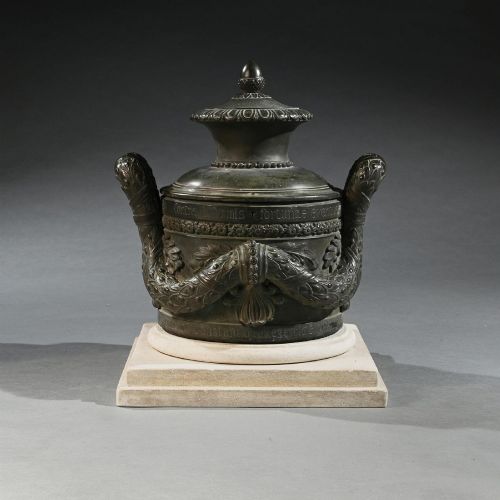
A neoclassical lidded vessel draws upon ancient Greek and Roman architectural vocabulary, taking the form of urns, vases, and covered cups designed purely for display or formal service. The pieces encountered here span the eighteenth and nineteenth centuries, including Georgian and Victorian examples alongside French and Italian interpretations.
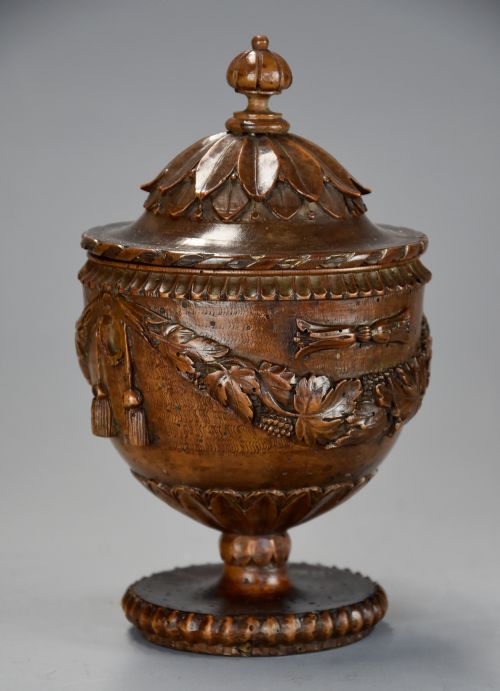
Most items adopt classic proportions with pedestal bases, handles, and fitted covers, appearing in materials ranging from carved marble and walnut to porcelain and bronze. One meets both diminutive chestnut urns and substantial Grand Tour souvenirs made to echo antiquity.
The decorative language relies on classical restraint, featuring allegorical scenes, Latin inscriptions, or simple fluted profiles rather than heavy ornamentation.
Materials and construction methods
Makers utilised durable hardstones such as Breccia Medicea and rouge griotte marble alongside cast bronze and fine porcelain, often mounting metal elements onto stone bases. Woodworkers turned walnut on lathes to achieve symmetrical classical profiles.
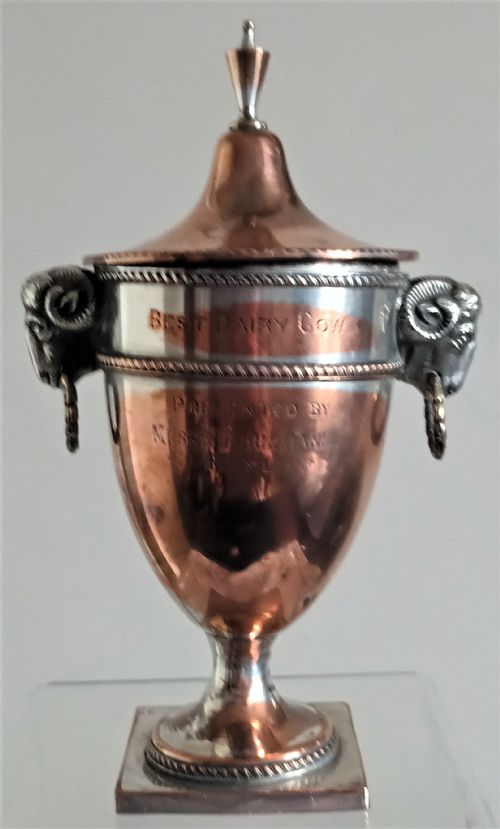
Surface finish involved intricate enamel painting, gilding with gold leaf, and silver plating over copper bases using the Old Sheffield Plate technique. Bronze components required traditional lost-wax casting before being hand-chased to sharpen the architectural details.
Materials represented across the selection include porcelain, bronze, walnut, Breccia Medicea marble, and Old Sheffield Plate.
Evaluating craftsmanship and material selection
Quality rests upon the purity of the material and the crispness of the hand-carved or cast detail, where superior stones display rich, natural veining and metalwork shows sharp relief without softening. Finely painted porcelain incorporates delicate allegorical scenes executed with precise brushwork rather than mechanical transfers.
Proportion and structural integrity define the better pieces, ensuring that the lid rests flush with the vessel and that pedestal mounts remain entirely stable. The sophistication of the design, whether an Italian Grand Tour souvenir or a Mansfield decorated porcelain vase, dictates the level of artistic ambition.
The Neoclassical Lidded Vessel Glossary
- Grand Tour
- A traditional trip through Europe undertaken by upper-class young men to study classical art and architecture, generating a market for portable bronze and marble souvenirs. These objects often replicated famous antique sculptures and monuments.
- Old Sheffield Plate
- An early composite material made by fusing a layer of silver to a thick copper base under high heat. This technique allowed makers to produce items with the appearance of solid silver.
- Vermeil
- Sterling silver plated with a thin layer of gold. The process creates a rich, warm metallic finish often utilised on decorative covered bowls and cups.
- Breccia Medicea
- A distinctive decorative marble featuring angular fragments embedded in a contrasting matrix, valued for its striking multicoloured appearance in classical urns.
- Mansfield decorated
- A specific style of porcelain ornamentation associated with early factory production around the turn of the nineteenth century. It applies distinctive enamel palettes to ceramic body forms.
Neoclassical Lidded Vessel: Frequently Asked Questions
What is a neoclassical lidded vessel?
A neoclassical lidded vessel is a decorative container inspired by ancient Greek and Roman forms, featuring architectural proportions and classical motifs such as urns or covered cups.
These pieces were produced primarily during the eighteenth and nineteenth centuries in materials like bronze, marble, porcelain, and silver.
How were these vessels used historically?
Many of these pieces served as decorative ornaments on mantelpieces, sideboards, or console tables to signal an owner's classical learning and refined taste.
Some specialised examples functioned as chestnut urns on dining tables or as chocolate cups for formal domestic service.
How do I care for a marble or bronze urn?
Stone and metal surfaces require only gentle dusting with a soft, dry cloth to prevent the accumulation of grit in carved crevices.
Avoid using abrasive cleaning products or chemical polishes that can strip patination from bronze or etch polished marble surfaces.
How can I distinguish an eighteenth-century piece from a nineteenth-century copy?
Dating relies on examining the manufacturing marks, the method of metal casting, and the specific composition of the ceramic body or stone.
Earlier eighteenth-century pieces often show hand-wrought assembly marks and simpler construction methods compared to later Victorian or Grand Tour souvenir productions.