






Neoclassical Half Moon Table
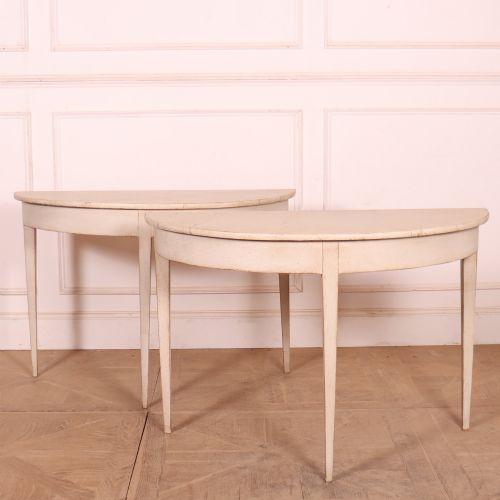
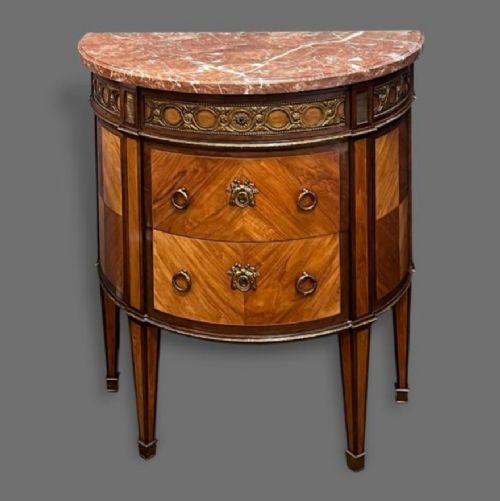
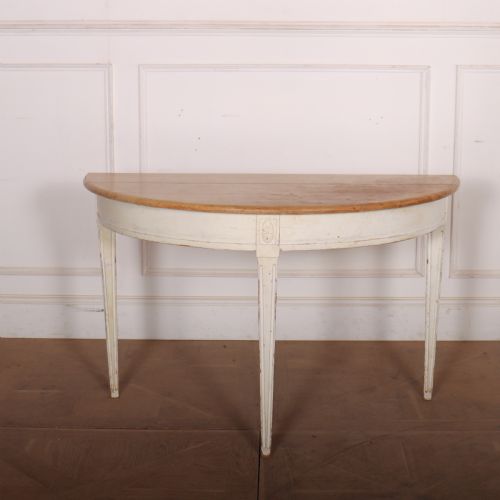
These neoclassical half moon table examples combine architectural symmetry with graceful curved proportions, offering a refined focal point for any hallway or reception room.
Neoclassical Half Moon Table
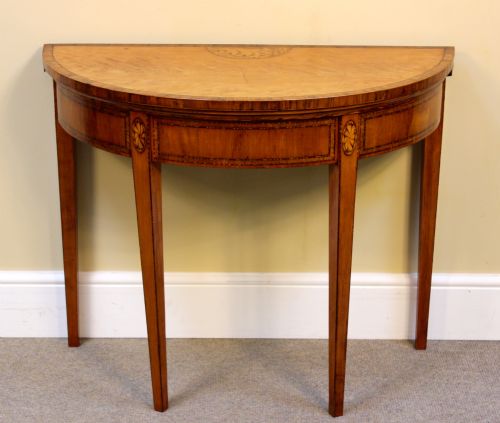
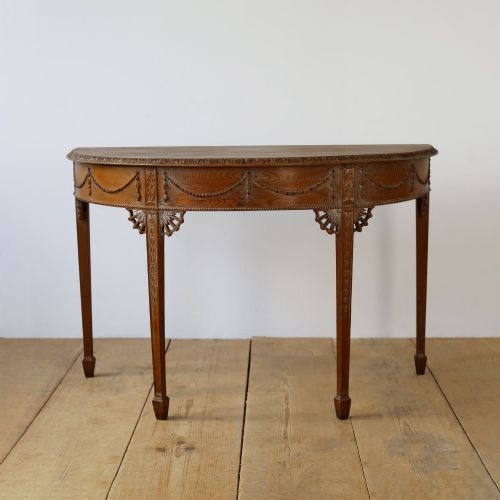
When you search for a neoclassical half moon table, you encounter semicircular console and pier tables designed to sit flush against a wall. The selections span 18th century Georgian origins through to 19th century interpretations and 20th century revivals.
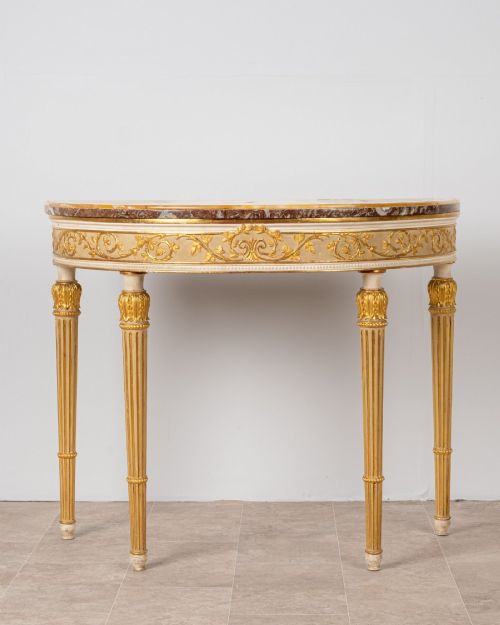
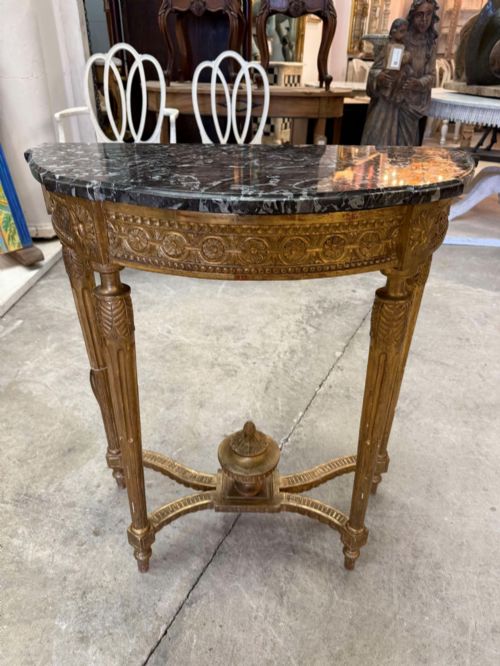
The primary forms on this page include console tables, side tables, and card tables featuring the characteristic flat back and curved front of the demi-lune shape. Makers from England, Italy, Sweden, and France adapted these geometric proportions for domestic and grand reception spaces alike.
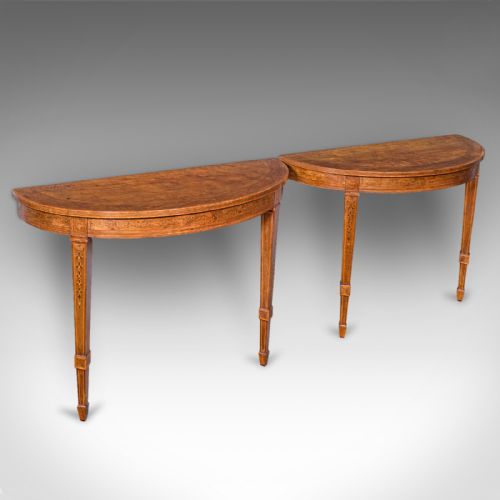
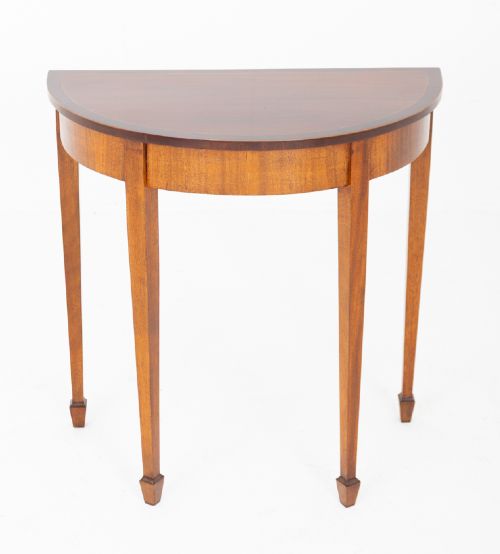
Mahogany and satinwood predominate amongst the wood surfaces, often accompanied by painted finishes, giltwood, and marble tops. These pieces frequently incorporate inlaid decoration reflecting the restrained symmetry of the period.
Materials and construction methods
Cabinet makers utilised solid timbers and veneers such as mahogany, satinwood, oak, and boxwood to build the curved carcasses of these tables. Complex marquetry, painted details, and inlaid motifs are applied across the semicircular tops and friezes.
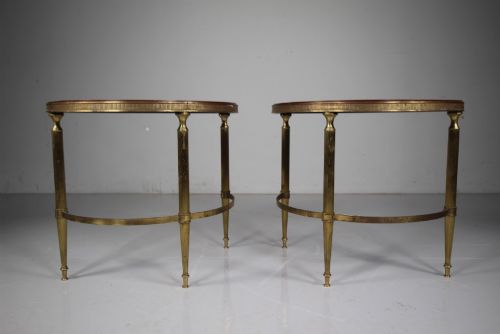
Structural embellishments involve carved wood, composition ornamentation, and giltwood highlights, occasionally paired with rouge marble tops and brass feet. French polishing and hand painting complete the decorative surfaces.
Neoclassical Half Moon Table Retail Price Guide 2026
Typical asking prices for neoclassical half moon table among the pieces listed under this phrase on Sellingantiques today, from the lower quarter to the upper quarter. They describe what is for sale here now, not the wider market.
Some demi-lune card tables secretly fold open to reveal hidden compartments for storing antique playing cards and counters.
Distinguishing quality across periods
The distinction between standard examples and museum quality pieces lies in the precision of the inlay, the complexity of the painted motifs, and the selection of fine veneers like figured satinwood. Timbers chosen for secondary woods and the crispness of carved details further separate regional workshops from master cabinet makers.
Original marble tops, integrated brass hardware, and documented provenance elevate specific items. The balance of proportion between the curved top and the supporting legs dictates the visual harmony of the finished piece.
Pietro Ferrario
The Neoclassical Half Moon Table Glossary
- Demi-lune
- A half-moon shape used to describe tables with a flat rear edge and a curved front. This configuration allows the furniture to stand neatly against a wall.
- Console table
- A table designed to be fixed against a wall, often supported by front legs with the rear secured to the architecture. They frequently served as decorative serving or display surfaces.
- Marquetry
- The art of applying pieces of veneer to a structure to form decorative patterns and pictorial designs. Cabinet makers used contrasting woods like satinwood and boxwood for this detailed work.
- Pier table
- A table designed specifically to stand against the wall space between two windows, typically positioned beneath a mirror. These items matched the formal neoclassical interior scheme.
- Giltwood
- Wood that has been coated with gold leaf or gold paint to provide a metallic finish. It highlights carved architectural details on grander examples.
Neoclassical Half Moon Table: Frequently Asked Questions
Where should I place a half moon table?
These tables suit narrow hallways, entrance spaces, and drawing rooms where floor depth is restricted. Their flat back allows them to sit securely against the wall without protruding too far into the walkway.
They also function effectively beneath mirrors or paintings, providing a stable surface for lamps, decorative bowls, or floral arrangements while maintaining an open circulation space.
How do I identify a neoclassical style?
Neoclassical pieces feature symmetrical lines, classical architectural motifs, and restrained ornamentation inspired by ancient Greek and Roman design. You will often see straight tapered legs, urn motifs, and geometric inlay.
In contrast to more ornate earlier styles, these tables rely on balanced proportions and refined surface decoration rather than heavy carving.
What is the difference between a console and pier table?
Console tables are generally secured to the wall and rely on the architecture for part of their stability, though many freestanding variants exist today. Pier tables historically occupied the specific wall pier between two windows.
Both terms describe semicircular or rectangular tables used primarily for display within formal neoclassical room schemes.
Are these tables suitable for everyday use?
Many examples are sturdy enough for daily use in living areas, provided they are treated with care regarding moisture and heat. Card tables with folding tops offer functional versatility as occasional dining or writing surfaces.
Delicate satinwood or painted surfaces require gentle maintenance and coasters to protect the historic finish from liquid rings and scratches.