


Neoclassical Glass Cabinet
These neoclassical glass cabinet examples bring structural symmetry and display capability to a room, spanning the late nineteenth century and Edwardian revivals.
Neoclassical Glass Cabinet
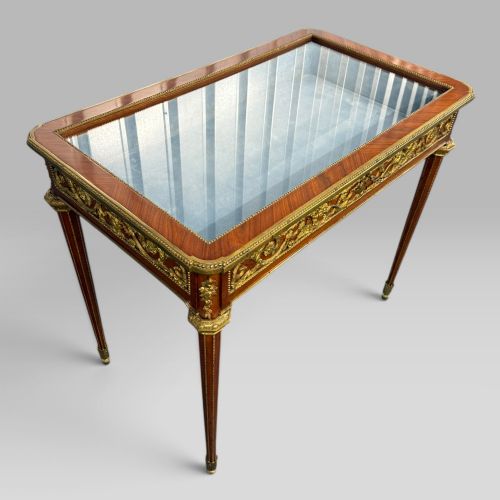
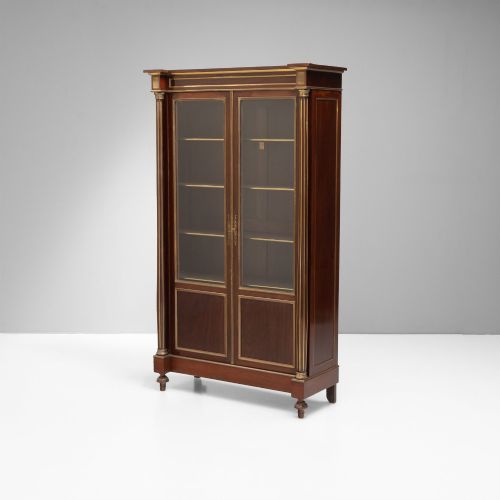
A neoclassical glass cabinet search uncovers formal display pieces designed to showcase objects behind glazed doors or glass panels. These range from tall upright vitrines and bookcases to low side cabinets and bijouterie display tables.
The pieces on this page draw on Adam style, Sheraton revival, and French Louis XVI influences. Makers interpreted these classical vocabularies in mahogany, satinwood, and walnut during the nineteenth and early twentieth centuries.
Materials and Construction
Makers built carcases in dense timbers like mahogany and walnut, frequently applying satinwood veneers for lighter visual contrast. Marquetry inlay and painted decoration provide the surface ornamentation characteristic of the revival styles.
Mounts in ormolu, brass, and gilt bronze frame the glass doors and highlight structural corners. Marble tops and fabric-lined interiors complete the construction of the finer display tables and vitrines.
The listings on this page span the Victorian, Edwardian, and 1930 periods, incorporating mahogany, satinwood, brass, and marble.
Standard of Manufacture
The caliber of a piece rests on the precision of its cabinetwork and the crispness of its mounts. Finer examples display meticulous marquetry and well-fitted glazed doors that move smoothly within their frames.
Attribution to documented makers and the retention of original painted decoration or gilt mounts elevate the standing of a cabinet. The choice of timbers, from figured mahogany to carefully selected satinwood, dictates the visual depth of the finished work.
François Linke·James Hicks·Jewell of Holborn·Paul Sormani·Waring & Gillow·Edwards & Roberts·C Hindley & Sons
The Neoclassical Glass Cabinet Glossary
- Vitrine
- A glass-fronted display cabinet intended for the presentation of porcelain and small artefacts. These pieces often feature glazed sides to maximise light penetration.
- Ormolu
- Gilded bronze mounts applied to furniture for decorative accent. The technique creates a bright metallic contrast against dark timber surfaces.
- Bijouterie table
- A low display table with a glazed top and compartment designed for jewellery and curiosities. They frequently stand on slender tapered legs.
- Marquetry
- Inlaid wood veneers arranged to form pictorial or geometric patterns. Makers utilised contrasting timbers to achieve tonal variation.
- Breakfront
- A piece of furniture where the central section projects forward from the flanking wings. This architectural arrangement adds depth to large bookcases and side cabinets.
Neoclassical Glass Cabinet: Frequently Asked Questions
How were these cabinets used?
Original owners utilised these cabinets to protect and exhibit valuable porcelain, silver, and curiosities. The glazed panels kept dust away while permitting light to reach the contents.
Table versions held smaller items like personal jewellery and medals beneath glass tops for close inspection.
How do I date a neoclassical cabinet?
Dating relies on identifying timber choices, construction methods, and revival stylistic markers. Pieces from the late nineteenth century often combine dense mahogany carcases with machine-cut brass or cast ormolu mounts.
Edwardian and later revival works frequently employ satinwood veneers and painted neoclassical motifs executed with distinct Victorian and twentieth-century workshop techniques.
Where should I place one at home?
These cabinets suit drawing rooms, libraries, and dining spaces where their reflective glass and polished wood can catch natural light. Tall vitrines require adequate wall clearance to let their symmetrical proportions register.
Table formats work well as centrepieces or against smaller wall spaces where their glazed tops remain accessible.