


Neoclassical French Sofa
A neoclassical french sofa brings architectural symmetry and classical restraint to a room, offering refined seating shaped by centuries of European design tradition.
Neoclassical French Sofa
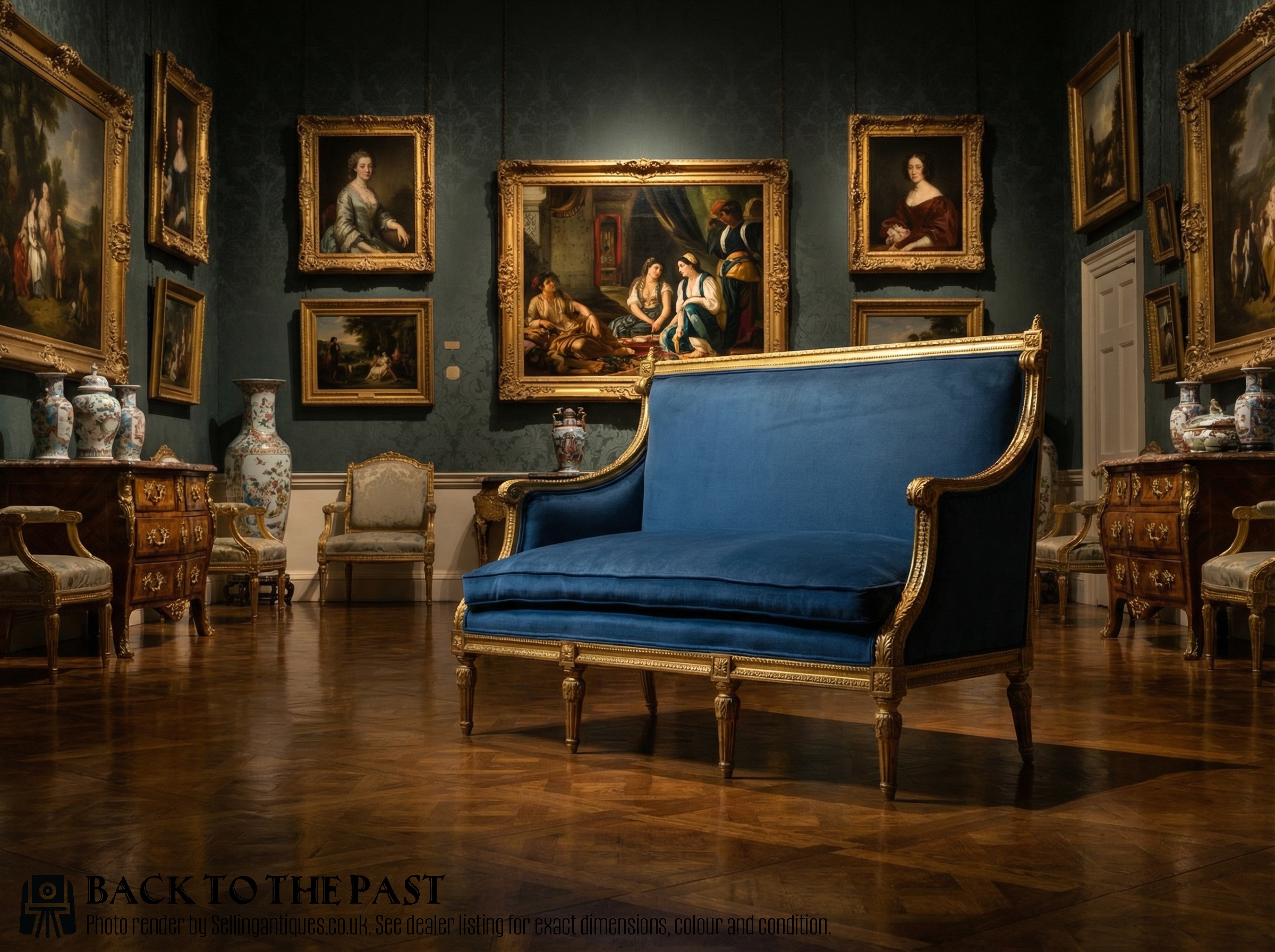
When you search for a neoclassical french sofa, you are looking at sophisticated seating expressions rooted in eighteenth and nineteenth century European craftsmanship. These pieces trace their lineage through Louis XVI, French Empire, and subsequent revival movements that favoured rectilinear frames, classical proportions, and restrained ornamentation over exuberant curves.
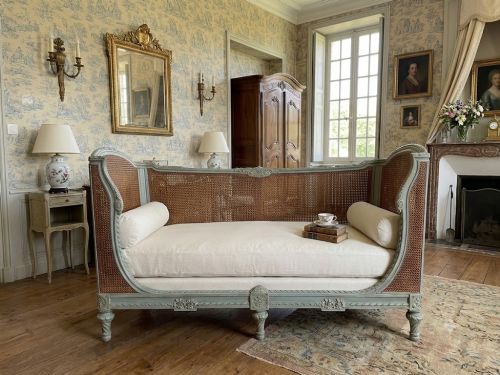
The variations on this page most frequently present as painted and caned daybeds, giltwood settees, and mahogany salon sofas dating from the nineteenth and early twentieth centuries. Alongside grand multi-seat settees, you will encounter smaller two-seat formats and triple-back daybeds originating from French and Swedish workshops.
These seating forms function equally well as focal points in formal reception rooms or as architectural accents in contemporary interiors. Their enduring appeal lies in the balance of structural rigidity, such as fluted legs and exposed wooden frames, with inviting upholstered or caned surfaces.
Evaluating Construction and Finish Quality
Quality in these seating forms resides primarily in the crispness of the timber carving and the integrity of the underlying joinery. Superior examples display sharp, hand-carved fluting, rosettes, and acanthus leaves rather than soft, moulded resin substitutes or blunt machine cutting.
The treatment of surfaces also dictates distinction, from the depth and burnish of genuine giltwood and ormolu mounts to the evenness of historic painted finishes. Original canework intact without breaks and frames maintaining tight, wobble-free joints separate exceptional pieces from heavily restored or structurally compromised alternatives.
Triple-back daybeds allowed nineteenth-century loungers to recline with architectural dignity while contemplating classical philosophy.
The Neoclassical French Sofa Glossary
- Cané
- Canework panels woven from rattan or similar natural materials, forming light and flexible seat or back inserts.
- Giltwood
- Timber coated with gold leaf over a prepared gesso base, creating a luminous decorative surface.
- Ormolu
- Finely cast and gilt brass or bronze ornamentation applied to furniture frames, characteristic of Empire design.
- Settee
- A medium-length upholstered or wooden seat with a backrest and arms, designed to accommodate multiple people.
- Gustavian
- The Swedish interpretation of neoclassical design, noted for pale painted finishes and simplified classical restraint.
Neoclassical French Sofa: Frequently Asked Questions
What is a neoclassical french sofa?
A neoclassical french sofa is a formal seat defined by classical architectural motifs, straight lines, and symmetry inspired by ancient Greece and Rome.
These pieces typically feature exposed wooden frames, fluted legs, and carved details associated with Louis XVI and Empire aesthetics.
How do I identify a revival piece?
Revival pieces are later interpretations, often dating from the nineteenth or early twentieth centuries, that replicate eighteenth-century classical styles.
Inspect the wood ageing, construction methods, and hardware to distinguish a nineteenth-century revival from an original period item.
Where were these sofas used?
Historically, these settees and daybeds occupied formal salons, parlours, and drawing rooms of grand European residences.
Today, they adapt well to living rooms, hallways, and bedrooms as statement seating pieces.
What maintenance do painted frames need?
Painted wooden frames require gentle dusting with a dry, soft cloth to protect the historic surface finish from moisture and abrasion.
Avoid chemical polishes that can degrade older oil or water-based paint layers.