


Neoclassical Desk Chair
A neoclassical desk chair brings formal symmetry and classical line to a study, blending utility with restrained ornament.
Neoclassical Desk Chair
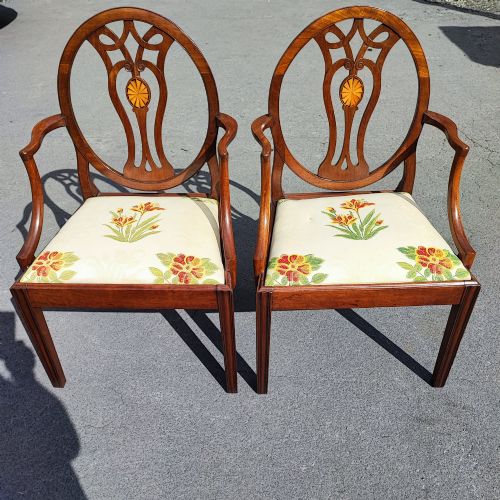
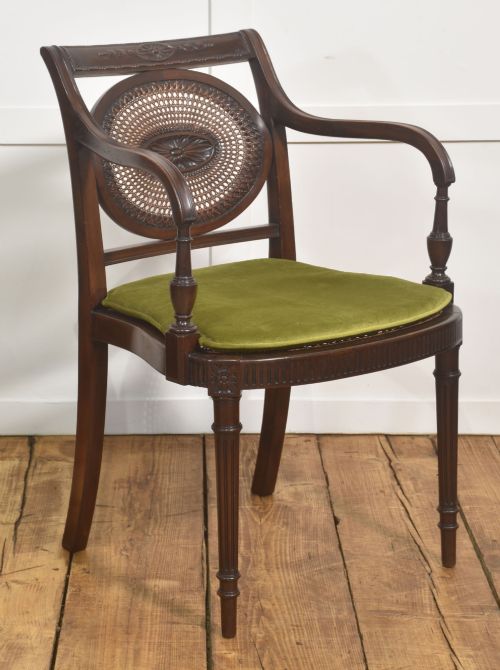
A neoclassical desk chair draws upon classical antiquity, utilising balanced proportions, tapered legs, and subtle carved motifs such as fluting or paterae. These pieces bridge the gap between architectural severity and domestic comfort, often appearing as open armchairs or specialised swivel and library forms.
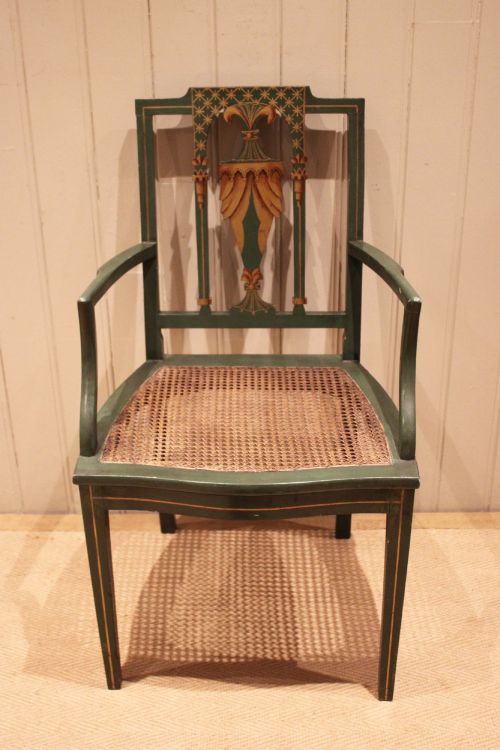
The selections available here span diverse periods, ranging from original Georgian and eighteenth-century examples to later nineteenth-century revivals like Sheraton Revival and French Empire. Mahogany, satinwood, and walnut form the structural backbone of these pieces, frequently paired with cane or upholstered seats.
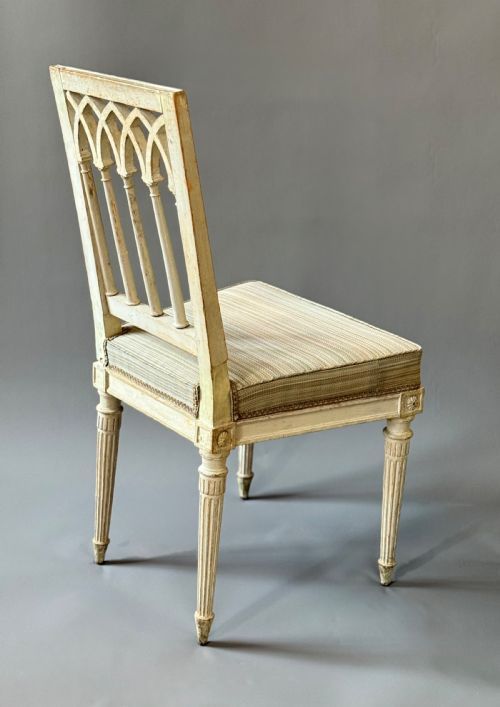
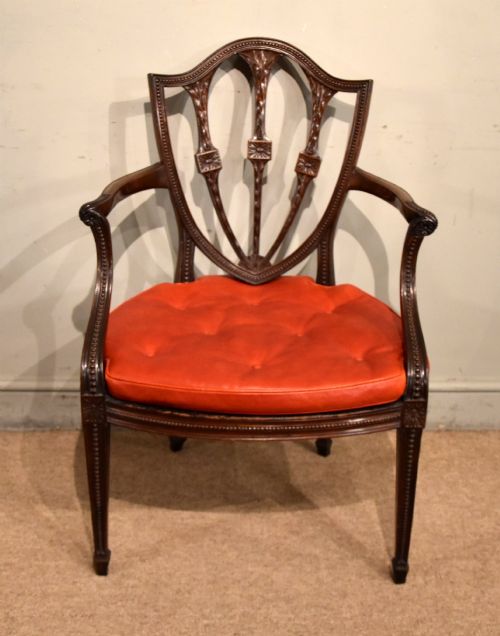
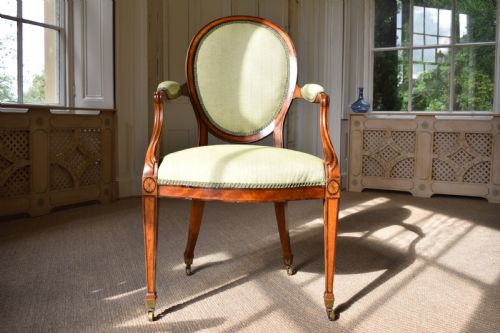
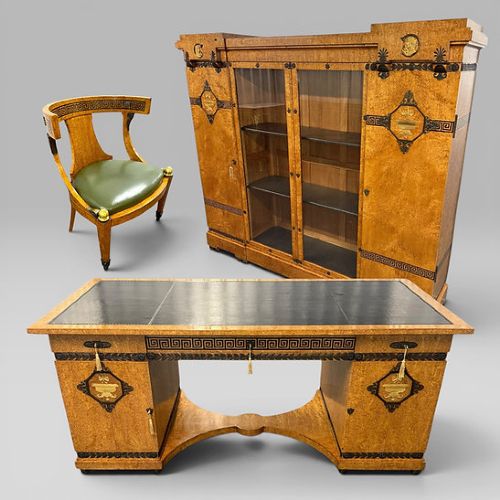
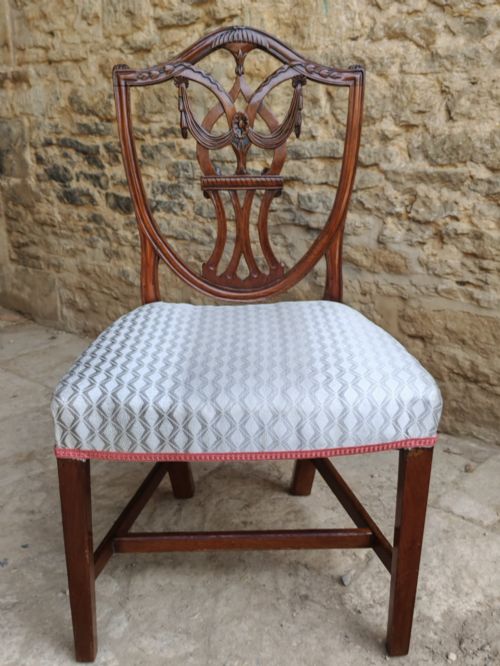
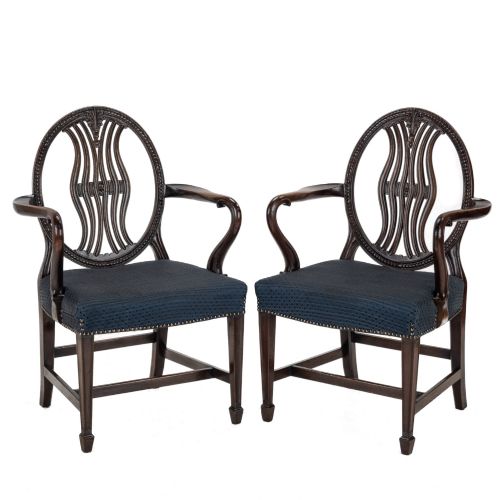
Buyers will encounter specific regional interpretations, including English Hepplewhite designs alongside French Empire Fauteuils du bureau and Swedish birchwood pieces. Each variant applies classical vocabulary differently, from shield-back dining adaptations to dedicated office armchairs.
Materials and construction
Cabinetmakers relied heavily on dense hardwoods such as mahogany, walnut, and satinwood to achieve crisp carved details and structural integrity. These timbers were often hand-carved with classical motifs, steam-bent for curved shield backs, or inlaid with contrasting veneers.
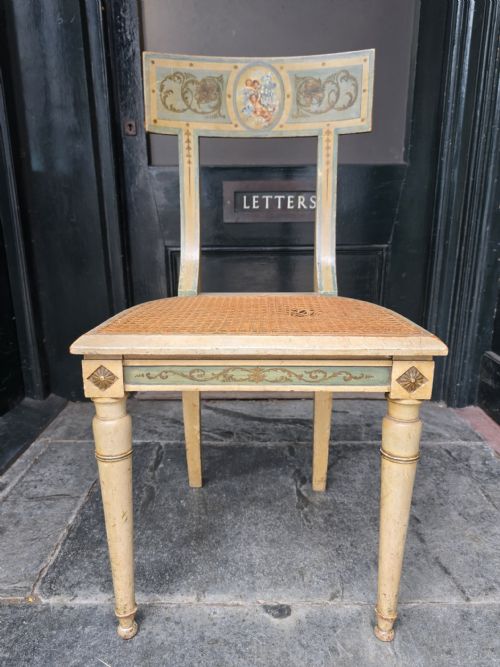
Surface treatments varied from traditional French polishing on exposed wood to painted and parcel-gilt finishes, particularly in French and Regency interpretations. Metal mounts in brass or ormolu frequently accented Empire and revival pieces, adding structural rigidity and visual contrast.
Listings feature mahogany, walnut, satinwood, and birchwood spanning periods from the eighteenth century through the Edwardian era.
Assessing quality and execution
The distinction between ordinary and exceptional pieces lies in the crispness of the hand-carving and the depth of the timber's grain. Superior examples exhibit precise joinery where frame members meet, alongside hand-applied patination that develops naturally over centuries.
Proportion and scale dictate the success of a design, with finer chairs maintaining structural harmony despite the demands of daily seating. The integration of auxiliary materials like cane, leather, or silk upholstery also reflects the original maker's investment in materials.
Mercier Freres·Gillows
The Neoclassical Desk Chair Glossary
- Neoclassical
- A style spanning the mid-eighteenth through nineteenth centuries inspired by the art and architecture of ancient Greece and Rome. It prioritises straight lines, symmetry, and classical motifs over baroque extravagance.
- Fauteuil
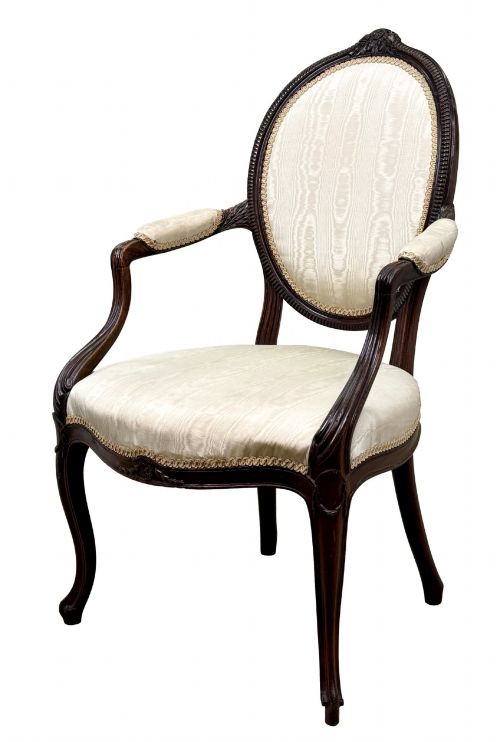
- An open-framed armchair with upholstered back and armrests, originating in France. The exposed wooden frame is typically carved and polished.
- Bergere
- An enclosed armchair with upholstered back and sides, frequently featuring cane panelling. It provides a deeper, more enclosed seat than standard open armchairs.
- Ormolu
- Gilded bronze used for decorative mounts and accents on furniture. It is characteristic of high-status French Empire and revival pieces.
- Shield Back
- A chair back shaped in the outline of a shield, popularised by Hepplewhite and Sheraton during the eighteenth century. It often incorporates pierced splats and delicate carving.
Neoclassical Desk Chair: Frequently Asked Questions
How do I spot a true eighteenth-century piece?
Examine the construction methods visible underneath the seat and behind the back panels, looking for hand-cut joints and timber ageing consistent with the period.
Compare the carving depth and wood species against documented examples from the same stylistic era to confirm authenticity.
Can I use an antique armchair at a modern desk?
Check the seat height and arm clearance carefully against your desk surface before purchasing, as historic chairs were often built lower than modern office furniture.
Consider adding a thin, custom leather pad if extra height is needed without altering the historic frame.
How do I maintain cane seats on a library chair?
Keep cane work lightly hydrated with a damp sponge occasionally to prevent the natural fibres from becoming brittle and snapping.
Avoid placing these chairs in direct sunlight or beside heat sources which dry out the organic materials prematurely.
What is the difference between Georgian and Regency styles?
Georgian furniture leans towards architectural restraint, carved mahogany, and classical proportions rooted in Palladian design.
Regency pieces introduce heavier classical antiquity influences, frequently incorporating brass inlay, ebonised details, and curule X-frame supports.