
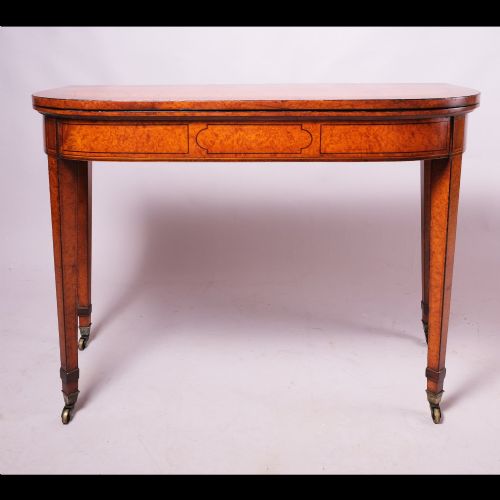
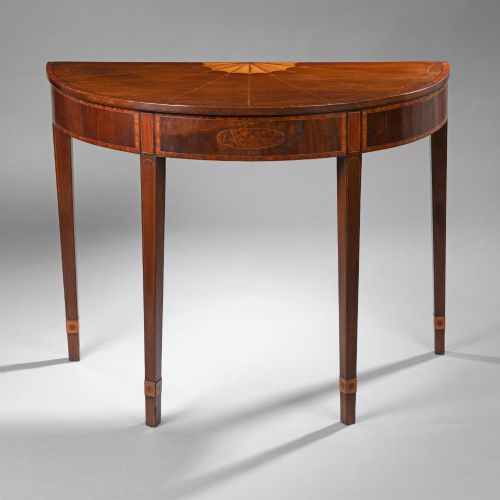

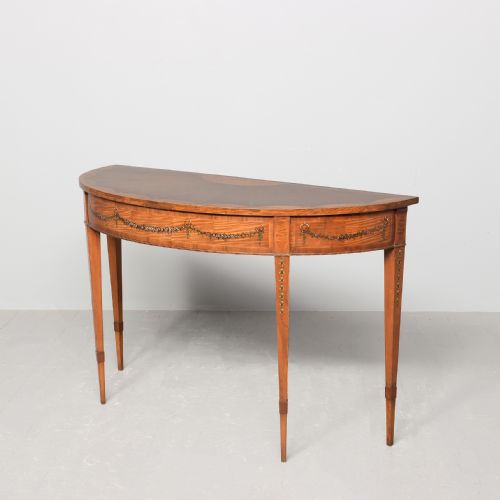
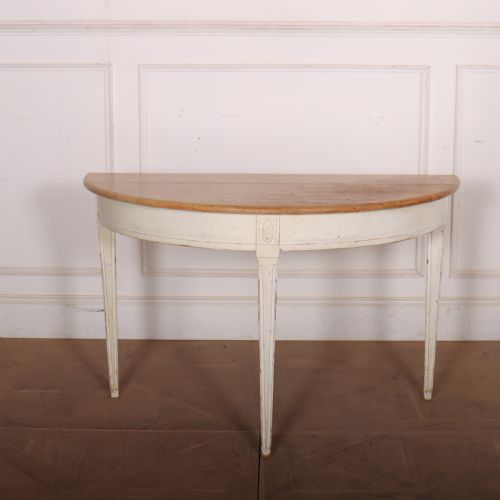


Neoclassical Demi Lune Console
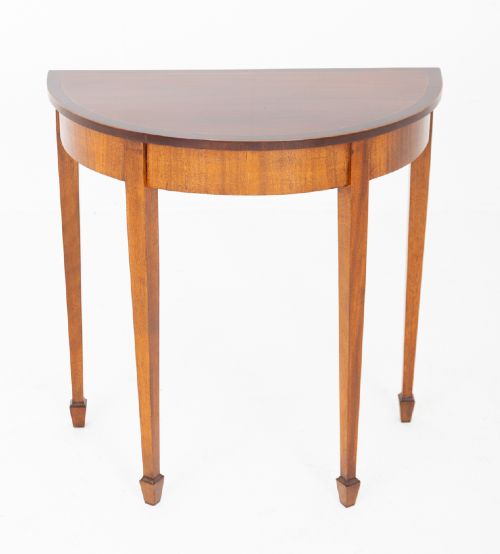
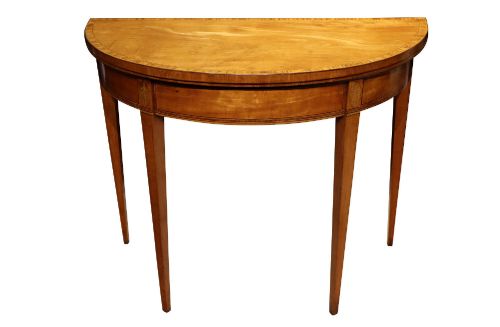
A neoclassical demi lune console brings architectural symmetry to a hallway or drawing room through its curved, half-moon silhouette.
Neoclassical Demi Lune Console
A neoclassical demi lune console sits flat against a wall, offering a shallow surface for display without crowding a room. When searching for a neoclassical demi lune console, buyers encounter pieces originating from the eighteenth century through the twentieth century.
The selection spans formal George III and Sheraton designs alongside later nineteenth-century revivals and early twentieth-century interpretations. Formats range from simple serving and side tables to card tables, games tables, and cabinets with painted or inlaid surfaces.
Evaluating craftsmanship
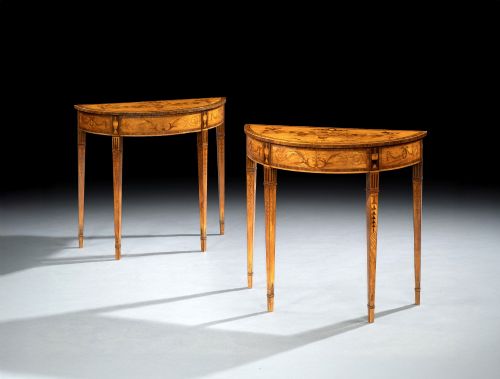
The refinement of the timber selection and the precision of the inlay dictate the standing of a piece. Finer examples display meticulous marquetry work and crisp carving along the frieze and legs.
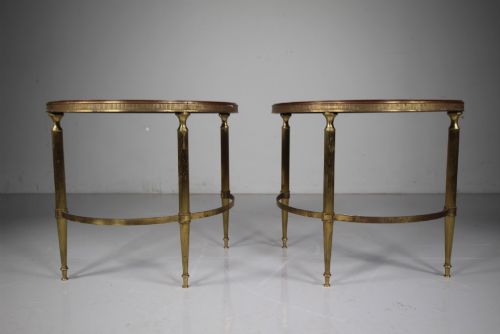
Hand-painted surfaces show varying degrees of artistry, from simple foliate motifs to detailed classical scenes. The presence of matching pairs elevates the desirability for larger reception spaces.
One Italian cabinetmaker apparently decided that a standard half-moon table simply required exhibition-level status to truly impress visitors.
Pietro Ferrario
The Neoclassical Demi Lune Console Glossary
- Demi-lune
- A half-moon shape used for console tables and card tables designed to stand flat against a wall.
- Marquetry
- Decorative patterns formed by fitting together small pieces of veneered wood of different colours and grains.
- Crossbanding
- A border of veneer laid around the edge of a tabletop with the grain running perpendicular to the central panel.
- Giltwood
- Timber that has been coated with gold leaf or a gold-coloured finish.
- Card table
- A folding table designed for playing games, featuring a hinged top that opens to reveal a baize-lined surface.
Neoclassical Demi Lune Console: Frequently Asked Questions
Where do you put a demi-lune console?
These tables fit naturally in narrow entrance halls, corridors, or against feature walls in a living room where floor space is limited.
Because of the flat back edge, they anchor securely to the wall while the curved front softens the geometry of a room.
What is the difference between George III and Sheraton style?
George III pieces date from the reign of George the Third and encompass various classical phases, whilst Sheraton style refers specifically to the lighter, neoclassical designs popularized by designer Thomas Sheraton.
Sheraton pieces often utilise satinwood, delicate painted motifs, and tapered legs.
How do you clean an antique satinwood table?
Dust the surface regularly with a soft, dry cloth to prevent the accumulation of grit.
Avoid using modern liquid polishes or water, which can damage aged veneer and delicate painted decoration.