


Neoclassical Cherub Light
A neoclassical cherub light brings figurative bronze work and classical proportion into a room, offering both illumination and sculptural presence.
Neoclassical Cherub Light
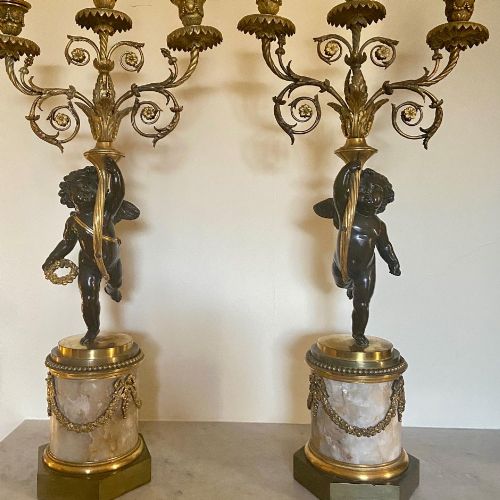
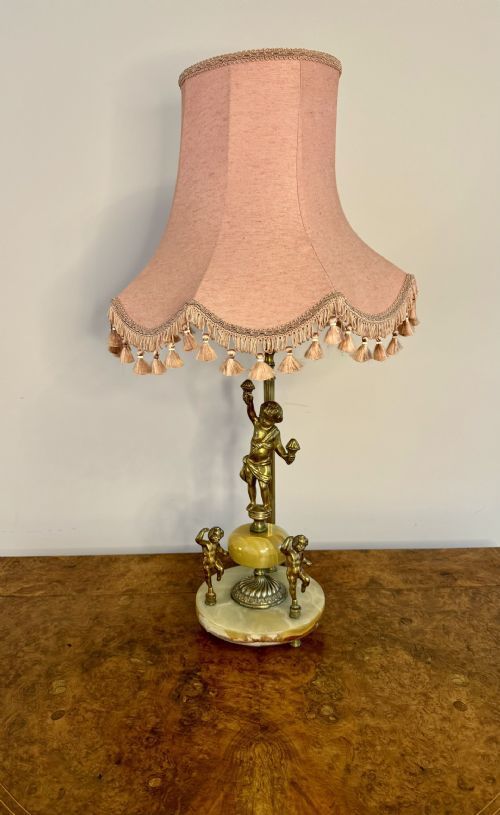
When you search for a neoclassical cherub light, you encounter sculptural lighting fixtures featuring putti, winged figures, and classical ornamentation. These pieces primarily take the form of paired candelabra, table lamps, and chandeliers originating from the eighteenth, nineteenth, and early twentieth centuries.
The selections available span French Empire, Louis XVI, Edwardian, and Regency idioms. The most common versions met on this page are patinated bronze and ormolu candelabra or table lamps pairing cherubic figures with marble, brass, or onyx bases.
How they were made
Metal components rely on traditional foundry methods, combining cast bronze, brass, spelter, or ormolu with applied patination and gilding. Founders frequently combined dark patinated bronze for the figures with bright ormolu highlights to create visual contrast.
Mounts and structural elements integrate carved or polished hardstones such as marble and onyx, alongside moulded plaster or fabric shades on later adaptations. These materials demand precise assembly to secure heavy metal figural work onto stone bases.
Listings feature items spanning the 18th, 19th, and early 20th centuries, executed in patinated bronze, ormolu, marble, onyx, and brass.
What varies in quality
The refinement of the casting defines the upper tier of these pieces, particularly in the rendering of facial expressions, wing feathering, and musculature on the putti. Crisp chasing and finishing work separate superior foundry output from softer, later reproductions.
The choice and integration of secondary materials dictate overall substance. Dense marbles, heavy gauge patinated bronze, and fire-gilded ormolu distinguish the most substantial examples from lighter spelter or brass alternatives.
Francois Redmond·Claude Clodion
The Neoclassical Cherub Light Glossary
- Putto
- A plump, naked male child figure frequently found in classical art. These winged figures form the central sculptural motif in many candelabra and lamps.
- Ormolu
- Finely ground high-carat gold applied to a bronze base using a mercury amalgamation process. This technique yields a deep, warm metallic lustre characteristic of French classical metalwork.
- Patinated bronze
- Bronze treated with chemical solutions to produce a controlled surface colour, typically deep brown or black. This finish accentuates the underlying modelled contours of the figures.
- Candelabra
- A branched candlestick designed to hold multiple lights. Eighteenth and nineteenth-century examples often incorporate figural shafts supporting two or more arms.
Neoclassical Cherub Light: Frequently Asked Questions
Can antique candelabra be wired?
Many candelabra and figural pieces undergo conversion into table lamps to suit modern domestic lighting requirements. Professional conversion preserves the structural integrity of the original metal components.
Ensure any electrical work utilises appropriate wiring housed safely through the existing central channels without damaging the antique bronze or marble structure.
How do I date a cherub lamp?
Examine the casting quality, the method of assembly, and the secondary materials such as marble or onyx. Nineteenth-century French pieces often exhibit heavier bronze casting and crisper chasing than twentieth-century revivals.
Compare stylistic cues against established periods like Louis XVI, Regency, or Edwardian design. Look for wear patterns and patination consistent with age.
Where should I place these lights?
These sculptural pieces anchor mantels, sideboards, and large console tables where their height and figural detail remain visible. Paired candelabra suit balanced arrangements on either side of a mirror or fireplace.
Ensure the surface supports the considerable weight of bronze and stone bases. Position them away from direct heat sources to protect any applied finishes.