



Neoclassical Carved Standard Lamp
These neoclassical carved standard lamps bring classical architectural discipline and warm illumination to a high-ceilinged room.
Neoclassical Carved Standard Lamp
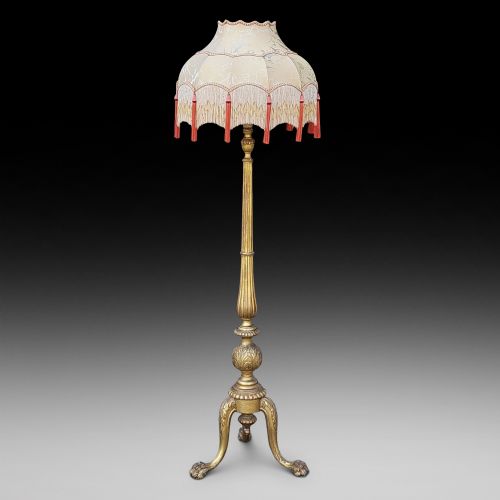
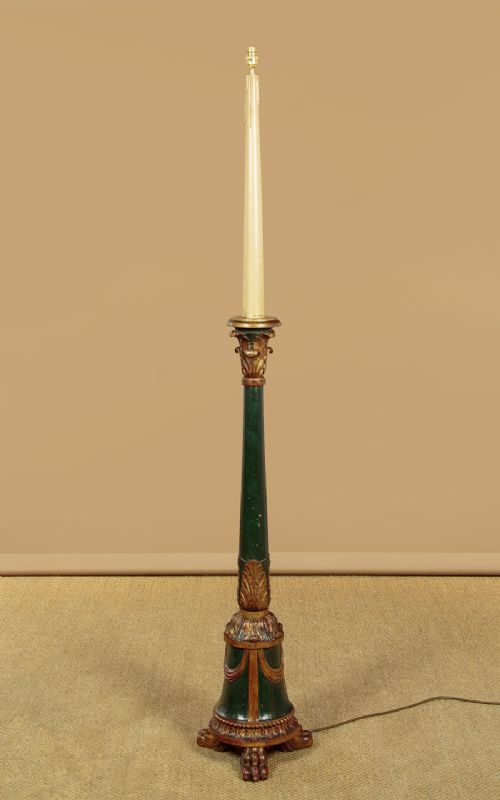
A neoclassical carved standard lamp stands as a commanding vertical element in a room, drawing the eye upward with architectural motifs derived from antiquity. These floor-standing fixtures borrow freely from Adam, Louis XVI, Regency, and Swedish design vocabularies, often translating stone temple ornaments into domestic woodwork.
The pieces appearing on this page span several decades from the late nineteenth century into the 1930s, encompassing both floor lamps and standard lamps alongside related table lamps. Buyers will frequently encounter revival interpretations executed with gilded surfaces, carved wood, and occasionally marbleized finishes.
Origins vary across British, Italian, and Swedish workshops, each bringing a distinct regional interpretation to classical columns, fluting, and urn motifs. Whether rendered as a tall standard lamp or a lower table-standing variant, the overriding aesthetic remains strictly classical and symmetrical.
Materials and construction
Makers built these standard lamps primarily from wood, applying layers of gesso to create smooth surfaces suitable for fine carving and subsequent gilding. Gold leaf and liquid gilt finishes were then meticulously applied to catch the light, echoing the opulence of royal French and Italian interiors.
Some examples incorporate marbleised painted treatments or contrasting parcel gilt details to emphasise architectural mouldings such as acanthus leaves and fluted columns. Fabric shades and passementerie trim complete the assembly, introducing textural contrast to the hard gilded surfaces below.
Neoclassical Carved Standard Lamp Retail Price Guide 2026
Typical asking prices for neoclassical carved standard lamp among the pieces listed under this phrase on Sellingantiques today, from the lower quarter to the upper quarter. They describe what is for sale here now, not the wider market.
The selection includes regional styles ranging from Italian Florentine and French Chateau to Swedish Neoclassical and British Adam revivals.
Judging the work
Quality in a neoclassical carved standard lamp rests upon the crispness of the wood carving and the depth of the gilding. Superior examples display sharply defined flutes, crisp acanthus leaves, and hand-applied gold leaf that ages with a soft, warm patina rather than flat modern paint.
The structural integrity of the column and the stability of the base distinguish finer workshops from mass production. Well-balanced proportions and harmonious integration of period revival styles elevate certain pieces above simpler painted standard lamps.
The Neoclassical Carved Standard Lamp Glossary
- Giltwood
- Wood that has been coated with gold leaf or a gold-coloured metallic finish. This surface treatment is fundamental to the neoclassical aesthetic found across many pieces on this page.
- Gesso
- A plaster-like mixture applied to wood to create a smooth surface for carving and gilding. It allows for intricate relief details that bare wood cannot hold as sharply.
- Passementerie
- Decorative trimmings such as fringe, cord, or tassels used on lampshades. These textile elements soften the transition between the illuminated shade and the carved standard.
- Parcel Gilt
- A decorative technique where only specific portions of an object are gilded, leaving painted or natural wood exposed elsewhere. This creates subtle contrast on architectural mouldings.
- Swedish Neoclassical
- A lighter, more restrained regional interpretation of classical design featuring pale painted surfaces and simplified columns. It strips away heavy ornamentation in favour of crisp, clean lines.
Neoclassical Carved Standard Lamp: Frequently Asked Questions
Where should I place a standard lamp?
These tall floor-standing fixtures work best in corners or beside substantial seating where their vertical presence can anchor the furniture arrangement.
Because they cast ambient light downward from a height, they suit living rooms and libraries that benefit from layered illumination.
How do I identify the period?
Dating relies upon examining the materials, underlying wood construction, and the specific revival style influences present in the carving.
Pieces range from late nineteenth-century interpretations up through the 1930s, reflecting changing revivals of Adam, Regency, and Louis XVI aesthetics.
Are these lamps originally electric?
Many standard lamps from the late nineteenth and early twentieth centuries were wired or adapted for electricity during their working lives.
Buyers should inspect the internal wiring to ensure it meets contemporary safety standards while preserving the antique standard lamp structure.
What is the difference between standard and floor lamps?
In British terminology, standard lamp traditionally refers to a tall, floor-standing lamp base designed to illuminate a room from a standing position.
Both terms are used interchangeably on this page to describe vertical lighting fixtures of substantial height.