
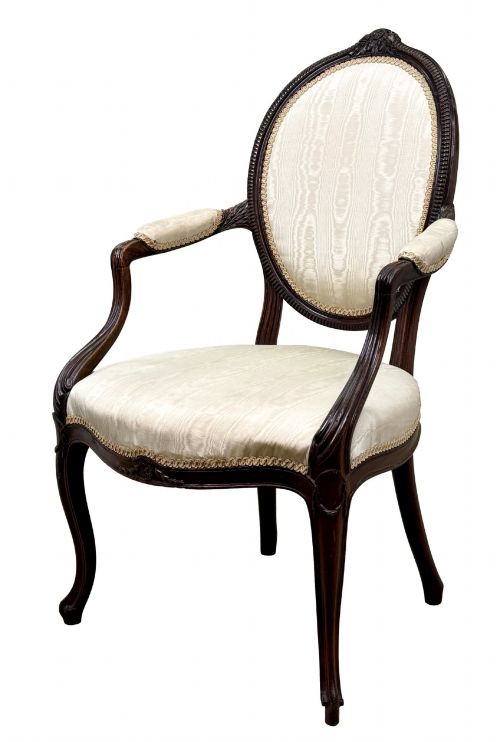
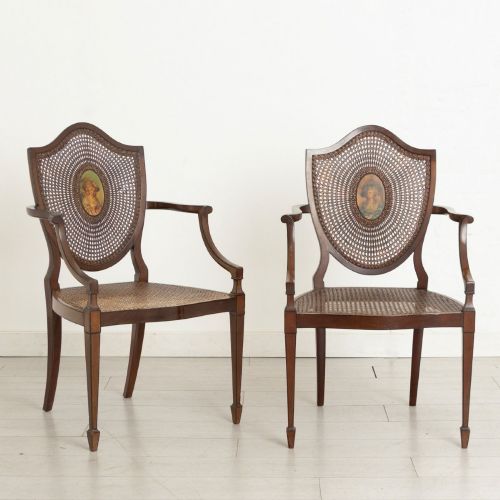
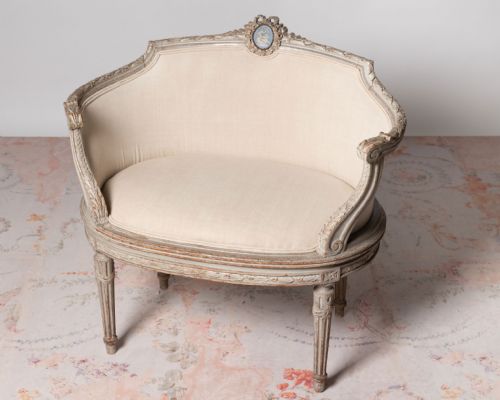
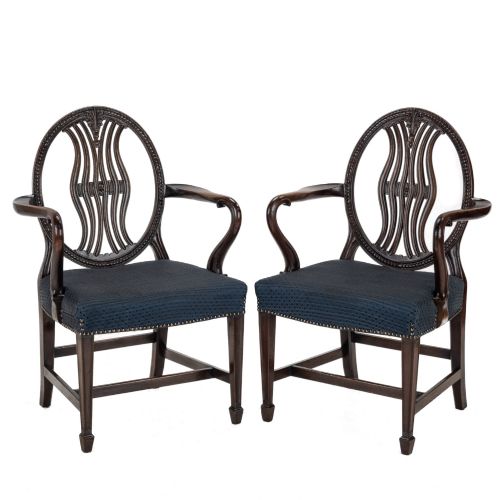
Neoclassical Carved Armchairs
Neoclassical carved armchairs bring structured symmetry and classical restraint to a room, offering both formal elegance and grounded support.
Neoclassical Carved Armchairs
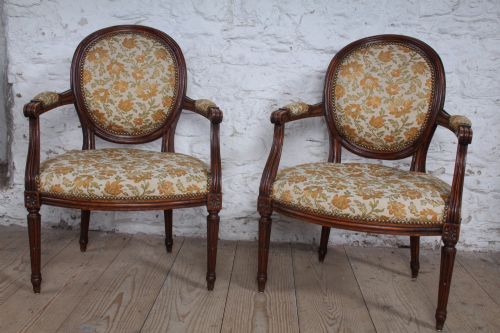
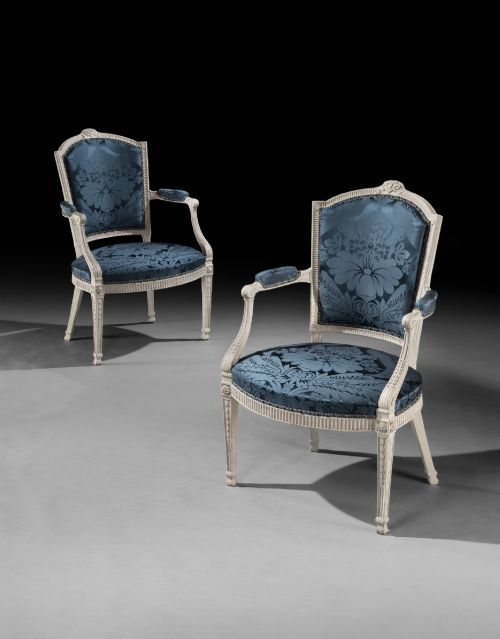
When you search for neoclassical carved armchairs, you encounter seating built during the eighteenth and nineteenth centuries, alongside later revivals stretching into the twentieth century. These pieces reflect a deliberate turn away from exuberant rococo curves toward straight lines, classical proportions, and motifs drawn from ancient architecture.
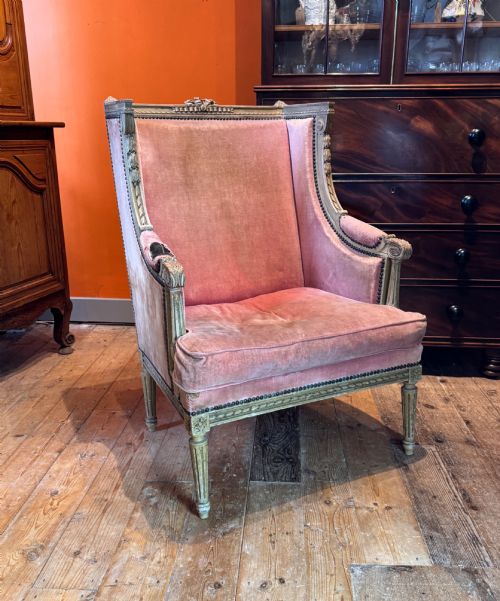
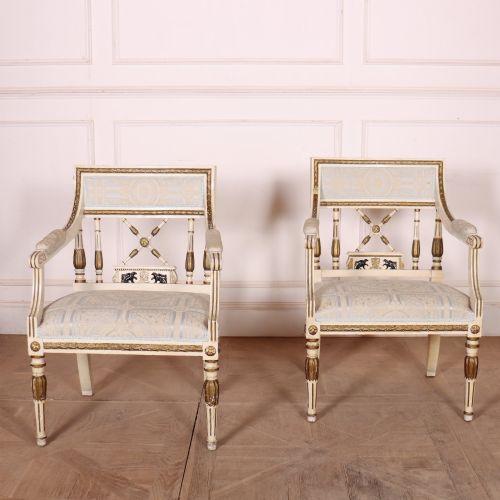
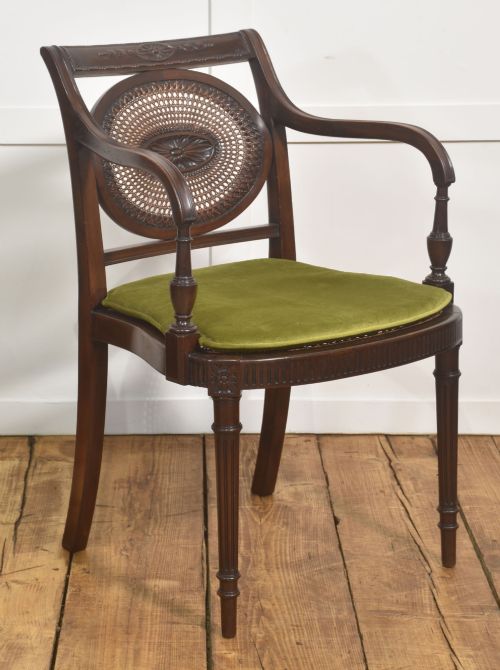
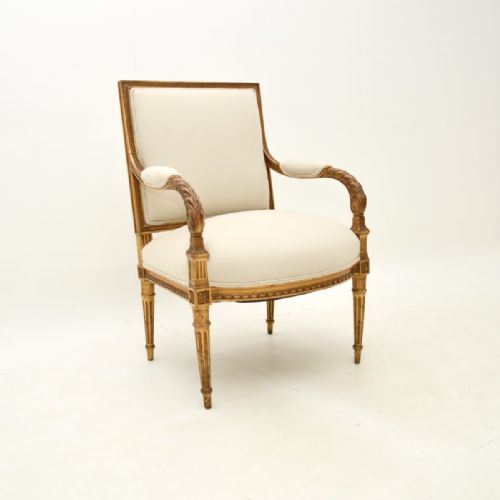
The versions you meet most frequently on this page span French, English, Italian, and Swedish interpretations. These range from eighteenth-century George III mahogany and giltwood armchairs to nineteenth-century French Louis XVI style fauteuils, Swedish Empire models, and later Edwardian salon chairs.
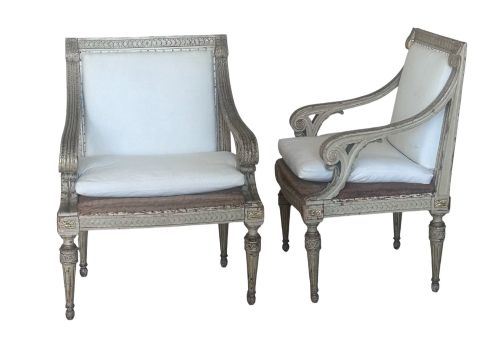
Forms vary from open armchairs and library carvers to salon suites, parlour seating, and desk chairs. Many survive in pairs, reflecting their original use in symmetrical drawing rooms and formal reception spaces.
Materials and Technique
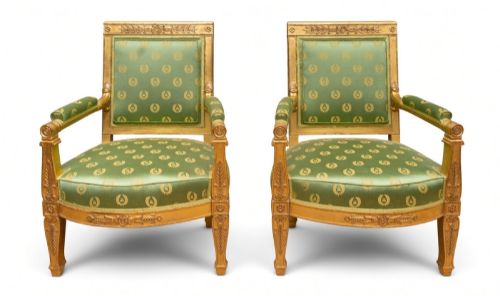
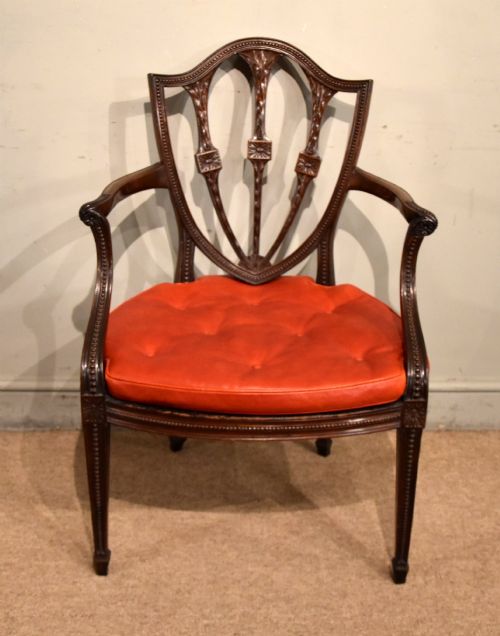
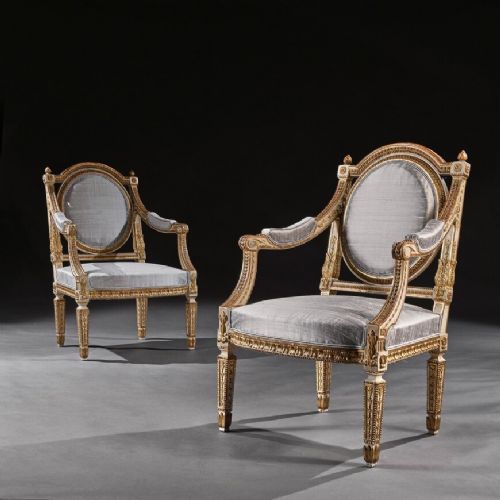
Makers shaped these frames primarily from solid timbers such as mahogany, walnut, and burr elm, alongside softer woods prepared for painted or gilded finishes. Craftspeople applied giltwood, or combined paint with parcel gilding, to highlight carved fluting, rosettes, and classical scrollwork.
Upholstery relied on traditional textiles, including silk velvet, decorative fabric, tapestry panels with needlepoint, and woven cane. Metal elements such as brass mounts and ormolu appeared on specific Empire and revival pieces to accent the structural joints and rails.
The furniture includes salon suites, desk chairs, and library armchairs from English, French, Italian, and Swedish traditions.
Craftsmanship and Proportion
Quality rests in the crispness of the hand-carving and the structural integrity of the timber frame. Superior pieces demonstrate deep, clean relief work on the crest rails, arm supports, and legs, rather than soft or shallow moulding.
Proportion and joinery dictate the distinction between standard seating and finer examples. The best chairs maintain balanced classical lines and tight corner blocking that withstands generations of use without loosening.
Thomas Chippendale·Jacob-Desmalter
The Neoclassical Carved Armchairs Glossary
- Fauteuil
- An open-framed armchair with upholstered back and arm pads, originating in France. These chairs typically feature exposed wooden frames and carved decoration.
- Giltwood
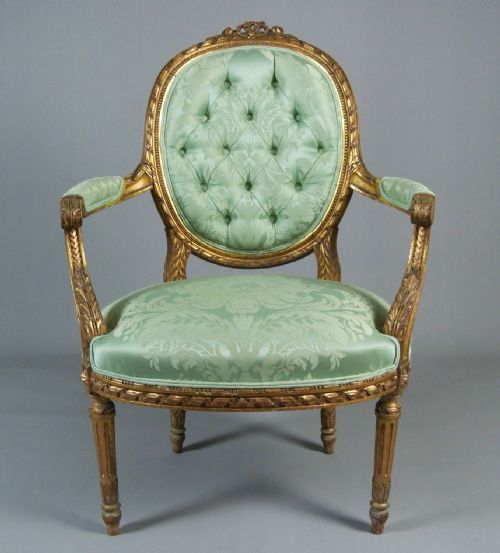
- Timber coated with a thin layer of gold leaf over a prepared gesso base. This finish provides a bright reflective surface common on formal eighteenth and nineteenth century chairs.
- Lyre Back
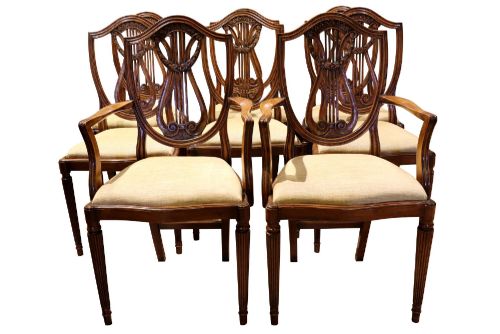
- A chair back shaped in the form of an ancient Greek lyre, frequently utilised in Hepplewhite and Regency designs. The central splat mimics the musical instrument's curved frame and strings.
- Medallion Chair
- A seat featuring an oval or circular upholstered back panel framed by carved wood. This form is strongly associated with Louis XVI and subsequent revival styles.
- Ormolu
- Gilded bronze mounts applied to furniture for decorative contrast. This technique appears on Empire and revival pieces to highlight structural corners and rails.
Neoclassical Carved Armchairs: Frequently Asked Questions
How do I identify a true neoclassical chair?
Look for straight tapered legs, architectural moulding, and symmetrical motifs such as fluting, paterae, and urns. These elements distinguish the style from earlier curving rococo forms.
Examine the construction methods and wood types to help determine whether a piece originates from the eighteenth century or a later nineteenth-century revival period.
Were these chairs used at dining tables?
Most armchairs from this tradition served in salons, libraries, and drawing rooms rather than around dining tables. They provided comfortable seating for reading, conversation, and formal entertaining.
Dining chairs generally lacked arms or appeared as smaller carvers designed to sit at the heads of the table alongside side chairs.
How should I care for original giltwood?
Dust gilt surfaces gently with a soft, dry brush to prevent the delicate gold leaf from flaking. Avoid using liquid cleaners, polishes, or damp cloths on gilded timber.
Keep these chairs away from direct sunlight and fluctuating radiator heat to protect the underlying gesso and wood from cracking over time.
Can I mix these chairs with modern interiors?
Their clean classical lines and balanced proportions allow them to sit comfortably alongside contemporary furniture. A single armchair or a pair works well as an accent piece in a minimalist room.
Pairing antique painted or gilded wood with plain modern upholstery bridges historical design with current living spaces.