

Neoclassical Candlestick Holders
Neoclassical candlestick holders bring strict architectural proportion and classical metalwork into a room, offering pairs built in bronze, silver and brass.
Neoclassical Candlestick Holders
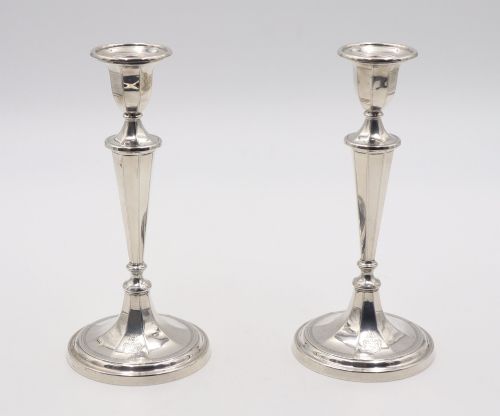
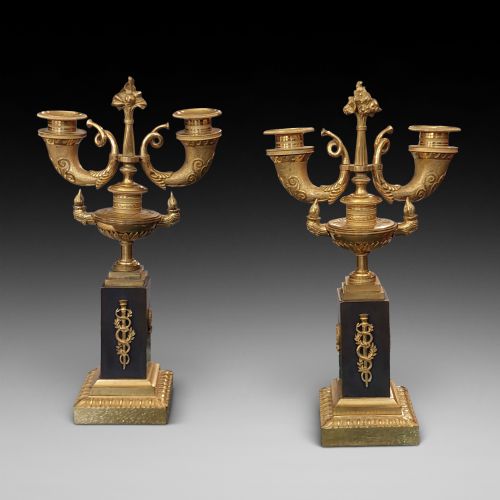
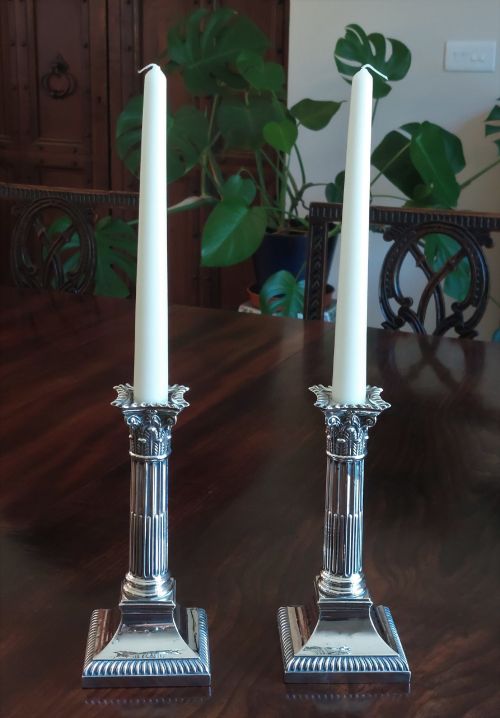
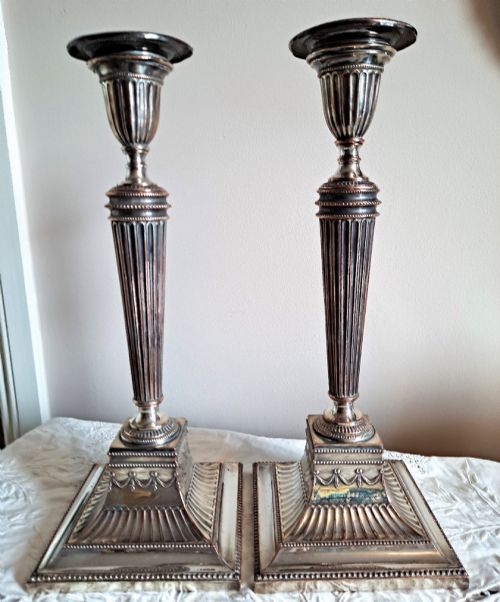
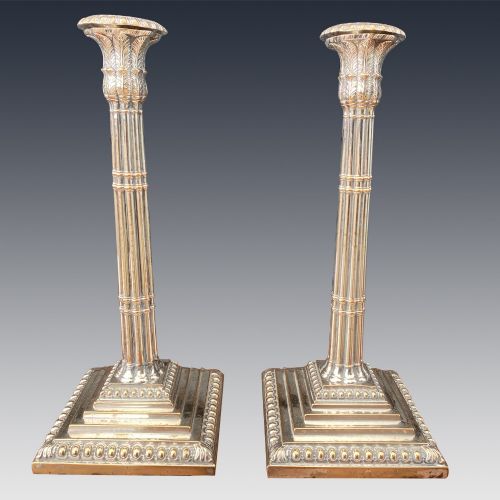
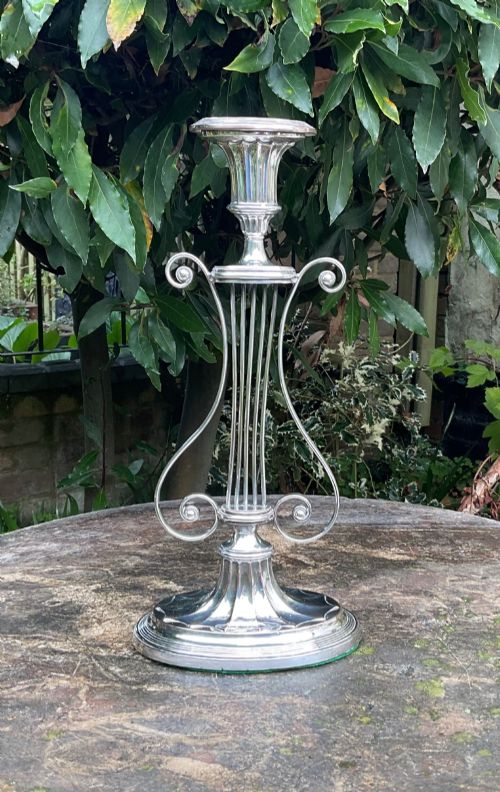
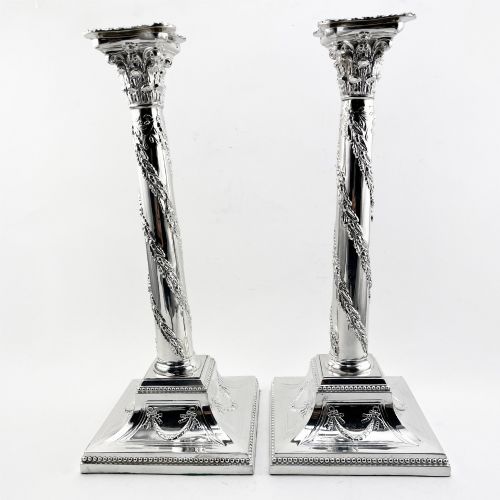
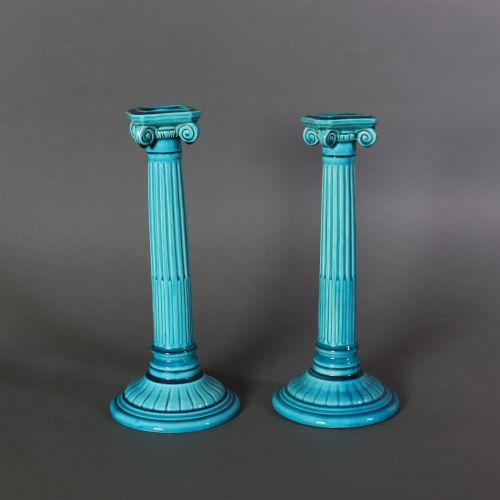
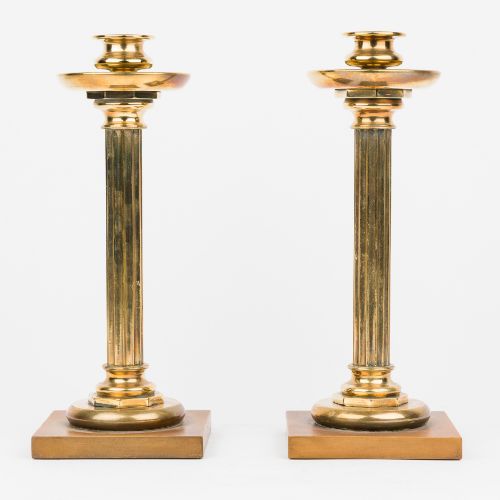
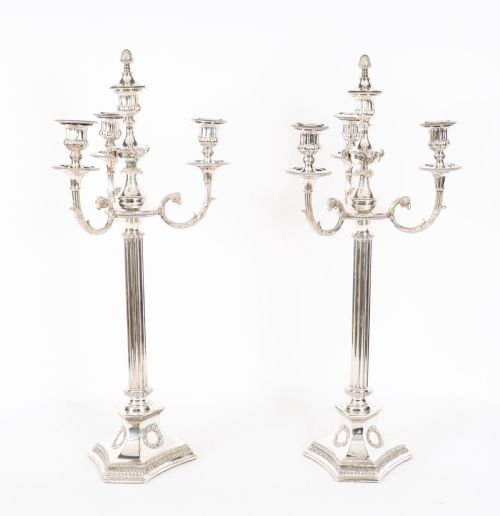
Neoclassical candlestick holders draw on classical Greek and Roman motifs, appearing primarily as matched pairs designed to light formal spaces. These pieces emerge in forms such as slender Corinthian columns, multi-light candelabra, and desk chambersticks.
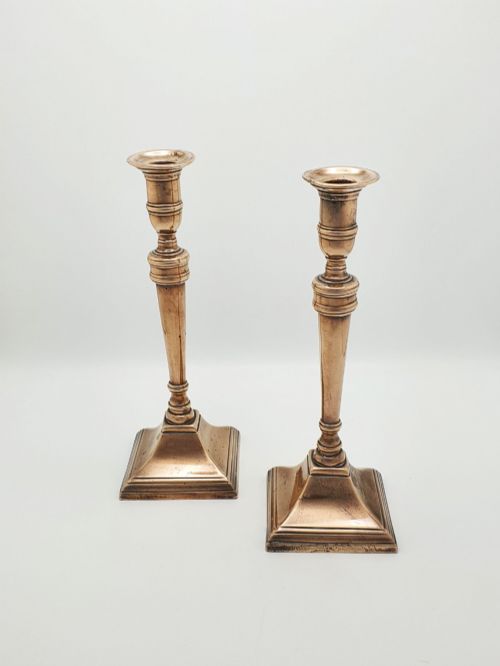
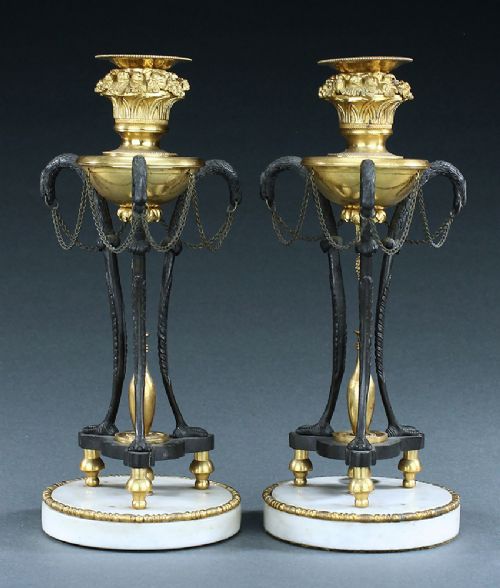
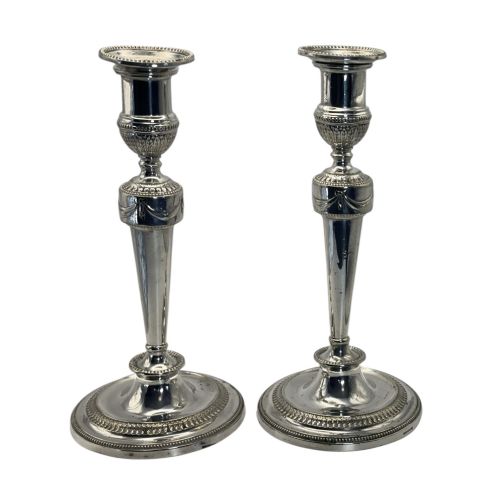
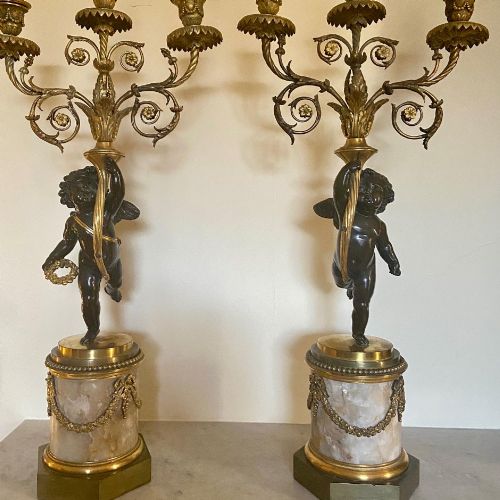
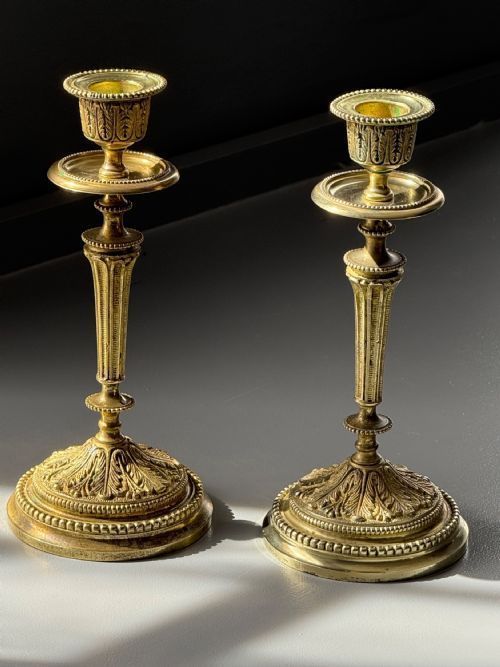
The selection ranges from Georgian brass and silver through to French Empire gilt bronze and Edwardian sterling silver. Buyers find both strict classical revivals and grand tour bronze figures standing on marble plinths.
Makers and workshops adopt architectural orders like Doric and Corinthian alongside figurative elements such as putti and caryatids. Most examples date from the eighteenth and nineteenth centuries, with later Victorian and Edwardian interpretations also present.
How they were made
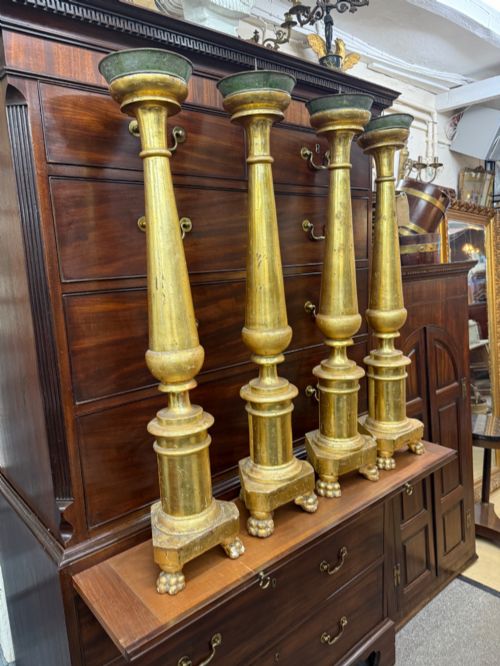
Foundry workers cast metals such as bronze, brass and ormolu, often combining patinated surfaces with fire-gilding. Silversmiths shape sterling silver and silver plate over supportive cores, while other examples utilise carved wood and porcelain.
The construction of multi-light candelabra involves assembling distinct branches and nozzles around a central stem, frequently mounted on white marble or sienna marble bases. Surface enrichment relies on chased detailing, silvered finishes and applied jasper plaques.
Neoclassical Candlestick Holders Retail Price Guide 2026
Typical asking prices for neoclassical candlestick holders among the pieces listed under this phrase on Sellingantiques today, from the lower quarter to the upper quarter. They describe what is for sale here now, not the wider market.
Listings feature materials spanning ormolu, silver plate, gilt bronze, brass, bronze, patinated bronze, sterling silver and copper across multiple centuries.
What varies in quality
The crispness of the chasing separates masterwork castings from routine production, as sharp fluting and detailed acanthus leaves demand high skill. Superior mercury gilding retains a deep, warm lustre over bronze, whereas lesser metalwork shows thin plating or flat surface execution.
The integrity of the construction determines whether components align precisely without wobble. Weight and the quality of associated materials, such as solid marble plinths or substantial sterling silver walls, elevate the standing of a piece.
Matthew Boulton·Mappin & Webb·J. Miller·Wedgwood·Sutherland & Sons
The Neoclassical Candlestick Holders Glossary
- Ormolu
- A technique of applying finely ground high-carat gold to a bronze base using a mercury amalgam. This process creates a durable, rich golden surface typical of French Empire pieces.
- Caryatid
- A sculpted human figure acting as an architectural support replacing a column. These appear supporting the stems of neoclassical candlesticks.
- Old Sheffield Plate
- A method of fusing a thin sheet of silver to a thicker copper base before rolling and forming. It characterises eighteenth and early nineteenth-century production.
- Grand Tour
- A traditional trip through Europe undertaken by upper-class scholars collecting antiquities and bronzes. Many miniature statuettes and candlesticks date from this travel period.
- Jasper
- A fine-grained stoneware developed by potteries such as Wedgwood, featuring contrasting applied white reliefs against coloured bodies.
Neoclassical Candlestick Holders: Frequently Asked Questions
How do I clean antique brass or bronze holders?
Dust gently with a soft dry cloth to preserve the existing patina and any original chemical or wax finishes.
Avoid aggressive metal polishes that strip away historical surface coloration, particularly on ormolu and patinated bronze.
Can I use standard modern candles in these holders?
Many older sockets vary slightly from modern metric dimensions due to historical hand-manufacturing methods.
Check the nozzle diameter carefully and gently pare down the base of a wax candle if a secure fit is needed.
How do I date a neoclassical candlestick?
Examine the casting method, stylistic markers like Regency or Louis XVI proportions, and any maker marks or hallmarks.
Silver pieces often carry assay office stamps and date letters that pinpoint the exact year of production.
Where should I display candelabra in a modern home?
Place matched pairs symmetrically on mantelpieces, sideboards or dining tables to create a formal focal point.
Keep them away from direct heat sources and strong draughts to protect the wax and the underlying metalwork.