



Neoclassical Bust on Plinth
A neoclassical bust on plinth brings the quiet authority of antiquity directly into a room.
Neoclassical Bust on Plinth
When you search for a neoclassical bust on plinth, you are looking at sculpted portraits of classical figures, philosophers, and youths paired with supporting columns or stands. These pieces draw on eighteenth and nineteenth century revivals of Greek and Roman forms, channeling archaeological discoveries into interior and garden decoration.
You will most commonly meet nineteenth century marble and bronze examples alongside later twentieth century stone and plaster interpretations. Many originate from the Grand Tour tradition, where travellers brought home miniature or cabinet scale representations of classical antiquity.
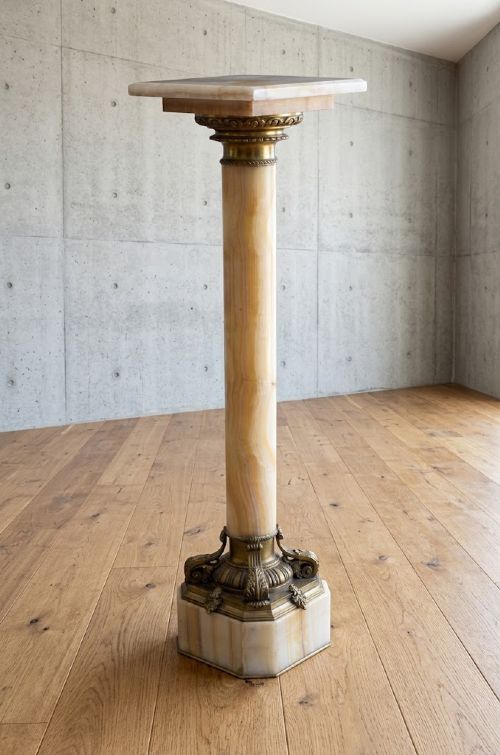
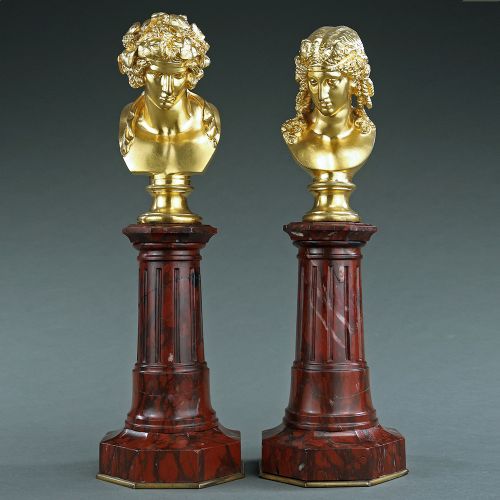
The objects combine separate sculptural busts and supporting pedestals, though some survive as unified compositions of marble, onyx, or ormolu. They function as focal points in libraries, hallways, and drawing rooms, elevating domestic spaces through classical allusion.
How They Were Made
Carved marble and cast bronze form the backbone of these pieces, often enhanced by gilt bronze or ormolu collars and mounts. Artisans utilised Carrara marble, variegated green Victorian marble, and solid onyx to achieve varied chromatic effects on both the bust and its supporting column.
Secondary materials such as scagliola, reconstituted stone, and painted plaster appear in later revival pieces to simulate the weight and finish of stone. Cast bronze and gilt bronze elements underwent intricate chasing and mounting to secure the sculpture to its plinth.
Neoclassical Bust on Plinth Retail Price Guide 2026
Typical asking prices for neoclassical bust on plinth among the pieces listed under this phrase on Sellingantiques today, from the lower quarter to the upper quarter. They describe what is for sale here now, not the wider market.
Some nineteenth century philosophers gaze perpetually toward distant corners, ignoring the modern vacuum cleaners humming at their feet.
What Varies in Quality
The integration between the bust and the plinth determines structural integrity and aesthetic balance. High quality examples employ matched materials, such as coordinated marble and ormolu mounts, rather than mismatched secondary components.
The Neoclassical Bust on Plinth Glossary
- Neoclassical
- A style spanning the eighteenth and nineteenth centuries that revived the aesthetic of classical Greece and Rome. It prioritises symmetry, restraint, and direct classical motifs.
- Ormolu
- Gilt bronze produced by applying a mercury and gold amalgam to cast bronze. This technique imparts a rich golden sheen common in nineteenth century French mounts.
- Grand Tour
- A traditional educational trip through Europe undertaken by upper class young men in the eighteenth and nineteenth centuries. Travellers collected classical antiquities and sculpture copies to bring home.
- Scagliola
- A composite material made from selenite, glue, and pigments, mixed to imitate marble and other stonework. It allows artisans to create smooth, decorative columns and pedestals.
- Torchere
- A tall stand or pedestal originally designed to hold a torch or candle. In later periods, it serves as a display column for busts and statues.
Neoclassical Bust on Plinth: Frequently Asked Questions
Where should I place a bust?
These pieces suit entrance halls, libraries, or corners where height and vertical emphasis add architectural interest. Pairing a bust with a matching column elevates the display to eye level.
Ensure the weight of marble or stone pieces is supported by stable flooring. Avoid positioning heavy stone directly on fragile antique carpets without proper protection.
What is the Grand Tour?
The Grand Tour was an extended journey through European cultural centres undertaken by wealthy collectors during the eighteenth and nineteenth centuries. Travellers acquired sculptures and architectural models as tokens of their education.
Busts from this context often reflect accurate copies of ancient Roman or Greek statues found in Italian collections. They represent a specific era of enthusiastic antiquarian collecting.
Are these pieces waterproof?
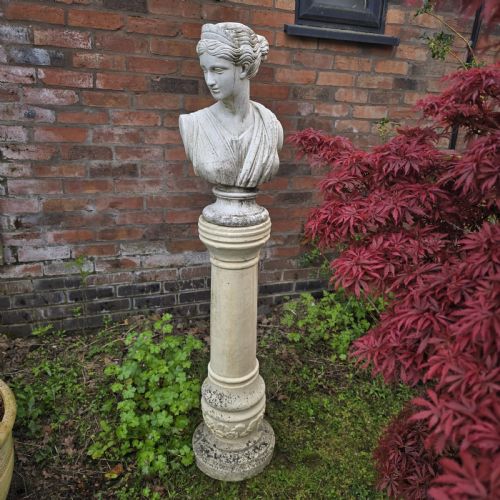
Pieces designated as garden statuary or cast stone resist outdoor conditions and weathering over time. Indoor compositions made of plaster, scagliola, or polished marble degrade rapidly if exposed to rain and frost.
Check the listed material before placing any sculpture outside. Protect indoor bronze and ormolu from high humidity to prevent oxidation.