


Neoclassical Bust Column
These neoclassical bust column pieces bring classical dignity into a room, offering a sturdy stage for sculptural portraits.
Neoclassical Bust Column
A neoclassical bust column pairs a sculptural head with a supporting stand, creating a commanding display in any interior. The pieces gathered here draw on architectural traditions from the nineteenth century and the Edwardian era, spanning pedestal columns, torchere stands, and plinths.
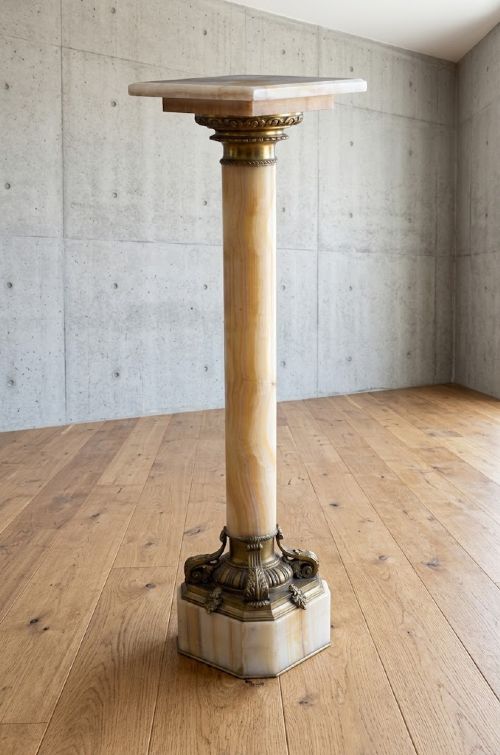
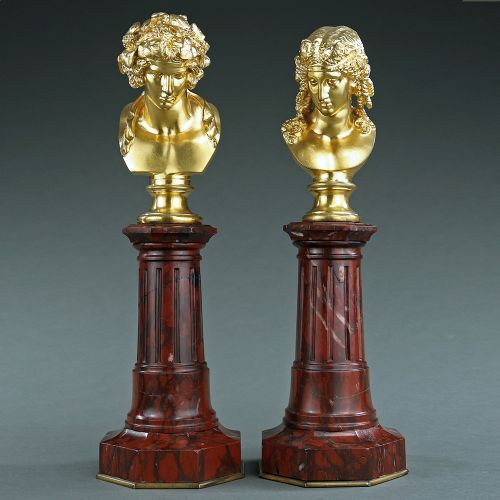
Buyers will most frequently encounter marble and onyx columns paired with ormolu mounts, alongside painted plaster and stone garden statuary. These works reflect revived classical motifs from French Empire, Regency, and Gustavian design traditions.
Materials and construction
Carved marble and variegated onyx form the core of the finer columns, often turned on a lathe and assembled in sections. Ormolu and gilt bronze mounts provide structural accents and decorative collars.
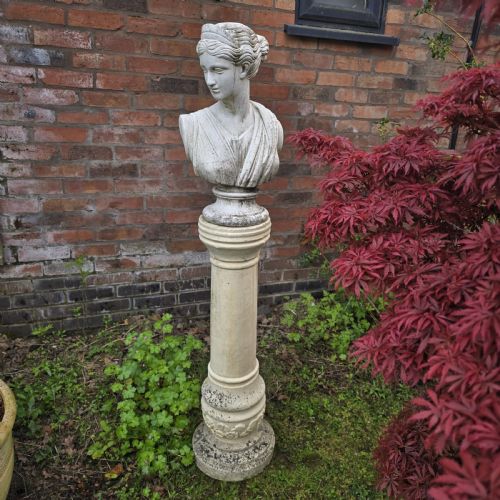
Plaster and reconstituted stone serve for sculptural busts and garden pedestals, sometimes finished with paint to mimic aged masonry. Mahogany and scagliola also appear, demonstrating varied surface treatments across different eras.
Plaster and stone garden pedestals represent the twentieth century additions within these listings.
Markers of quality
The distinction between tiers rests upon the choice of raw material and the crispness of the carving. Natural variegated marble and heavy onyx carry a visual depth that simpler plaster or painted surfaces do not match.
Fine chasing on ormolu mounts and solid bronze details elevate an object above standard production pieces. The precision of the turning and the harmony of proportions determine the visual weight of the stand.
The Neoclassical Bust Column Glossary
- Ormolu
- Gilded bronze applied as a decorative mount or collar. It adds a bright metallic contrast to dark stone.
- Torchere
- A tall stand or pedestal originally designed to hold a torch or light. These slender columns elevate busts to eye level.
- Scagliola
- A composite material made from selenite, glue, and pigments, mimicking true marble. Artisans use it to create ornate architectural surfaces.
- Carrara marble
- A type of white or blue-grey marble from Italy, prized for classical sculpture and architectural columns.
Neoclassical Bust Column: Frequently Asked Questions
What is a neoclassical bust column?
A neoclassical bust column is a combination of a classical sculptural head and a supporting architectural pedestal. These pieces reflect historical revival styles from the nineteenth and early twentieth centuries.
They serve primarily as display furniture for studies, libraries, and grand reception rooms. The column elevates the bust to eye level for close viewing.
Where should I place a heavy marble column?
Heavy marble and onyx columns require stable flooring due to their significant weight. Placing them against a structural wall or in a corner prevents accidental tipping.
Ensure the base sits level on the floor surface. Avoid high-traffic pathways where the stand might get knocked.
How do I clean an ormolu mount?
Ormolu mounts require gentle dusting with a soft, dry cloth to remove surface particles. Avoid chemical polishes that can strip the delicate gilding from the bronze beneath.
If the metal requires deeper cleaning, consult a professional restorer. Moisture can seep into tiny crevices and damage adjacent stone.
Are these columns suitable for gardens?
Garden placement depends entirely on the material composition of the piece. Reconstituted stone and certain exterior pedestals handle outdoor environments well.
Marble, onyx, plaster, and gilded bronze pieces belong indoors. Frost and moisture will degrade fine stone and ruin metal patinas over time.