


Neoclassical Brass Wall Sconces
Neoclassical brass wall sconces bring disciplined proportion and enduring architectural presence to interiors through classic Revival forms.
Neoclassical Brass Wall Sconces
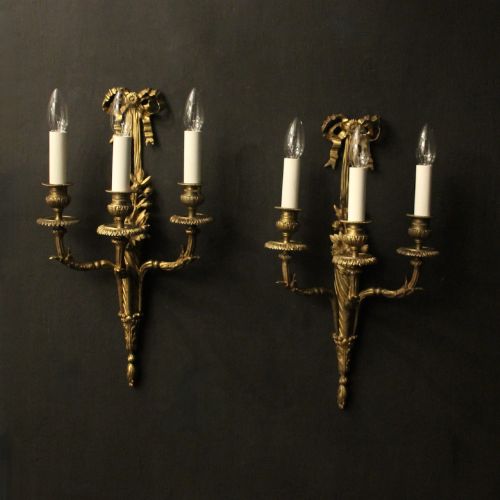
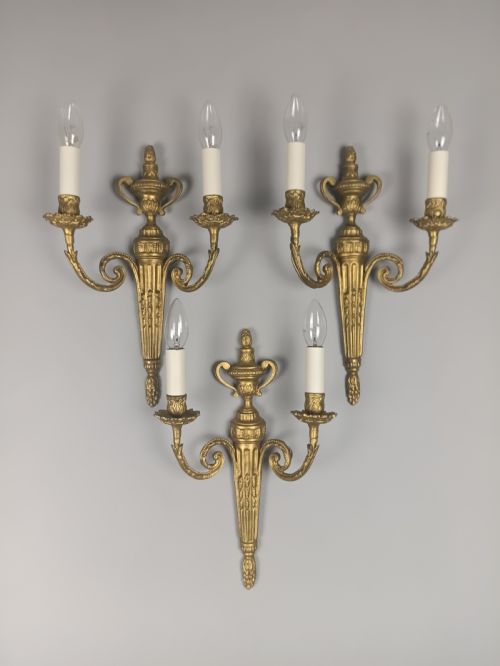
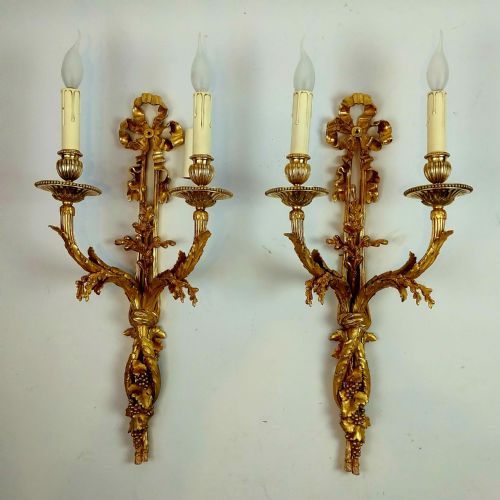
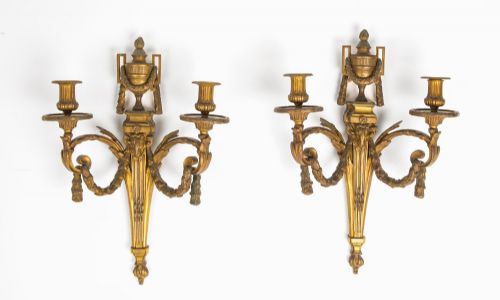
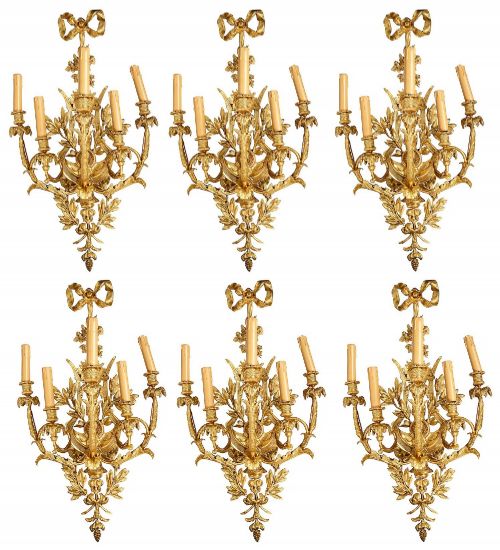
These neoclassical brass wall sconces draw upon antique design codes, uniting restrained symmetry with classical motifs. Buyers seeking these fixtures encounter pieces spanning the nineteenth century through the early twentieth century, alongside specific revival periods like Louis XVI and Adam styles.
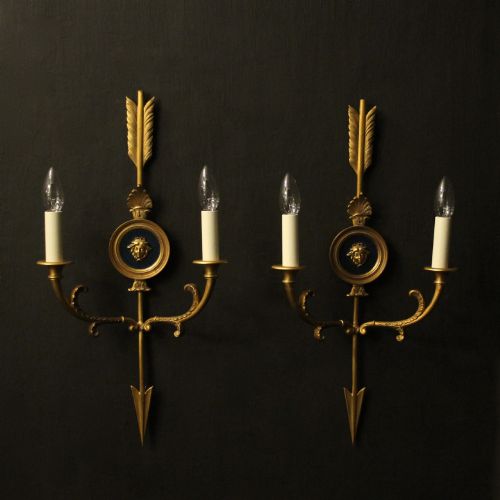
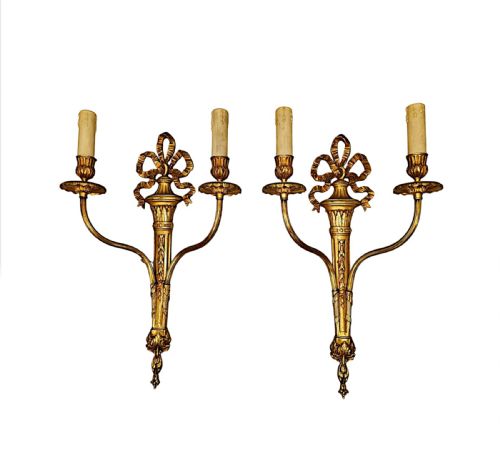
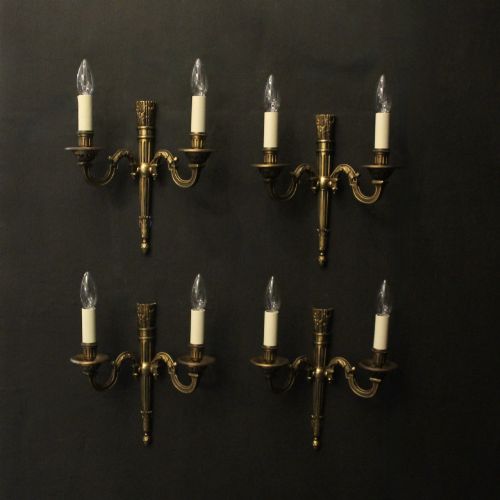
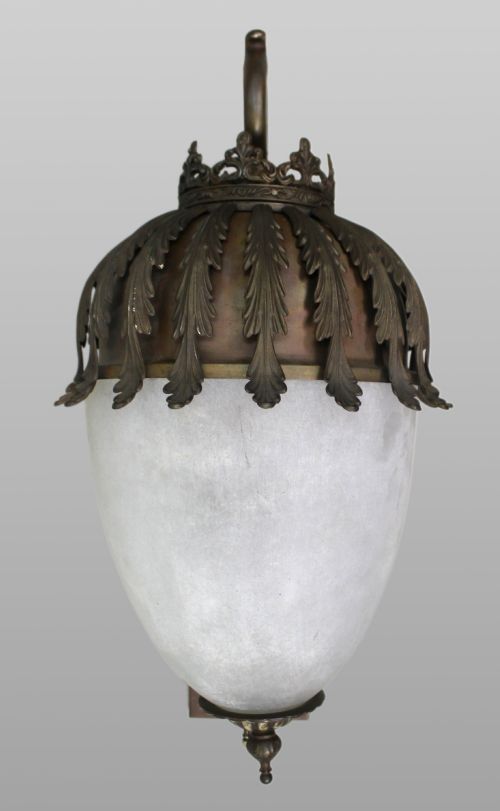
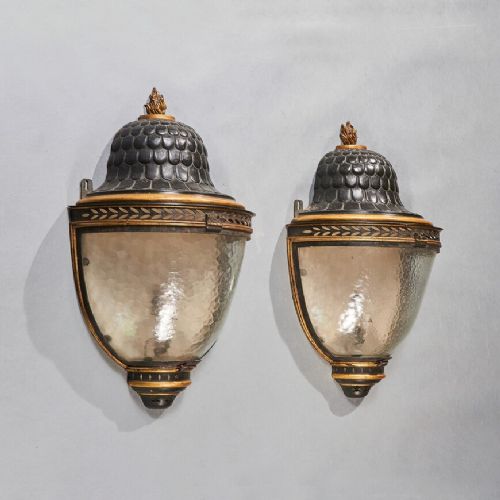
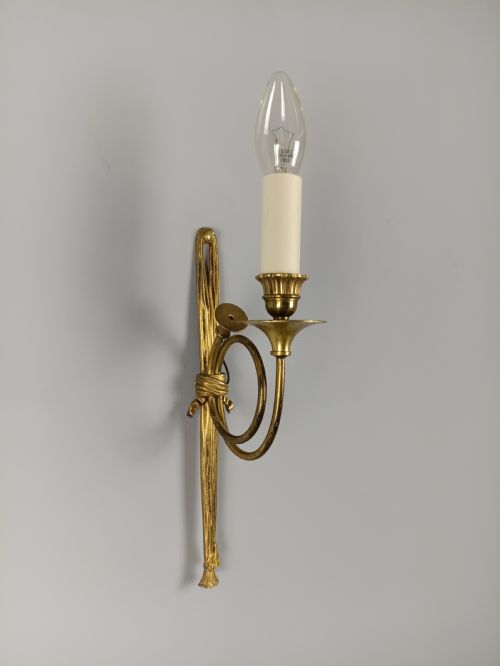
The selection here encompasses pairs and sets configured as single, twin, or triple-arm lights, often incorporating ormolu, gilt bronze, and frosted glass elements. French and English origins predominate, ranging from domestic candle sconces to substantial wall lanterns sourced from notable locations such as hotels.
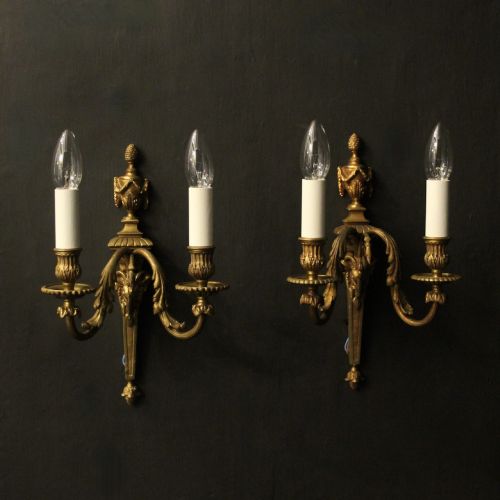
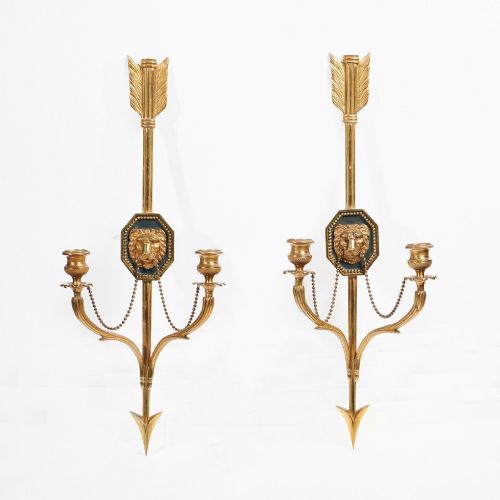
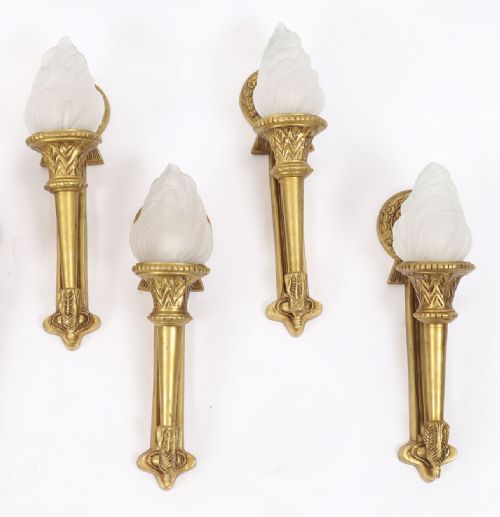
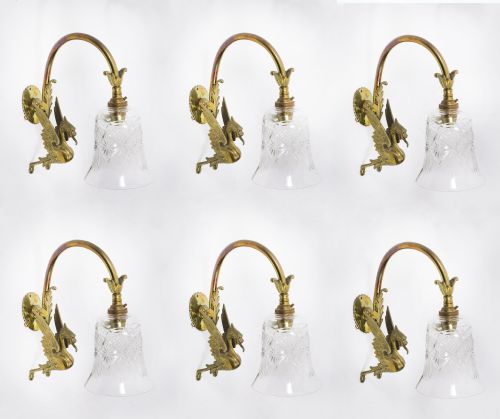
Forms frequently integrate classical iconography, including ram's head masks, flaming torches, and griffin details. These lighting fixtures function as both sources of illumination and sculptural wall ornaments within period or contemporary rooms.
Materials and Construction
Construction relies heavily on cast brass, ormolu, and gilt bronze, often complemented by parcels of gilding or silvered finishes. Metals are shaped through casting and chasing, capturing fine details in foliage, urns, and neoclassical drapery.
Glazing techniques appear in wall lanterns and torch-form sconces utilising frosted or clear glass panels. Surface treatments range from hand-applied gilding to patinated bronze, giving each piece a distinct textural finish.
Neoclassical Brass Wall Sconces Retail Price Guide 2026
Typical asking prices for neoclassical brass wall sconces among the pieces listed under this phrase on Sellingantiques today, from the lower quarter to the upper quarter. They describe what is for sale here now, not the wider market.
Some sconces incorporate fierce mythical griffins alongside polite neoclassical urns, keeping watch over the hallway with silent mythological resolve.
Evaluating the Pieces
Differentiation in quality stems from the crispness of the metal casting and the depth of the chasing work on motifs like ram's heads and floral garlands. Superior examples exhibit sharp, well-defined details rather than softened edges resulting from worn moulds.
The calibre of the finish, whether fire-gilt ormolu or rich patinated bronze, dictates the visual weight and longevity of the piece. Heavier gauge brass and integrated structural integrity further separate standard production items from finer workshop output.
Maison Baguès
The Neoclassical Brass Wall Sconces Glossary
- Ormolu
- Gilded metal applied to decorative hardware, created by fusing a gold-mercury amalgam to a bronze base. This technique produces a warm, enduring surface sheen found on fine period pieces.
- Louis XVI Style
- An aesthetic movement reviving classical restraint, straight lines, and symmetrical motifs. It heavily influences many nineteenth-century wall lights.
- Appliques
- Wall-mounted lighting fixtures designed to hold candles or electric lamps. The term is frequently used interchangeably with wall sconces in continental pieces.
- Tole Peinte
- Painted sheet metal used in decorative lanterns and fixtures. It provides a matte coloured surface contrasting with bright metallic elements.
Neoclassical Brass Wall Sconces: Frequently Asked Questions
How do I wire antique wall sconces?
Most period wall lights require professional rewiring to meet modern safety standards while retaining their original brass backplates and candle tubes. Electricians can usually adapt historical fixtures without altering visible external surfaces.
Care should be taken to preserve fragile ormolu finishes and glass components during the installation process.
What rooms suit neoclassical wall lights?
These sconces complement formal drawing rooms, hallways, and dining spaces where architectural symmetry is desired. Pairs work effectively flanking mirrors, fireplaces, or architectural doorways.
Their restrained classical ornamentation allows them to anchor both traditional period schemes and pared-down modern interiors.
How do I clean gilt bronze sconces?
Dusting gently with a soft, dry brush prevents the accumulation of grime on chased metal surfaces. Avoid harsh chemical cleaners or abrasive cloths that can strip fragile gilding or ormolu.
Professional conservation cleaning is recommended for heavily tarnished or delicate historical pieces.
How do I date an antique sconce?
Dating relies on examining casting techniques, fixing screws, mounting brackets, and stylistic markers tied to specific revival periods like the nineteenth century or Edwardian eras. Variations in brass composition and wear patterns also offer clues regarding age.
Comparing decorative motifs against documented workshop designs helps narrow down the manufacturing decade.