




Neoclassical Bedside Cabinets
Neoclassical bedside cabinets bring architectural balance and refined timberwork to the bedroom through classical proportions.
Neoclassical Bedside Cabinets
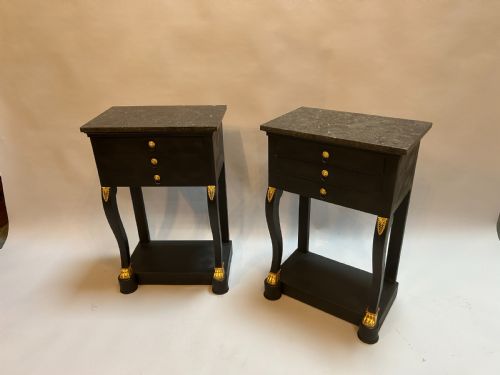
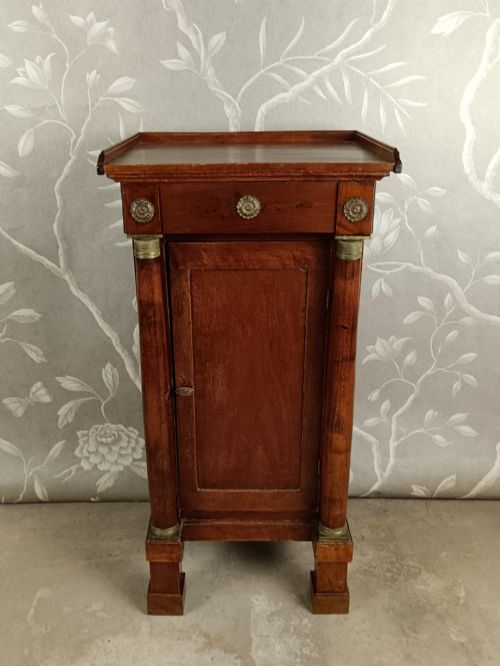
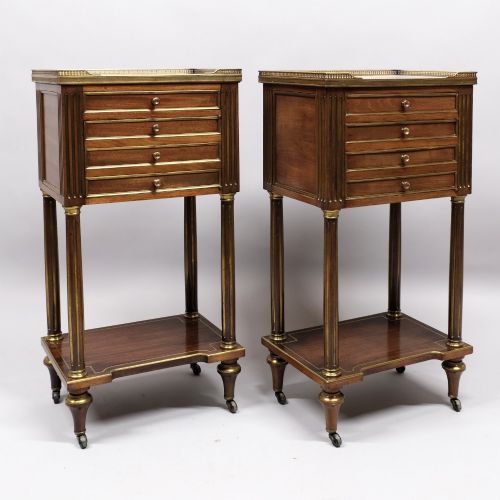
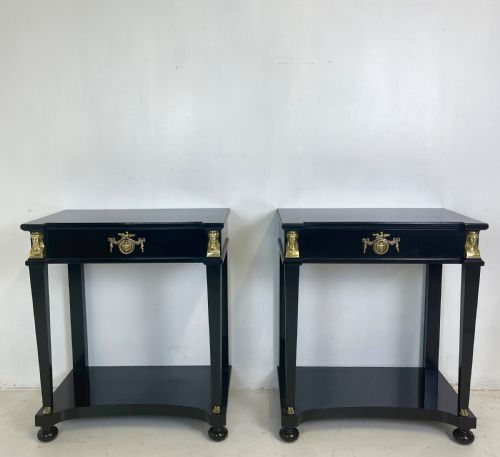
Neoclassical bedside cabinets encompass a range of storage forms including bedside chests, Commodinos, night tables, and pedestal cabinets produced across the eighteenth, nineteenth, and early twentieth centuries. These pieces reflect enduring classical principles through disciplined lines and formal restraint, drawing on French Empire, Italian Empire, Swedish Gustavian, and Louis XVI design idioms.
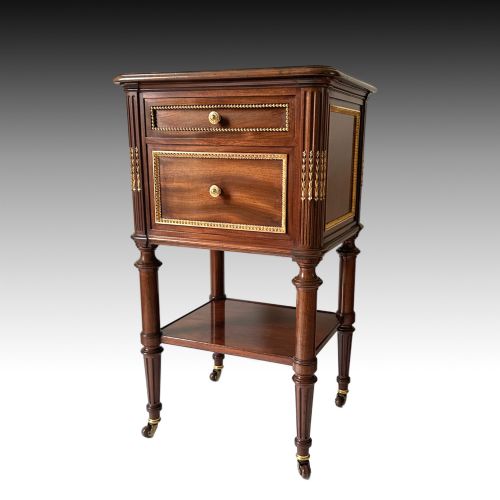
Origins stretch from continental workshops in France, Italy, and Sweden to British interpretations in Edwardian and Victorian idioms. Buyers encounter everything from austere painted Scandinavian cupboards to richly mounted French mahogany pieces set with ormolu and marble.
How they were made
Construction relies on solid and veneered timbers such as mahogany, walnut, and satinwood, often supported by secondary pine carcasses. Timber selection prioritized straight grains and rich figure, providing a stable canvas for decorative treatments.
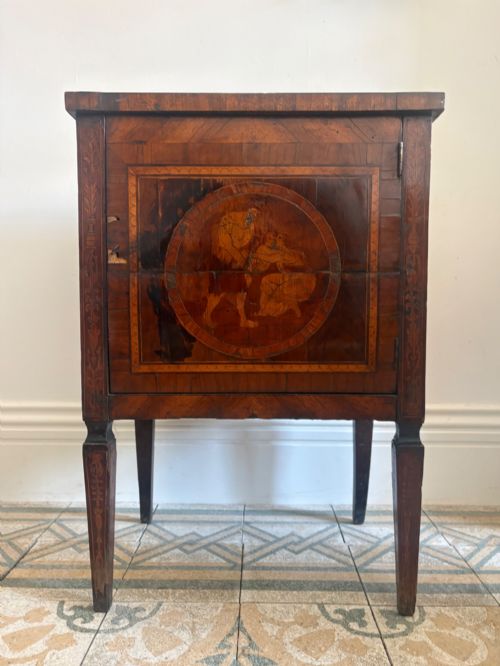
Surface ornamentation integrates cast ormolu mounts, brass detailing, and detailed marquetry inlay alongside black or light paint finishes. Ormolu mounts are pinned or screwed to the timber, while marquetry employs contrasting wood veneers arranged in geometric or classical motifs.
Neoclassical Bedside Cabinets Retail Price Guide 2026
Typical asking prices for neoclassical bedside cabinets among the pieces listed under this phrase on Sellingantiques today, from the lower quarter to the upper quarter. They describe what is for sale here now, not the wider market.
Listings span the eighteenth century to the early twentieth century, incorporating mahogany, walnut, marble, and ormolu.
What varies in quality
Quality reveals itself in the precision of the timber joints, the crispness of applied ormolu or brass mounts, and the integrity of inlaid marquetry. Finer cabinets maintain balanced proportions where decorative elements complement rather than crowd the architectural form.
The refinement of internal drawer construction and the selection of primary veneers separate standard production from exceptional examples. Superior pieces display thoughtful execution in every hidden detail, from drawer linings to the seating of marble tops.
The Neoclassical Bedside Cabinets Glossary
- Ormolu
- Gilded bronze mounts applied to furniture. These decorative elements provided metallic contrast against dark mahogany and walnut surfaces.
- Marquetry
- Inlaid wood veneers forming pictorial or geometric patterns. Artisans cut contrasting timber species to fit flush within the primary surface.
- Gustavian
- Swedish neoclassical style characterised by restrained ornamentation and pale paint finishes. This aesthetic lightened classical forms for northern interiors.
- Commodino
- Small Italian bedside chest or cabinet. These diminutive pieces offered practical storage beside low sleeping berths.
- Pedestal cabinet
- Tall, narrow standalone storage unit based on classical column proportions. They served varied functions as bedside or side storage.
Neoclassical Bedside Cabinets: Frequently Asked Questions
Are these cabinets sold as pairs?
Many listings present matched pairs intended for placement on either side of a bed. Other entries comprise single cabinets suited for compact spaces.
Buyers seeking symmetrical bedside arrangements will find several paired options spanning different continental traditions.
What wood types are most common?
Mahogany and walnut predominate, frequently accented with satinwood veneers or detailed marquetry work. Painted pine also appears in Swedish and French provincial interpretations.
These timbers provided both structural stability and rich surfaces for classical decorative schemes.
How do I identify French Empire style?
French Empire pieces utilise dark timbers accented with cast ormolu mounts and strict architectural lines. The aesthetic emphasises military and classical triumph through heavy symmetry.
Such cabinets often incorporate marble tops and polished brass detailing to reflect period luxury.
Where were these cabinets made?
Origin workshops span France, Italy, Sweden, and Britain across the eighteenth, nineteenth, and early twentieth centuries. Continental centres developed distinct regional interpretations of classical proportion.
Swedish makers favored pale painted finishes, while French and Italian craftsmen prioritized figured veneers and gilt bronzes.