


Neoclassical Bedroom Chairs
Neoclassical bedroom chairs bring restrained classical lines and refined proportion to domestic spaces, offering both decorative presence and usable seating.
Neoclassical Bedroom Chairs
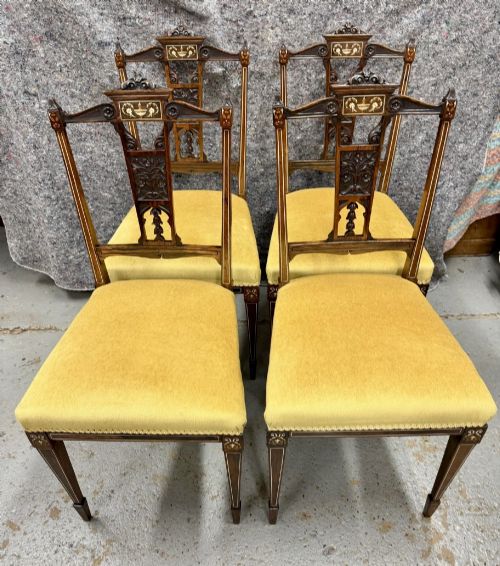
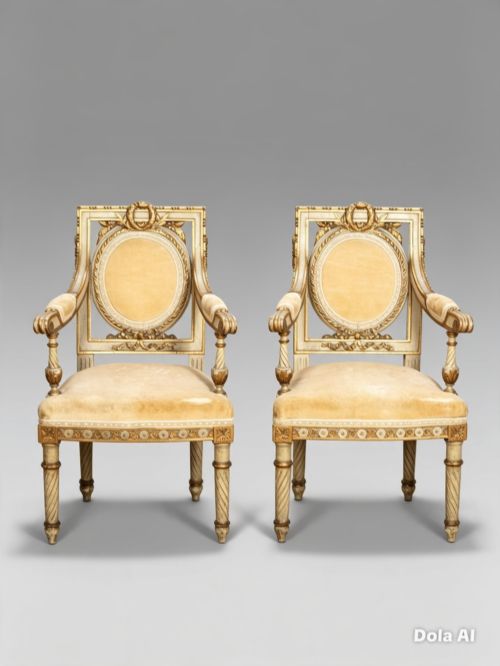
When you search for neoclassical bedroom chairs, you encounter a selection spanning the eighteenth, nineteenth, and early twentieth centuries, including Edwardian and later revival pieces. The forms take shape primarily as armchairs, side chairs, and salon chairs, alongside occasional benches and window seats.
French and English influences dominate the selection, referencing Louis XVI, Regency, Georgian, and Sheraton idioms. You will frequently find pairs and small sets originating from the late nineteenth and early twentieth centuries, constructed in varied regional workshops.
Materials and Construction
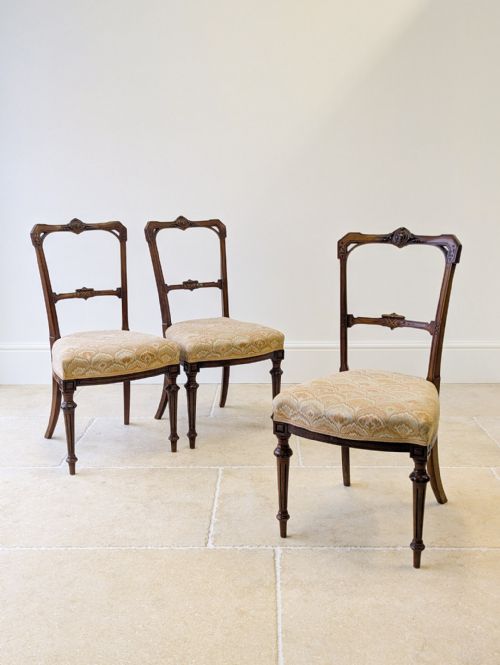
Solid timbers such as mahogany, walnut, and rosewood form the structural foundation of these chairs, often complemented by giltwood, painted surfaces, and ebonised finishes. Brass mounts and carved wooden details provide the characteristic ornamentation associated with the style.
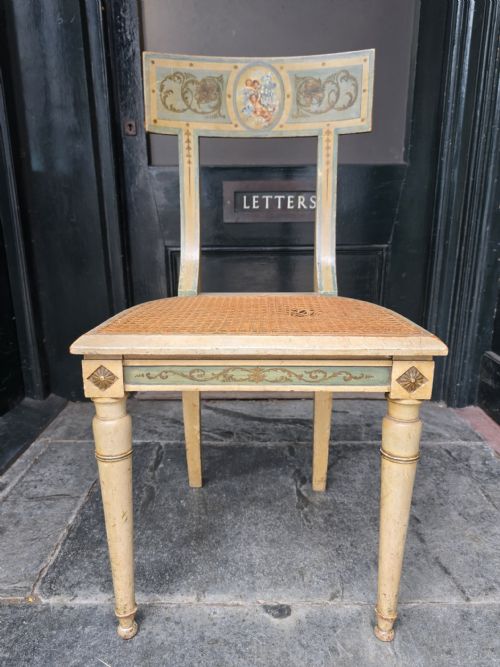
Seating areas utilise traditional upholstery, fabric, textile, and split cane work set within carved wooden frames. Joinery and hand carving define the construction methods across both English and continental examples.
The selection includes specific forms such as open-arm armchairs, window seats, and split cane bergere chairs.
Judging Quality
The standard of carving and the crispness of applied gesso or paint separate standard production from finer work. Hand-carved elements demonstrate depth and precision that distinguish superior frames from simpler commercial output.
The integrity of the structural timber and the retention of original surface treatments dictate the standing of an individual piece. Original gilding and period upholstery techniques hold more weight than later alterations.
The Neoclassical Bedroom Chairs Glossary
- Louis XVI
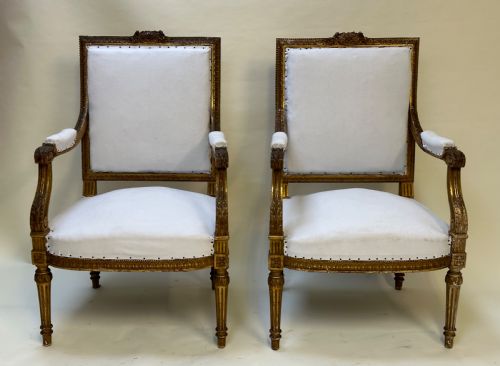
- A French design style characterised by straight tapered legs, neoclassical symmetry, and classical motifs. It forms the primary design vocabulary for many nineteenth-century revival chairs.
- Giltwood
- Timber coated with a thin layer of gold leaf or powder over a prepared gesso ground. It provides a bright reflective surface on decorative frames.
- Bergere
- An enclosed upholstered armchair with wooden sides and a padded seat. The back often incorporates cane panels.
- Shield Back
- A chair back shaped like a classical shield, popular in eighteenth-century English furniture design. This form frequently appears in Georgian and Sheraton revival pieces.
- Fauteuil
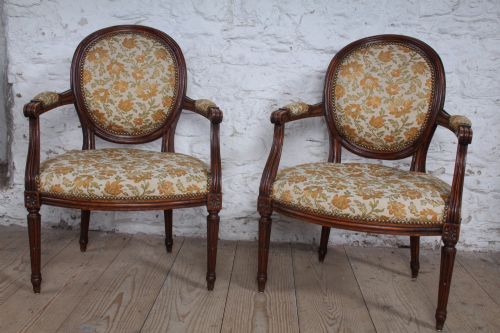
- An open-framed French armchair with upholstered back and armrests, exposing the carved wooden arms and frame. It represents a standard seating form in salon and bedroom furnishings.
Neoclassical Bedroom Chairs: Frequently Asked Questions
Are these chairs comfortable for daily use?
Many of these chairs provide supportive upright seating suited to dressing tables or bedroom corners. Upholstered models offer softer cushioning than solid wood or cane variants.
Depth and back angle vary according to the specific period and intended room placement. Selecting a model with armrests increases comfort for longer periods of sitting.
How do I identify a French revival chair?
French revival pieces often display Louis XVI characteristics such as fluted tapered legs and carved ribbon or floral motifs. Painted or gilded finishes frequently appear alongside exposed show frames.
English interpretations tend to lean towards Georgian or Sheraton restraint, utilising mahogany and shield-back forms. Comparing the timber and decorative carving helps clarify the regional origin.
Can I mix these chairs with modern decor?
The clean geometry and classical proportions of neoclassical seating integrate smoothly into contemporary rooms. Placing a single gilded or painted chair beside minimalist furniture creates a deliberate contrast.
Pairs work effectively as bedside seating or flanking a low table. The neutral tones of wood and fabric bridge traditional and modern interiors.
What is the difference between salon and bedroom chairs?
Salon chairs were originally intended for formal reception rooms, often featuring lighter frames and decorative carving. Bedroom chairs served private quarters, prioritising comfort and upholstery.
In practice, surviving examples share similar proportions and materials across both categories. Selection depends primarily on the desired finish and upholstery style.