
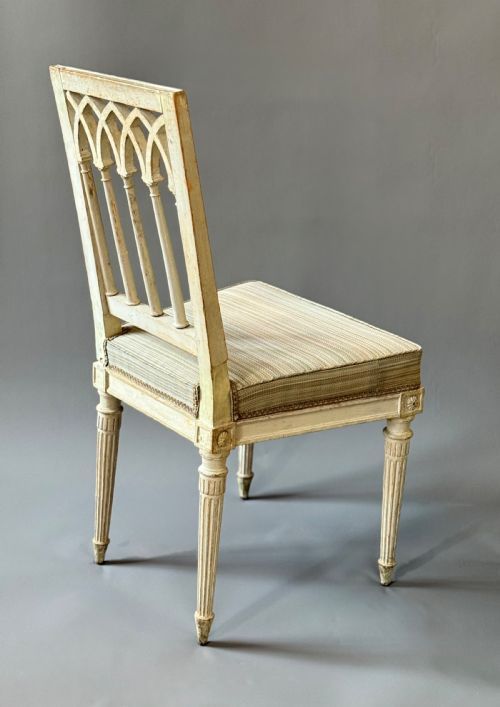


French Neoclassical Side Chairs
French neoclassical side chairs bring symmetry and refined carving to a room, offering understated elegance through classical motifs.
French Neoclassical Side Chairs
French neoclassical side chairs encompass formal seating pieces shaped by classical proportions and restrained ornamentation. Buyers searching this phrase encounter dining chairs, salon chairs, and bedroom chairs dating from the eighteenth century through the twentieth century.
The selections span periods including the eighteenth century, the Victorian era, and the early twentieth century, alongside revivals and related styles like Louis XVI and Gothic Revival. Painted wood, giltwood, and cane forms appear frequently across the inventory.
Armchairs, open armchairs, and dining chairs complement the core offering of side chairs. Pieces originate from diverse periods such as eighteen-eighty, nineteen-hundred, and nineteen-thirty.
How they were made
Construction relies upon traditional timber frames shaped through hand carving. Artisans utilise painted wood and giltwood surfaces to finish the structural elements.
Upholstery techniques incorporate fabric, velvet, and silk damask to pad the seats and backs. Cane panels provide lightweight support within wooden frameworks, while brass components add structural detail.
One notable set previously resided at Lady Diana's Spencer House.
What varies in quality
The refinement of the hand carving distinguishes standard production from superior examples. Crisp details on wooden foliage and classical motifs reveal the hand of a skilled maker.
The integrity of the structural timber and the retention of original painted or gilt surfaces influence the overall standard. Intact cane work and high-grade textile upholstery further separate the finer pieces.
The French Neoclassical Side Chairs Glossary
- Giltwood
- Timber treated with a thin layer of gold leaf. This finish creates a bright metallic surface popular in formal neoclassical interiors.
- Cane
- Woven material made from rattan or stripped plant stems. It provides a flexible and breathable panel for seat backs.
- Louis XVI Style
- Design aesthetic defined by straight lines, classical symmetry, and geometric motifs. It emerged in France during the eighteenth century and inspired later revivals.
- Silk Damask
- Reversible figured textile woven from silk threads. It offers a lustrous pattern suitable for upholstery on formal seating.
French Neoclassical Side Chairs: Frequently Asked Questions
Where were these chairs used historically?
These seats served primarily in formal salons, dining rooms, and private bedrooms of grand residences. Their lightweight construction allowed servants to move them easily around the room.
Side chairs were positioned against walls when not in use for dining or conversation. Armchairs typically accommodated hosts or principal guests.
How do I care for painted and giltwood finishes?
Dust wooden frames gently with a soft, dry cloth to prevent surface accumulation. Avoid commercial polishes that can degrade delicate painted or gilded layers.
Keep seating away from direct sunlight and strong heat sources to protect the underlying timber. Stable humidity levels prevent the wood from expanding and cracking.
Can I use these chairs for daily dining?
Sturdy antique and revival frames function well for regular seating provided the joinery remains tight. Periodic checks ensure that legs and stretchers stay secure under daily use.
Delicate caned panels and antique silk upholstery require gentle treatment. Selecting chairs with robust fabric upholstery suits active dining environments better.