


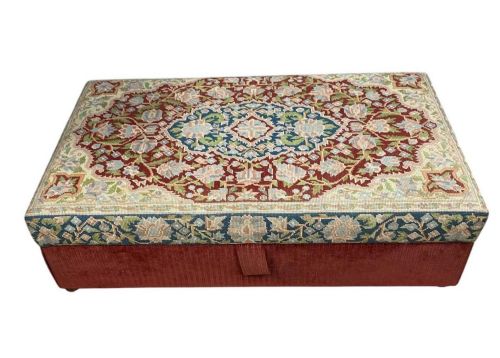
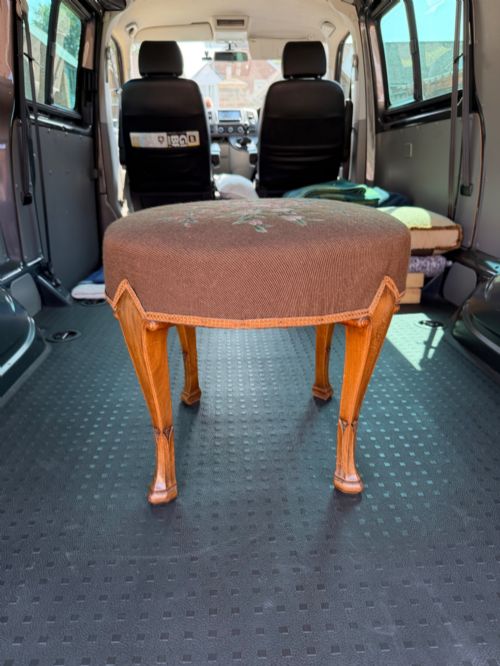


Needlepoint Tapestry Table
These needlepoint tapestry tables and related stools bring worked textile panels into practical wooden furniture, offering collectors useful period pieces with tactile historical surfaces.
Needlepoint Tapestry Table
A needlepoint tapestry table search typically reveals a variety of low seating, dressing stools, sewing stands, and occasional tables incorporating worked textile panels. The pieces on this page span several periods, with Victorian and nineteenth-century examples appearing frequently alongside Georgian and twentieth-century revivals.
Forms range from revolving piano stools and dressing table stools to metamorphic fire screen tables and sewing stands. Walnut and mahogany frames provide the primary wooden structures for these textiles, often featuring styles like Queen Anne Revival, Aesthetic Movement, and William IV.
Buyers also encounter related small seating such as footstools and ottomans where the tapestry top remains the central decorative feature. These functional items combine upholstery craft with cabinet-making traditions from English and continental workshops.
Materials and construction methods
Makers constructed the wooden frames of these pieces using hardwoods such as mahogany and walnut, occasionally employing ebonised finishes, gilt, or paint. Timber sections were joined to support upholstered tops and functional elements like drawers or revolving mechanisms.
The decorative surfaces utilise wool and textile threads worked into needlepoint tapestry and embroidery panels. These textile inserts were then secured over padding onto the wooden frames of stools, tables, and screens.
Needlepoint Tapestry Table Retail Price Guide 2026
Typical asking prices for needlepoint tapestry table among the pieces listed under this phrase on Sellingantiques today, from the lower quarter to the upper quarter. They describe what is for sale here now, not the wider market.
Listings incorporate Victorian, Georgian, and twentieth-century periods alongside materials like mahogany, walnut, wool, and brass.
Distinctions in quality
Quality rests in the crispness of the timber carving, the tightness of the frame joints, and the fineness of the needlepoint stitches in the textile panel. Superior examples display dense wool work with well-preserved colour and robust timber frames showing thoughtful proportion and detail.
The integration of the textile to the wooden structure also dictates worth, where original upholstery techniques and stable underlying frames outweigh later replacements. Master cabinet-making and intricate joinery distinguish finer production from simpler utility pieces.
H Ogden of Manchester·Whytock and Reid
The Needlepoint Tapestry Table Glossary
- Needlepoint
- A type of canvas work embroidery stitched by hand using wool or other yarn. It forms the patterned top seen on many period stools and table inserts.
- Tapestry
- A form of textile art traditionally woven on a loom, though the term often describes needlework panels in nineteenth-century furniture context. These panels define the visual character of the pieces.
- Metamorphic
- Furniture designed to transform from one object into another, such as a fire screen that converts into an occasional table. This ingenuity marks inventive period design.
- Cross stretcher
- An X-shaped wooden brace connecting the legs of a stool or table for added structural support. It frequently appears on walnut and mahogany framing.
- Aesthetic Movement
- A late nineteenth-century design style emphasising visual beauty over narrative subject matter. Pieces from this movement display distinctive artistic sensibility.
Needlepoint Tapestry Table: Frequently Asked Questions
What is a needlepoint tapestry table?
It is a piece of furniture featuring a worked textile panel, often taking the form of a dressing stool, sewing stand, or occasional table.
These items blend textile art with woodworking, serving both decorative and practical roles in period interiors.
How were these tables used?
They functioned as dressing furniture, sewing stands, or small occasional tables in Victorian and earlier parlours.
Some designs incorporated revolving seats or metamorphic frames to serve multiple household purposes.
How do I care for the tapestry?
Keep wool needlepoint panels away from direct sunlight to prevent the textile colours from fading over time.
Gentle dusting with a soft brush helps maintain the integrity of the vintage wool threads.
How are different periods identified?
Cabinet-making styles, such as William IV scrolls or Queen Anne Revival cabriole legs, point to specific eras of production.
Turned wood details and the specific weave of the textile panels also offer clues to the date of creation.