
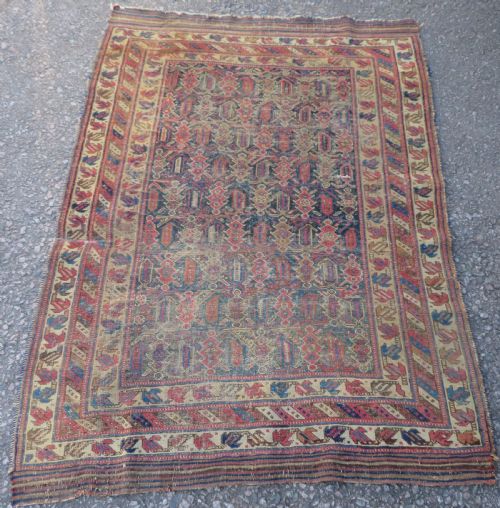
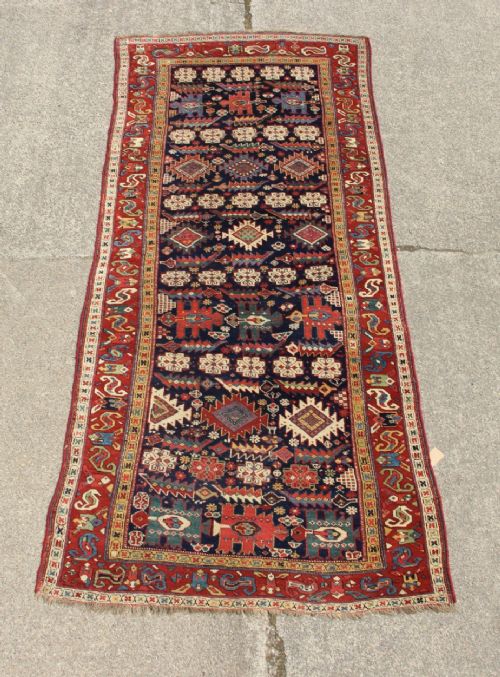
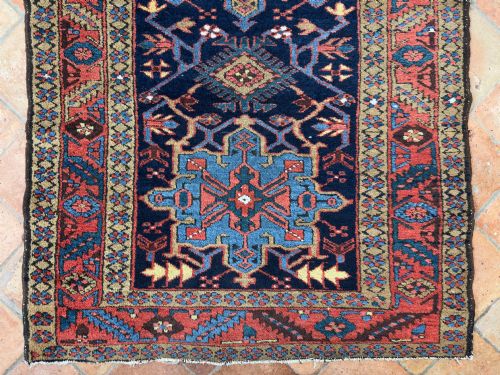


Navy Wool Hallway Rug
A navy wool hallway rug brings depth and structure to a narrow interior corridor through enduring tribal artistry.
Navy Wool Hallway Rug
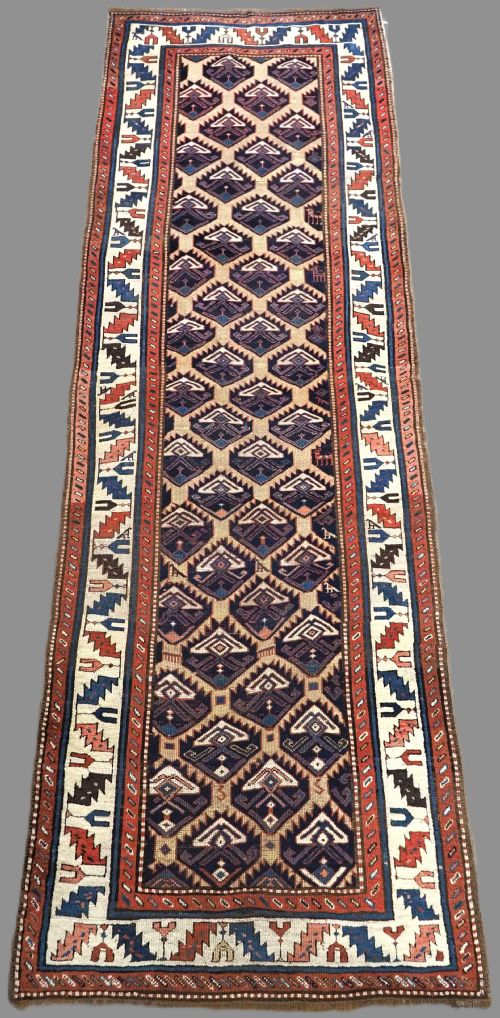
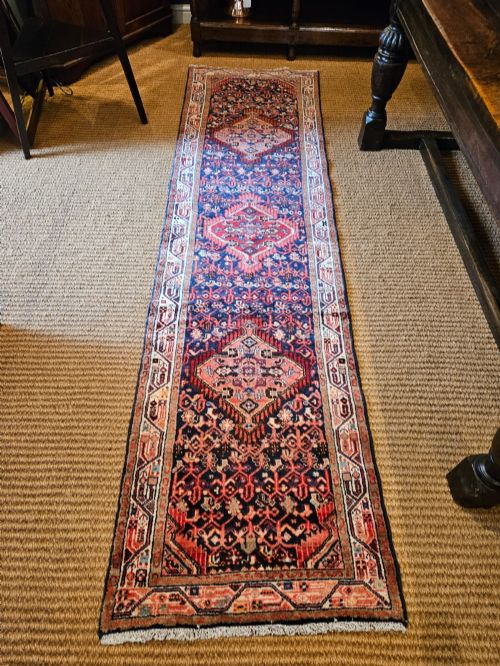
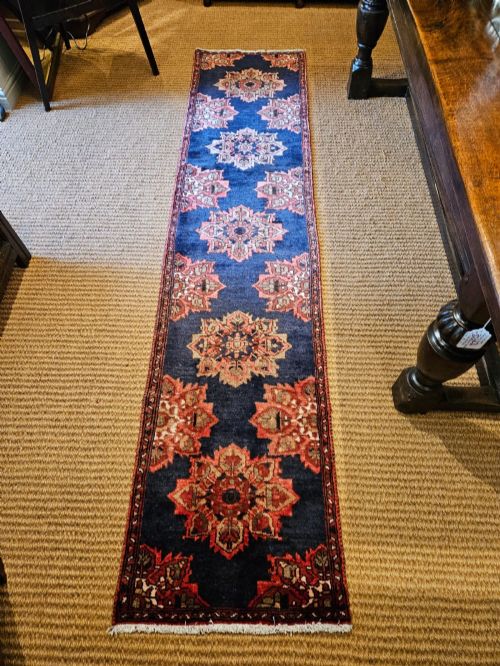
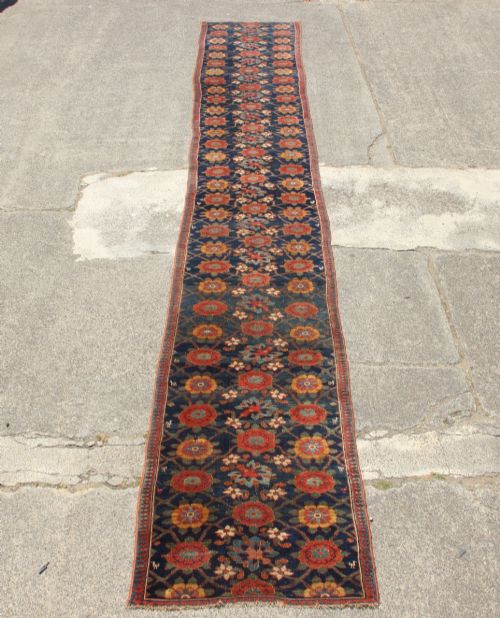
A navy wool hallway rug searches out elongated formats designed specifically for narrow domestic thoroughfares and passages. The selections span Persian tribal and village workshops alongside Caucasian weaves dating from the mid-nineteenth century into the early twentieth century.
Most pieces appearing here adopt traditional runner proportions, engineered to line corridors while displaying rich indigo grounds. Village weavers from centres such as Heriz, Hamadan, Bidjar and Kurdish regions created these textiles for functional warmth and daily foot traffic.
Materials and Construction
Construction relies primarily on natural wool and hand-spun wool foundation yarns, occasionally paired with cotton warps in later village pieces. Artisans bound these materials using dense knotting techniques to withstand sustained wear in high-traffic hallways.
Colour saturation depends on natural dyes applied to hand-spun wool, yielding the deep navy tones characteristic of these runners. The interaction between varied wool textures and natural dyestuffs produces a subtle variation across the pile.
Listings span production dates from the eighteen-sixties through the nineteen-thirties, documenting village weaving traditions across Persia and the Caucasus.
Defining Quality Variations
Quality rests on the density of the weave and the clarity of the tribal or geometric motifs drawn across the field. Tightly packed knots in resilient wool distinguish finer town and village productions from coarser utility floor coverings.
The sophistication of the natural dye palette and the integrity of the original borders dictate the standing of an individual runner. Pieces retaining crisp graphic definition along their narrow spans demonstrate superior wool selection and weaving discipline.
The Navy Wool Hallway Rug Glossary
- Runner
- A long, narrow carpet format intended for corridors, staircases and hallways. These pieces measure significantly longer than they are wide to fit restricted spatial layouts.
- Knot
- The individual loop of wool tied around warp threads that forms the pile of the rug. Tighter knotting increases durability and allows for sharper pattern definition.
- Warp
- The vertical foundation threads stretched tightly on the loom before weaving begins. Weft threads are inserted across these warps to lock the knots in place.
- Natural Dye
- Colour extracted from plant, insect or mineral sources rather than synthetic chemical compounds. These dyes yield rich, complex tones that age with considerable depth.
- Boteh
- A traditional teardrop or almond-shaped motif with a curved upper end, frequently seen in Persian and Caucasian textile designs. This ancient symbol represents a floral spray or cypress tree.
Navy Wool Hallway Rug: Frequently Asked Questions
How do I measure for a hallway runner?
Measure the clear floor space of your corridor, leaving an equal margin of exposed wood or stone around the edges. Ensure doors swing freely above the chosen pile height.
Account for length by stopping the rug short of doorframes and thresholds to maintain a balanced visual proportion in the passage.
Are these rugs suitable for heavy traffic?
Dense wool construction and durable foundation weaves make these historical runners well-equipped for active domestic corridors. The natural lanolin present in traditional wool naturally repels dirt and resists crushing under foot.
Use a quality underlay beneath the runner to prevent slipping and absorb impact from footsteps, which preserves the structural integrity of the foundation over time.
How do I identify a Persian village runner?
Village runners typically display geometric repeating medallions, latch-hook motifs and asymmetrical tribal abstractions rather than refined court designs. Artisans working in regions like Heriz, Hamadan or Kurdish districts relied on memory and local traditions rather than precise cartoon drawings.
Inspect the wool quality and irregularities in the border symmetry, which point to independent workshop production rather than mass-produced manufacturing.
What causes the distressed look in antique rugs?
Generations of foot traffic combined with natural oxidation of wool and plant-based dyes create gentle wear patterns across the surface. This gradual softening alters the pile height and mellows the contrast between the navy ground and secondary colours.
Such patination reflects decades of domestic use, transforming a utilitarian floor covering into a textured textile with visible history.