




Navy Border Carpet
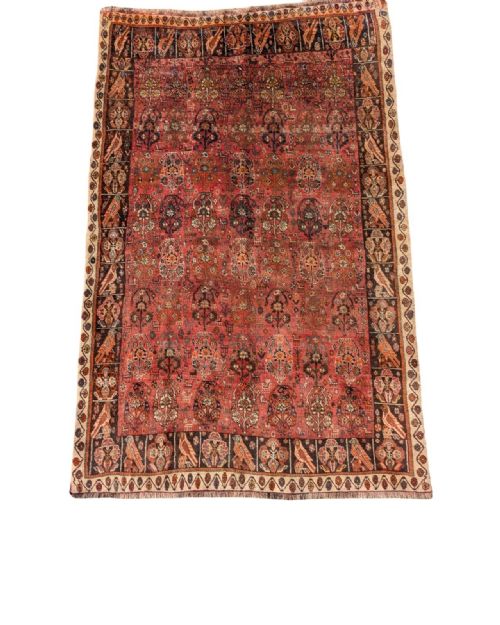
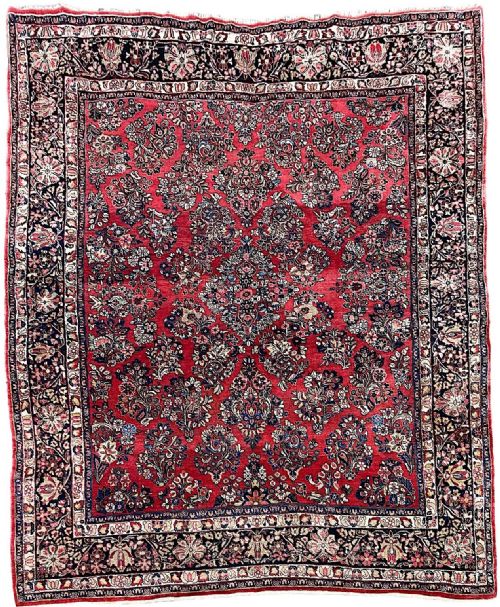
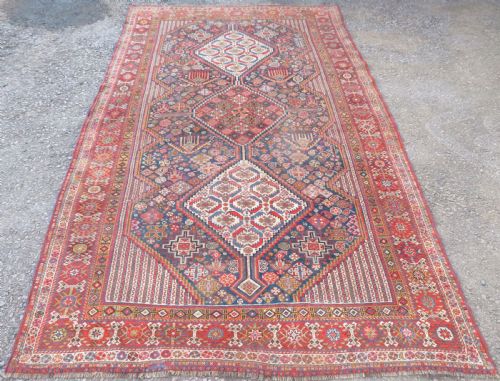
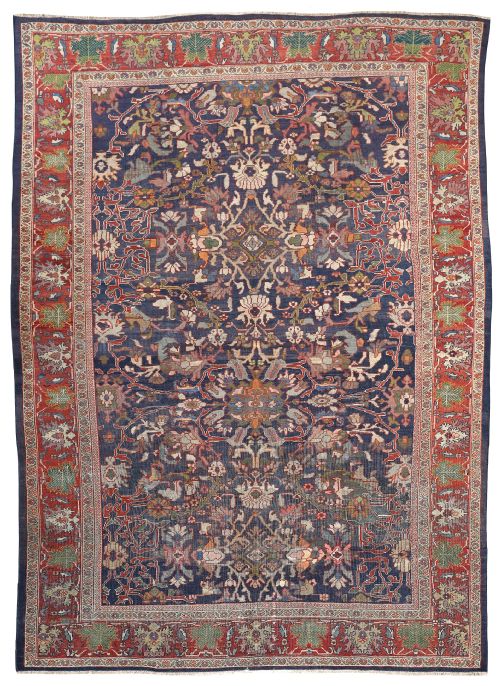
A navy border carpet brings structured geometry and deep indigo framing to a room, drawn from nineteenth and early twentieth century Persian and Caucasian weaving traditions.
Navy Border Carpet
A navy border carpet centres on traditional Persian and Caucasian styles, featuring distinctive framing bands in deep blue tones that anchor the field designs.
The selections span significant periods from the mid-nineteenth century through the 1930s, encompassing room-size formats, square carpets, and long runners.
Regional origins in this inventory include Heriz, Sarouk, Tabriz, Sultanabad, and various Caucasian weaving districts, each bringing specific medallion or all-over patterns.
Materials and construction
The pieces rely primarily on wool and cotton foundations, utilising hand-spun wool for the pile to achieve durability and rich dye absorption.
Weavers employed traditional hand-knotting techniques on upright looms, integrating natural dyes derived from plants and minerals to create the enduring blue borders.
Materials documented across the inventory consist of wool, cotton, and hand-spun wool.
Judging quality in woven floor coverings
Quality rests on the density of the knotting and the precision of the drawing within both the central field and the framing borders.
The depth and clarity of the wool pile directly influence how the piece handles foot traffic and how the natural dyes age over decades of use.
The Navy Border Carpet Glossary
- Border
- The outer decorative band framing the central field of the carpet. It typically contains repeating geometric motifs or floral vines.
- Field
- The main central background area enclosed by the outer borders. This space often displays medallions, boteh motifs, or all-over trellis patterns.
- Kelleh
- A specific rectangular format for a carpet that is longer than it is wide, traditionally suited for specific reception rooms.
- Runner
- A long, narrow carpet format designed for hallways, corridors, or alongside large furniture. These pieces maintain consistent widths while extending in length.
- Boteh
- A stylised almond or paisley motif with a curved upper tip. This ancient symbol appears frequently in Persian and Caucasian rug designs.
Navy Border Carpet: Frequently Asked Questions
How do I place a large room-size carpet?
Position the piece to anchor the main seating furniture in a living room, ensuring the front legs of sofas and chairs rest comfortably upon the wool surface.
Allow an even margin of exposed flooring around the perimeter of the carpet to frame the room correctly and highlight the border work.
How are antique Heriz carpets identified?
Heriz pieces typically display bold, geometric medallion designs executed with a sturdy structural weave. They often incorporate terracotta fields contrasted by deep blue corners and borders.
The heavier knotting and robust cotton foundations distinguish them from finer city-woven Persian types.
What maintenance do these wool rugs need?
Regular gentle vacuuming without a rotating brush roll prevents dust accumulation in the wool pile. Professional cleaning should be undertaken periodically by specialists in antique textiles.
Rotating the rug every year ensures even wear patterns from foot traffic and sunlight exposure.
How do Caucasian runners differ from Persian ones?
Caucasian runners generally favour sharper, more rectilinear geometry and saturated primary colours. Their border patterns often feature distinct tribal motifs and starker contrasts.
Persian runners tend towards curved floral vines and more nuanced, blended tonal transitions across the field.