


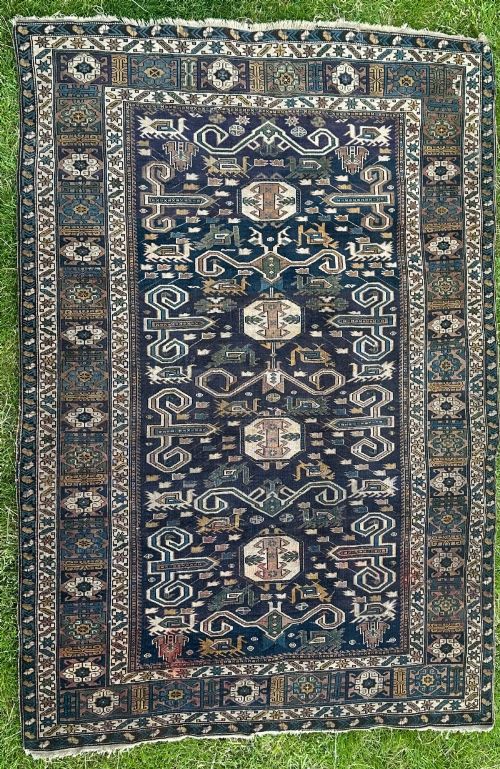
Navy Blue Geometric Carpet
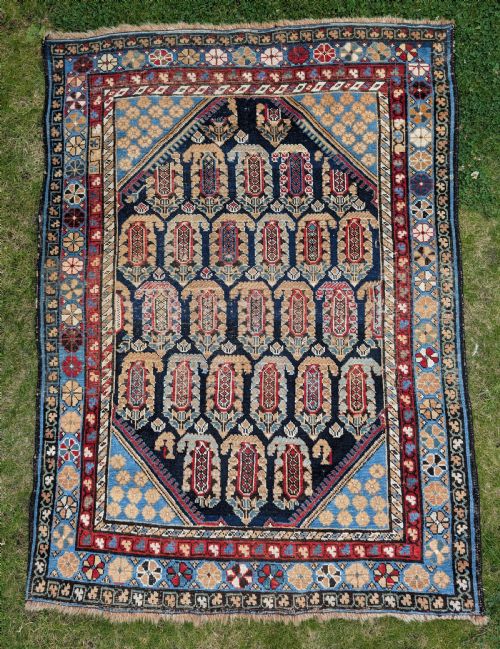
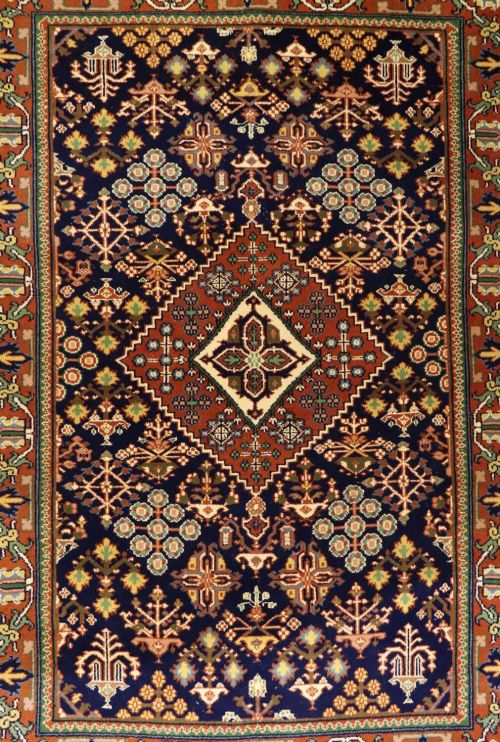
A navy blue geometric carpet brings enduring linear pattern and deep indigo dye to a floor, grounding a room with traditional tribal artistry.
Navy Blue Geometric Carpet
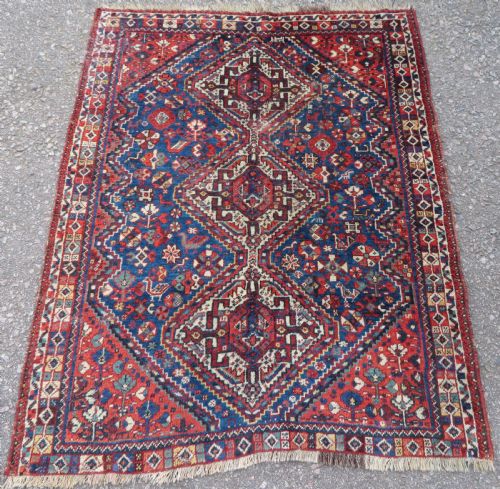
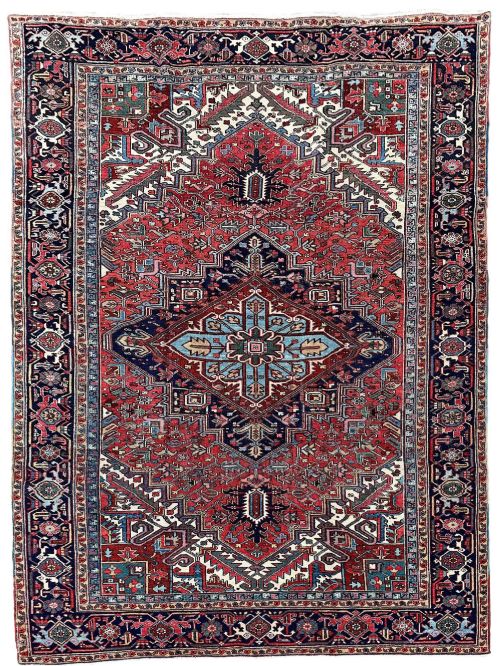
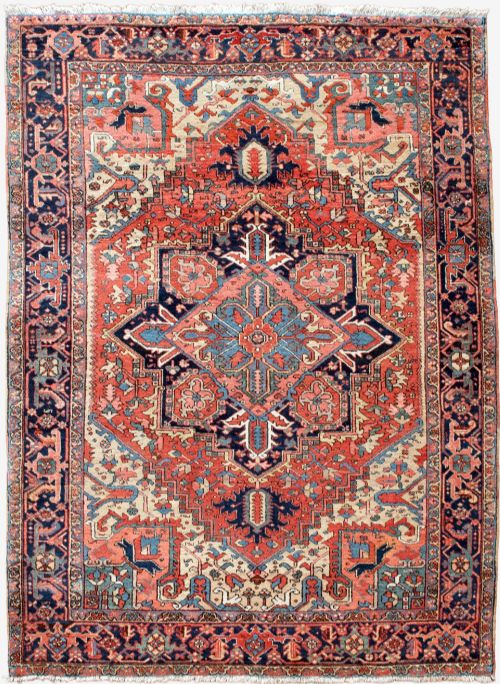
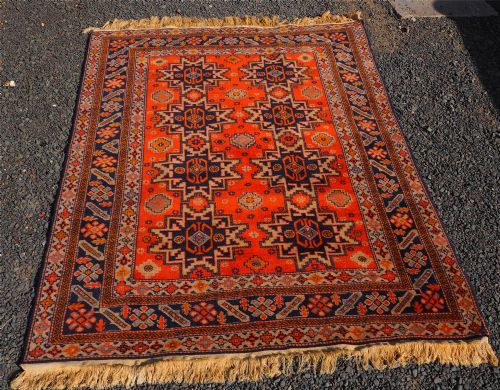
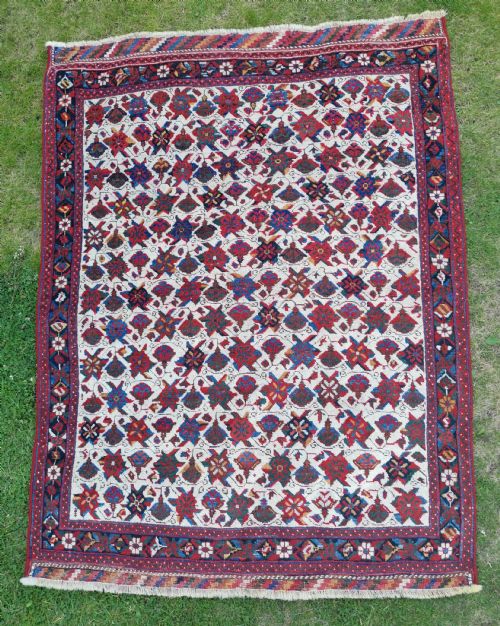
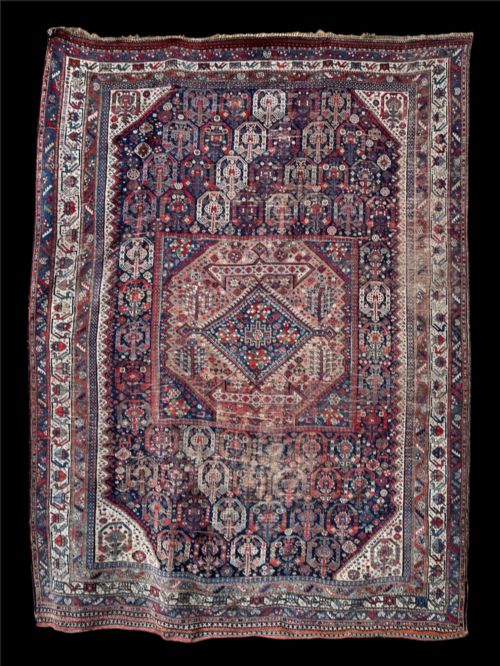
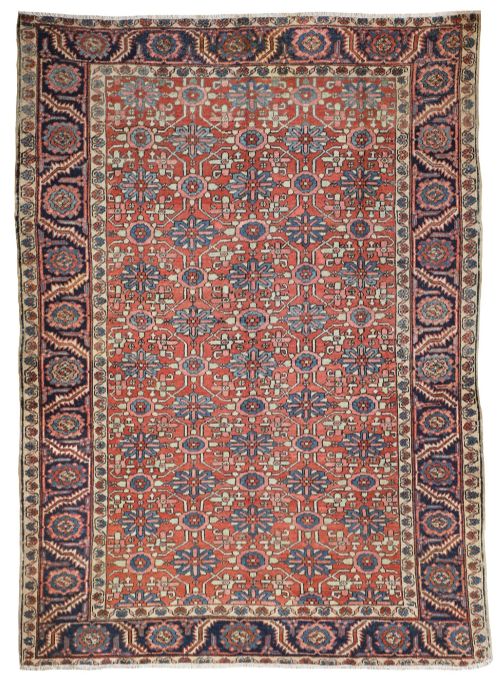
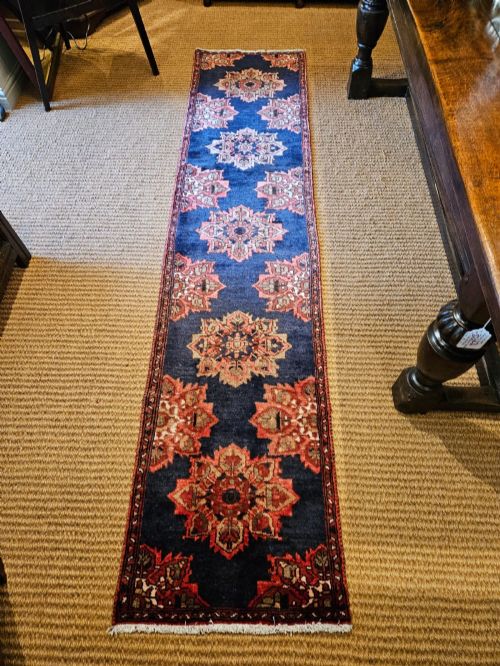
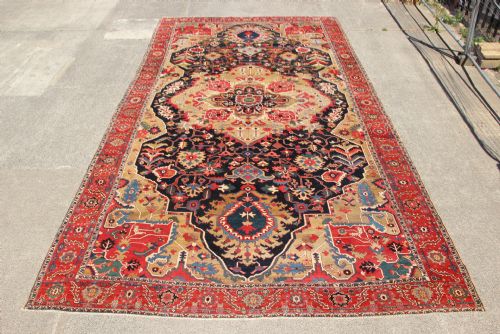
A navy blue geometric carpet encompasses hand-woven rugs and runners originating predominantly from Persian and Caucasian traditions, spanning the nineteenth and twentieth centuries. These floor coverings span diverse formats, from long hallway runners and compact area rugs to large main carpets featuring angular motifs.
The selections encountered here range from nineteenth-century tribal weaving to twentieth-century vintage examples. Buyers frequently encounter regional Persian types such as Heriz, Afshar, Khamseh, and Kurdish pieces, alongside Caucasian examples like Shirvan and Karabagh.
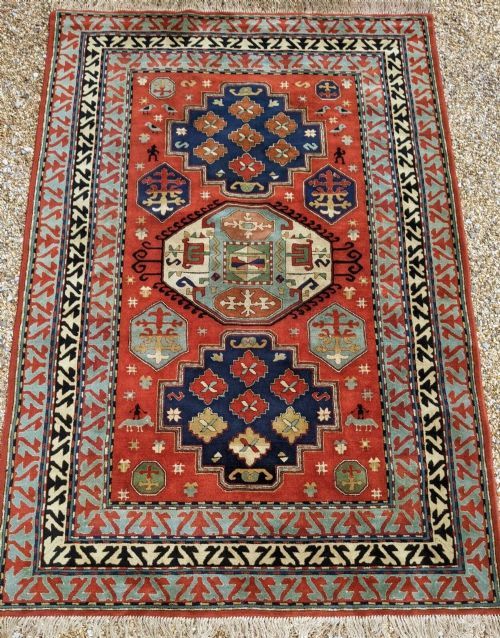
The designs rely heavily on rectilinear medallions, all-over lattice patterns, and repeating tribal symbols rather than floral curves. This makes each navy blue geometric carpet a structured composition of rectilinear ornament mapped across a dark indigo or navy field.
How They Were Made
These carpets rely on wool and hand-spun wool for the pile, providing both resilience and a varied texture that absorbs indigo and navy dyes with subtle variation. Cotton is frequently utilised for the foundation warps and wefts, giving the textile structural stability and crispness to the geometric lines.
Weavers knotted the wool by hand onto vertical looms, employing traditional tribal techniques passed down through generations. The resulting density of the knotting dictates the sharpness of the geometric medallions and the overall weight of the carpet.
The documented styles encompass Persian tribal, Kurdish, Heriz, and Caucasian traditions.
What Varies in Quality
The finesse of a navy blue geometric carpet rests primarily on the precision of its knotting and the crisp execution of its rectilinear lines. Denser knotting permits sharper definition within the medallions and intricate borders.
The quality of the wool and the depth of the dye work also separate standard examples from superior ones. Hand-spun wool takes dye with tonal variation, giving the navy ground a rich, light-catching depth rather than a flat, uniform appearance.
The Navy Blue Geometric Carpet Glossary
- Medallion
- A central ornamental motif set into the field of the carpet. In these pieces, medallions typically take sharp, angular, geometric forms rather than curved outlines.
- Runner
- A long, narrow carpet format designed specifically for hallways and corridors. They often employ repeating geometric patterns to draw the eye along a linear space.
- Warps
- The vertical threads stretched tightly on the loom before weaving begins. The exposed ends of these threads frequently form the fringe at either end of the carpet.
- Wefts
- The horizontal threads passed alternately over and under the warp threads to bind the knots in place. They work alongside the warps to form the stable foundation of the textile.
- Pile
- The upright cut or looped wool surface of the carpet that forms the actual wear layer. Hand-spun wool pile provides both softness underfoot and long-term durability.
Navy Blue Geometric Carpet: Frequently Asked Questions
How do I style a geometric carpet?
A navy blue geometric carpet works well in rooms with neutral furnishings, allowing the sharp indigo patterns to serve as a visual anchor. Pairing them with hardwood floors or minimalist furniture highlights the linear structure of the tribal designs without visual competition.
Because these pieces come in various dimensions, from compact area rugs to substantial room-sized carpets, they can define specific zones within open-plan spaces or add warmth to long corridors.
How do I identify a tribal carpet?
Tribal carpets often display spontaneous, memory-driven designs featuring repeating geometric motifs, stylized animals, and hooked polygons rather than rigid, factory-produced symmetry. The use of hand-spun wool and regional colour palettes further points to nomadic or village workshops.
Examining the reverse side reveals the irregularity of the hand-tying and the structure of the foundation, distinguishing independent weavers from later commercial production.
What is a runner rug used for?
Runner rugs are narrow, elongated floor coverings intended primarily for hallways, entryways, and narrow corridors. They protect high-traffic wooden floors while introducing pattern and colour to transitional spaces.
In geometric designs, the repeating motifs create a sense of forward momentum, visually extending the length of the passage.
How are different regional styles told apart?
Regional styles are distinguished by their specific choice of geometric vocabulary, border arrangements, and wool characteristics. For instance, Heriz carpets often feature large, bold central medallions with distinct corner spandrels, whereas Caucasian pieces lean towards sharper, more compartmentalised star and lattice motifs.
Colour palettes also vary by region, though deep navy and indigo grounds remain a unifying thread across many Persian and Caucasian traditions.