




Naval Watercolour Painting
These naval watercolour painting works capture sea power and sailing vessels through pigment on paper, offering collectors direct glimpses into maritime history.
Naval Watercolour Painting
A naval watercolour painting depicts warships, coastal scenes, and officers across periods from the Regency era through the mid-twentieth century. The works on this page span styles such as Victorian Maritime, Edwardian Maritime, and Mid-Century Maritime.
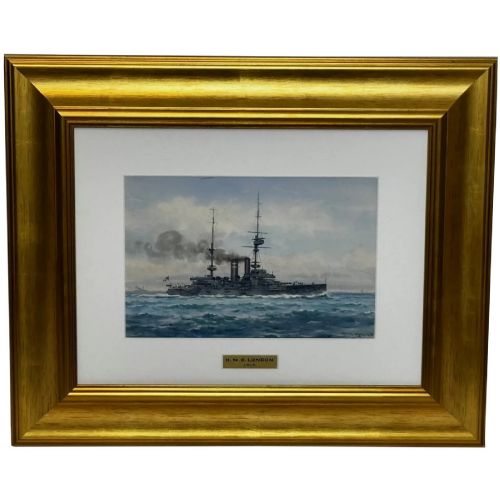
Buyers encounter framed paintings, portrait miniatures, and detailed depictions of specific vessels like HMS London and HMS Newcastle. These pieces utilise paper supports housed within wood, glass, and gilt frames.
Materials and execution
Artists apply watercolour and gouache pigments directly onto paper surfaces to render water, sky, and vessel details. Certain portrait miniatures incorporate unconventional supports such as agate panels.
Finished works find protection behind glass within wooden frames, frequently enhanced with gilt finishes to accent the presentation of the maritime subject matter.
Naval Watercolour Painting Retail Price Guide 2026
Typical asking prices for naval watercolour painting among the pieces listed under this phrase on Sellingantiques today, from the lower quarter to the upper quarter. They describe what is for sale here now, not the wider market.
Listings feature paper supports, gilt wood frames, and glass housings across Victorian and mid-twentieth-century styles.
Distinctions in quality
Quality rests upon the artist's precision in capturing ship architecture, rigging, and atmospheric water conditions. Named works by documented marine painters demonstrate superior draughtsmanship compared to anonymous compositions.
Preservation of the delicate paper support and original framing elements influences the standing of a piece. Stronger works retain vibrant pigment without excessive fading or paper acidification.
Eric Tufnell·Frank Watson Wood·Charles William Adderton·Vincenzo D’Esposito·Samuel Owen·J. Hardy·WF Mitchell·Frank Wasley·Snaffles
The Naval Watercolour Painting Glossary
- Watercolour
- A paint consisting of pigment suspended in a water-soluble vehicle, traditionally applied to paper. It allows for transparent washes that render light and water effects.
- Gouache
- An opaque watercolour medium containing pigment bound in water-soluble gum plus an inert white pigment. Artists utilise it to add solid highlights and dense opaque areas to paper works.
- Man-of-war
- A powerful armed sailing warship of the eighteenth or nineteenth century. These vessels form a primary subject for maritime artists depicting naval dominance.
- Miniature portrait
- A small, highly detailed painting, often executed on materials like paper or agate. Naval examples frequently depict officers in uniform.
- Maritime
- Relating to the sea, navigation, and shipping. This term encompasses both commercial vessels and naval fleets.
Naval Watercolour Painting: Frequently Asked Questions
What periods do these paintings cover?
The available works span several centuries, including Regency, Victorian, and mid-twentieth-century periods. Each era reflects distinct artistic approaches to recording naval fleets and maritime scenes.
Collector options range from early nineteenth-century portrayals of individual officers to 1950s records of specific vessels in foreign harbours.
How were these watercolours originally displayed?
Most pieces appear in period frames constructed from wood and gilt, often protected by glass to shield the paper from environmental damage. Officers and maritime enthusiasts historically hung these framed artworks in domestic parlours and cabins.
Miniature portraits on agate or paper were designed for intimate viewing or portable display within heavy gold mountings.
How do I identify a ship in a painting?
Artists frequently inscribed vessel names, dates, or locations directly onto the mount or within the composition. Historical records and naval registers help match specific hull configurations, funnel counts, and flag displays to named ships like HMS Nairana.
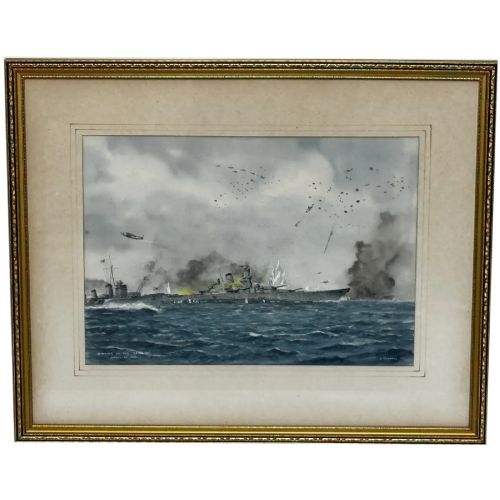
Inscriptions detailing specific actions, such as the battle of the East China Sea, provide immediate context for the depicted fleet.
What is the difference between watercolour and gouache?
Watercolour relies on transparent washes that allow the white of the paper to illuminate the pigment. This technique suits luminous seascapes and atmospheric sky conditions.
Gouache incorporates opaque elements that provide solid coverage, allowing artists to render crisp highlights on metal armour or foaming waves.