



Naval Battle Art
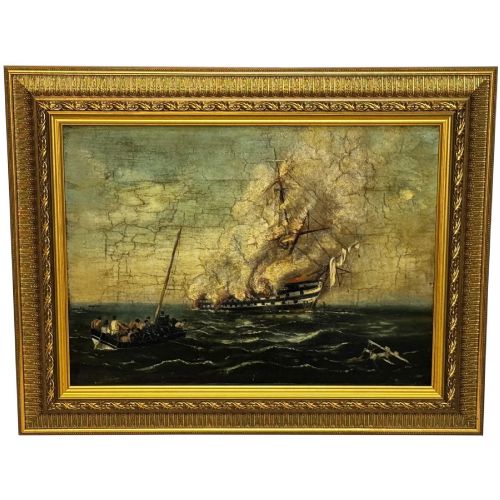
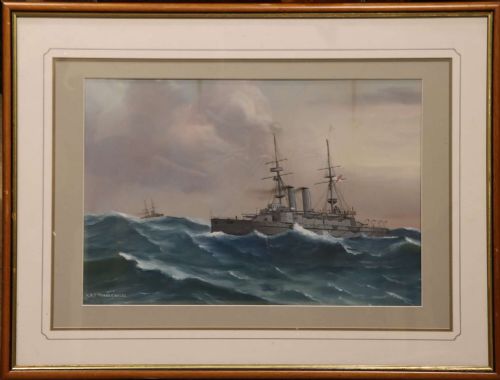
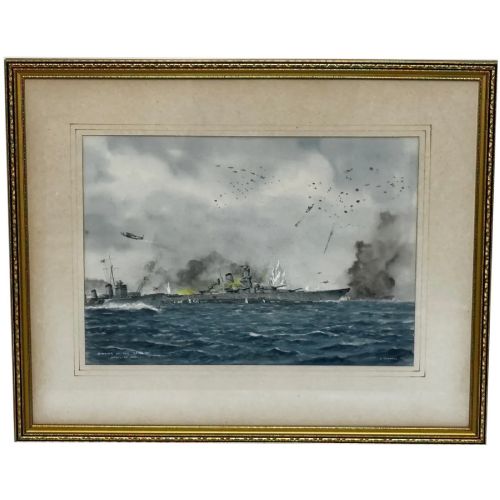
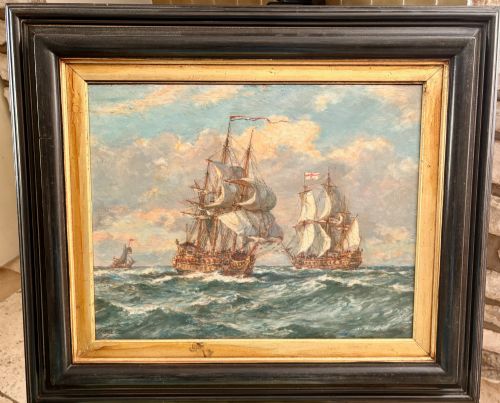
Naval battle art captures historic maritime conflicts on canvas and paper, offering a dramatic focal point for collectors of historic military and marine history.
Naval Battle Art
Naval battle art encompasses oil paintings, watercolours, and gouache depictions of historic sea warfare, warships, and maritime engagements. When you search for naval battle art, you encounter works spanning from the seventeenth century through to the mid-twentieth century.
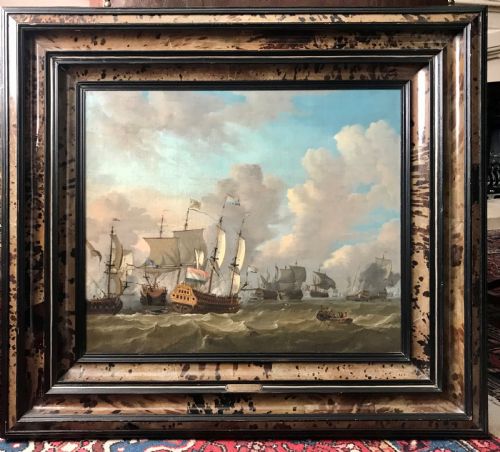
The pieces on this page range from eighteenth-century canvases of galleons with raised sails to Victorian and Edwardian depictions of specific historic actions. Artists frequently record famous vessels, royal flagships, and dramatic coastal engagements.
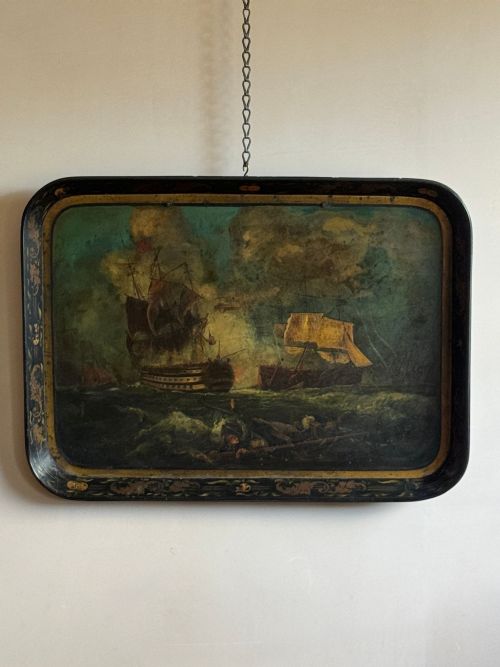
Common formats include framed oil on canvas works, watercolours on paper, and decorated papier-mâché trays featuring naval themes. These pieces document naval history through varied stylistic lenses, from Dutch golden age followers to twentieth-century marine realists.
How they were made
Painters used oil paint on stretched canvas or applied watercolours and gouache to paper to capture the tumultuous movement of the sea and smoke from ship cannons. Many works employ layered oil paint to create depth in the water and realistic billowing sail textures.
Frames often incorporate wood and gold leaf, matching the traditional presentation standards of nineteenth and early twentieth-century marine paintings. Decorative items like trays utilise papier-mâché with japanned surfaces to hold painted maritime scenes.
Listings feature oil on canvas, watercolour, gouache, and wood across periods from the seventeenth century to the mid-twentieth century.
What varies in quality
Quality in these maritime works rests on the artist's command of ship architecture, rigging detail, and the atmospheric rendering of smoke, sky, and rough water. Works by documented painters or skilled followers of established marine artists demonstrate superior handling of perspective and historical accuracy.
The condition of the canvas or paper support and the originality of the surface pigment significantly influence the standing of a piece. Earlier works from the seventeenth and eighteenth centuries command attention for their detailed depiction of galleons and period naval tactics.
William McAlpine·Eric Tufnell·Bernard Gribble·Dion Pears·Richard Brydges Beechey·James Hardy·Abraham Storck
The Naval Battle Art Glossary
- Gouache
- An opaque water-based medium that allows artists to build rich, matte surfaces on paper. It was frequently utilised for detailed maritime watercolours around nineteen hundred.
- Japanned
- A European imitation of East Asian lacquerwork applied to objects such as papier-mâché trays. This technique created a dark, glossy surface suitable for framing painted scenes.
- Galleon
- A large sailing warship used by European nations from the sixteenth through the eighteenth centuries. These multi-decked vessels frequently appear in earlier sea battle compositions.
- Follower
- An artist working in the style of a master painter, either during their lifetime or subsequently. These painters adopted the compositional methods of established marine artists.
Naval Battle Art: Frequently Asked Questions
What periods do these paintings cover?
The works span several centuries, starting from seventeenth-century depictions of Dutch ships up to mid-twentieth-century watercolours of twentieth-century naval vessels.
Intervening periods are represented by eighteenth-century canvases, Regency pieces, and Victorian or Edwardian maritime art.
Are these works original paintings?
The selections consist of original hand-painted works in oil, watercolour, and gouache, alongside painted decorative items like japanned trays.
Artists created these pieces directly on canvas, paper, or papier-mâché supports rather than using mechanical reproduction methods.
How should I hang naval art?
These dramatic maritime scenes require wall space with stable lighting, away from direct sunlight to protect oil pigments and works on paper.
Traditional wood and gold leaf frames suit period interiors, particularly when paired with study or library decor.
How do I identify a ship in a painting?
Artists often recorded specific vessels by name, such as HMS Prince of Wales, HMS Queen Charlotte, or the Japanese battleship Yamato.
Details like flag signals, specific hull configurations, and recorded historical engagements help identify the exact naval action portrayed.