
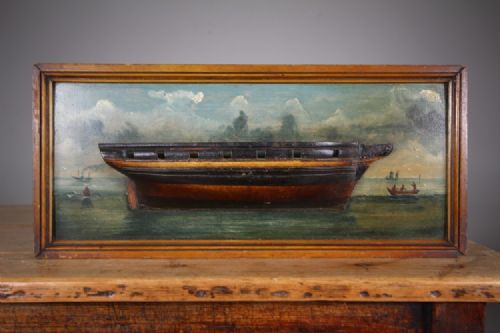
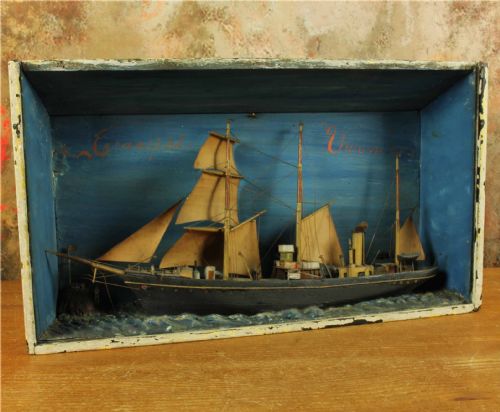


Nautical Ship Diorama
These nautical ship diorama pieces capture maritime history in miniature, offering handmade sailing vessels and steamers enclosed within glass or wooden frames for any collector.
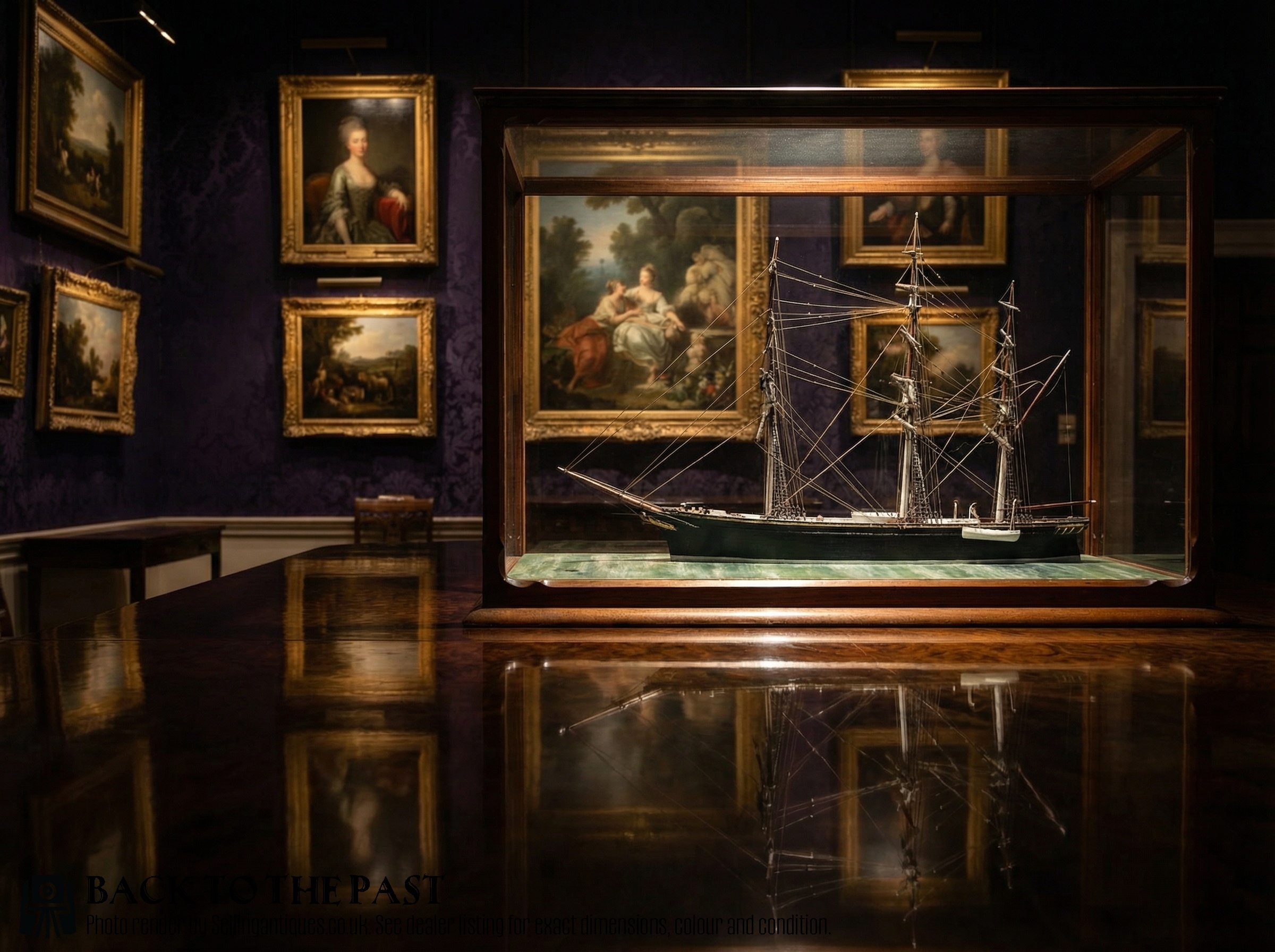
Nautical Ship Diorama
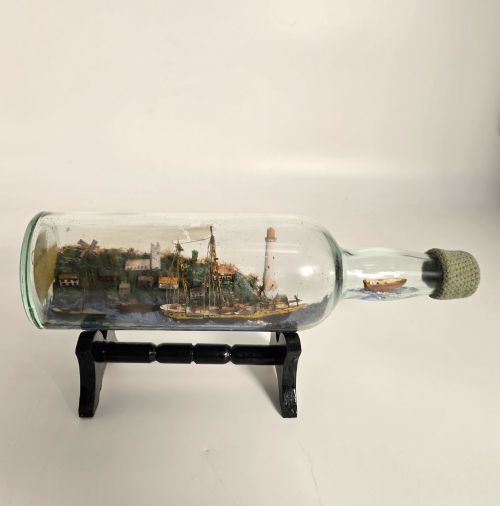
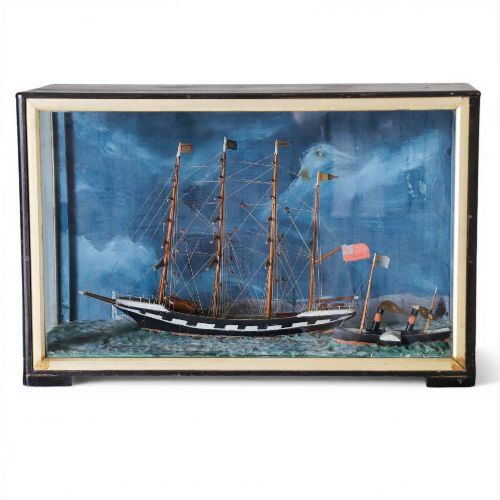
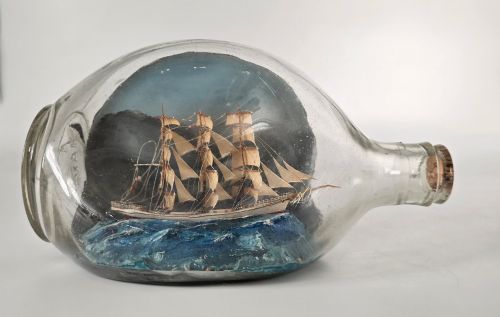
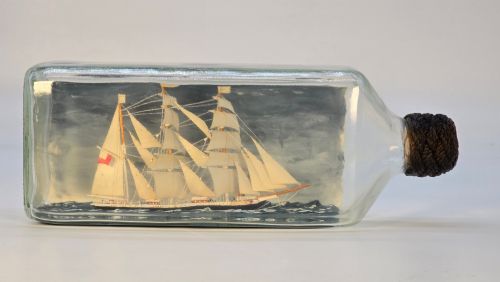
A nautical ship diorama represents vessels enclosed in glazed boxes, shadow frames, or glass bottles. These items capture sailing ships, clippers, and steam vessels through detailed model work.
The pieces on this page span the nineteenth century through the nineteen-forties, covering Victorian maritime pieces alongside later folk art creations. Collectors encounter shadow boxes, wall art, and ship in a bottle examples.
Makers ranged from sailors to local artisans producing folk art expressions of British and French vessels. Many represent named ships on wooden plinths or within wall-hanging timber cases.
How they were made
Wood, glass, and paint form the primary components of these models, alongside canvas, thread, plaster, putty, and fabric. Artisans utilised carved timber for hulls and painted canvas or plaster to render the sea.
Makers constructed shadow boxes and glazed wooden cases to protect the delicate rigging and thread work inside. Bottled examples required passing folded masts and sails through narrow glass necks before erecting them.
Listings feature wood, glass, paint, plaster, canvas, thread, putty, and fabric across nineteenth-century and twentieth-century items.
What varies in quality
Quality rests upon the fineness of the maritime model work and the complexity of the rigging. Superior examples display meticulous scratch-built details that accurately reflect specific vessel rigging and hull shapes.
The enclosure itself dictates much of the visual impact, from simple glass bottles on wooden plinths to large cased shadow boxes. Preserved painted seascapes and balanced compositions separate standard items from superior works.
The Nautical Ship Diorama Glossary
- Diorama
- A three-dimensional miniature scene enclosed within a frame, box, or bottle. These displays use painted backgrounds and model elements to recreate historical vessels at sea.
- Shadow box
- A deep glazed wooden frame designed to house three-dimensional displays on a wall or shelf. This housing protects delicate model rigging from dust and damage.
- Folk art
- Artistic work created by untrained or traditional craftsmen working outside academic traditions. Maritime folk art encompasses naive ship models and sailor-made dioramas.
- Scratch-built
- A model constructed entirely from raw materials rather than from a commercial kit. Makers built these items using timber, thread, and fabric.
- Clipper
- A very fast nineteenth-century sailing ship with multiple masts and square sails. These vessels appear frequently in Victorian maritime displays and dioramas.
Nautical Ship Diorama: Frequently Asked Questions
How do I display a nautical ship diorama?
These cased models and shadow boxes suit sideboards, mantels, or wall mounting depending on the specific housing. Ensure they sit away from direct sunlight to protect painted canvas backgrounds and thread rigging.
Keep glass surfaces clean using dry microfibre cloths. Avoid damp rooms which can damage internal wooden components and paper elements.
What is a ship in a bottle diorama?
A ship in a bottle diorama contains a miniature sailing vessel or steam ship housed entirely inside a sealed glass bottle. Makers hinged the masts so they could pass through the neck and pull upright using hidden threads.
These pieces often rest on wooden plinths or cradles. They represent a traditional form of sailor folk art.
How do I date a maritime diorama?
Dating relies on the style of the vessel, the construction of the wooden case, and any inscribed names or dates. Nineteenth-century examples often feature clipper ships or barques within deep timber frames.
Twentieth-century pieces commonly include steam ships or art deco electric elements. Compare the painted background style and framing materials against known periods.
What materials were used to make the sea?
Makers rendered the sea using painted canvas, carved wood, plaster, and putty to create rolling waves. Artists painted these surfaces to depict deep water and white foam around moving vessels.
Thread and fabric frequently formed additional details such as wakes and flags. These varied media give each folk art scene a distinct texture.