


Nature Oil Painting Canvas
A nature oil painting canvas brings the outdoors inside, offering textured brushwork and authentic scenery from the nineteenth century onward.
Nature Oil Painting Canvas
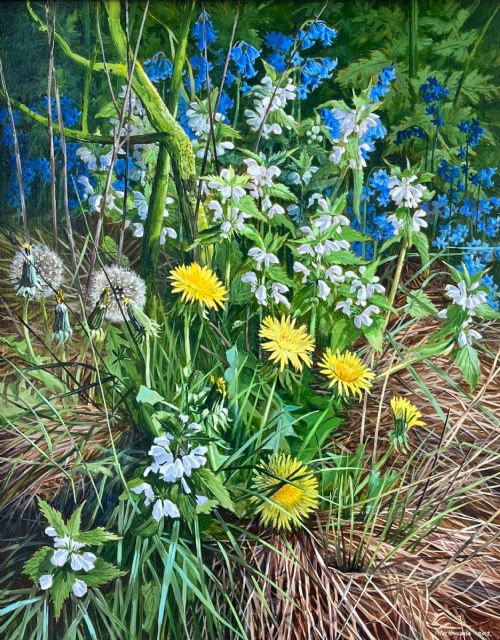
A nature oil painting canvas captures landscapes, rivers, woodlands, and rural scenes executed in oil paint upon woven fabric supports. Buyers seeking these works will find pieces stretching from the seventeenth century through to works made later than nineteen sixty.
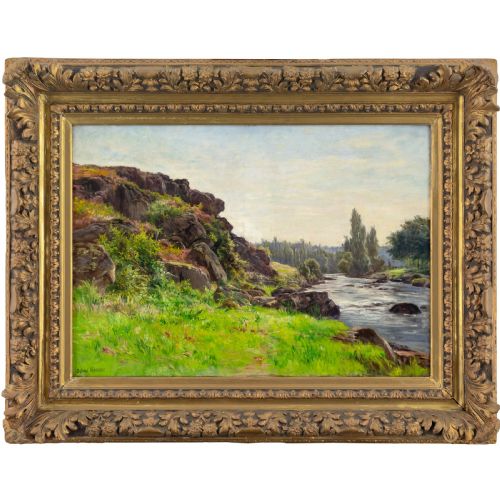
The most common examples on this page date from the nineteenth and early twentieth centuries, spanning Victorian landscapes, impressionist treatments, and French rural scenes. Common subjects include rivers, highland views, orchards, and wooded country lanes.
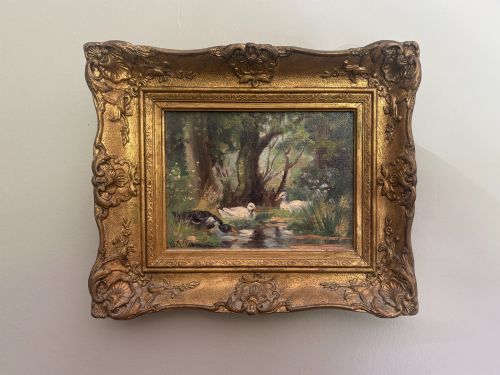
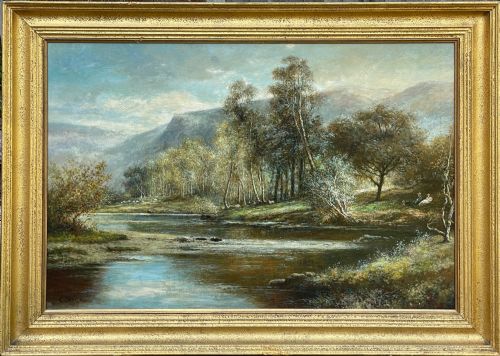
Works range from intimate rural studies by named artists to larger framed exhibition pieces depicting Welsh valleys, Scottish hills, and French forests. Many retain their period wooden frames, occasionally finished with gold leaf or gesso.
How They Were Made
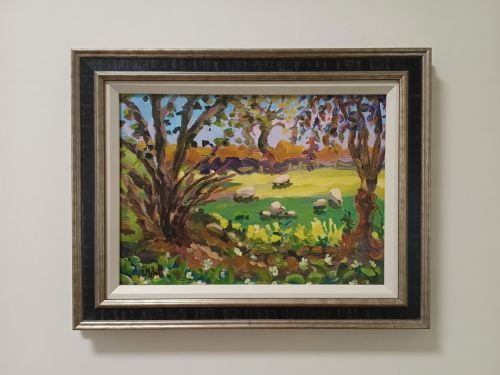
Artists painted primarily with oil colours applied to stretched canvas supports, using brushes and occasionally palette knives to build up layers of pigment and texture. This combination allowed painters to capture the changing light of natural environments, from luminous summer skies to rugged winter climates.
Support frames consisted of wooden stretchers, which were often housed within decorative wooden frames finished with giltwood, gesso, or gold leaf. These period frames protect the canvas edges and contribute significantly to the visual weight of the finished artwork.
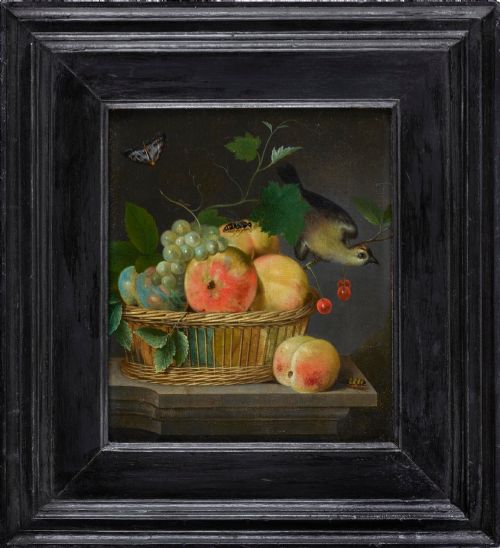
One canvas preserves a seventeenth-century still life featuring fruit in a wicker basket alongside an observant bird.
What Varies in Quality
Quality rests upon the artist's ability to handle perspective, light, and natural atmosphere within the composition, distinguishing accomplished academic or impressionist works from standard decorative pieces. The treatment of foliage, water reflections, and sky depth reveals the painter's technical control over the oil medium.
The integrity of the canvas and paint layer determines the physical standing of the work, alongside the originality and condition of the accompanying giltwood or gesso frame. Works retaining documented provenance or attribution to recognised nineteenth and twentieth-century painters command greater interest.
Thomas W Lascelles·Lucy Pratt·Gaspar Peeter Verbruggen·Peter Newcombe·Margaret Maitland Howard·William Mellor·William Langley·John Wright Oakes·George F Wetherbee·T B Garvie·Owen Bowen·Ernest Moore·Adolphe Gumery·James Poole·Fred Merriman·Kenneth Washburn·Emile Lecomte·John Nost Sartorius
The Nature Oil Painting Canvas Glossary
- Canvas
- A heavy woven fabric, usually linen or cotton, stretched tightly across a wooden frame to serve as the foundation for oil paintings. It provides a durable and slightly textured surface that holds oil paint effectively over centuries.
- Gesso
- A traditional white paint mixture consisting of a binder mixed with chalk, gypsum, or pigment, used to prepare wooden panels and picture frames. It creates a smooth, absorbent surface for subsequent layers of gilding or paint.
- Giltwood
- Wood that has been coated with a thin layer of gold leaf or gold paint for decorative effect. It is commonly found on traditional picture frames surrounding nineteenth-century paintings.
- Impressionism
- A nineteenth-century art movement characterised by relatively small, thin, yet visible brush strokes and an emphasis on accurate depiction of light. Painters working in this style often captured outdoor nature scenes directly in natural daylight.
- Plein air
- A French expression describing the act of painting outdoors, allowing artists to directly observe landscape lighting and nature. Barbizon painters and impressionists frequently utilised this method.
Nature Oil Painting Canvas: Frequently Asked Questions
How do I identify a nineteenth-century landscape?
Nineteenth-century landscapes typically exhibit traditional framing methods, characteristic brushwork, and natural pigment ageing patterns across the canvas. Examining the stretcher construction and canvas texture often helps confirm the period.
Subjects from this era frequently focus on romanticized rural views, pastoral rivers, and detailed woodland scenes popular among Victorian and French painters.
What is plein air painting?
Plein air painting involves creating artwork entirely outdoors to capture natural light and atmospheric conditions directly from nature. This technique became popular during the nineteenth century, particularly among French impressionists and Barbizon school artists.
Works created this way often possess lively brushwork and immediate tonal qualities distinct from studio-finished pieces.
How should I care for an oil painting on canvas?
Oil paintings require stable indoor humidity and protection from direct sunlight to prevent canvas sagging and pigment degradation. Keeping the environment temperate preserves both the paint layer and the wooden frame.
Dust should be removed gently with a soft, dry brush, avoiding liquid cleaners or harsh chemicals on the canvas surface.
Why do some canvases feature gesso frames?
Gesso and giltwood frames provided structural protection and aesthetic enhancement for valuable canvases during the Victorian and Edwardian eras. The gesso base allowed craftsmen to mould intricate decorative details before applying gold leaf.
Original frames often remain paired with specific paintings, adding historical context to the artwork.