

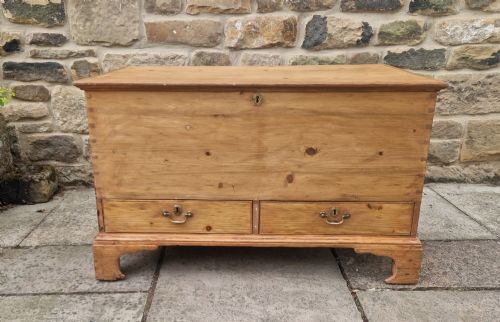
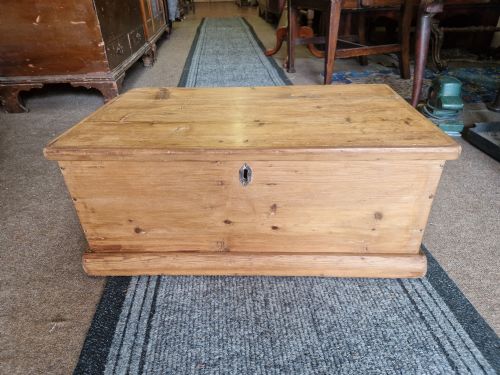


Natural Pine Storage Trunk
A natural pine storage trunk offers honest utility and tactile warmth, bringing enduring storage capacity into contemporary rooms.
Natural Pine Storage Trunk
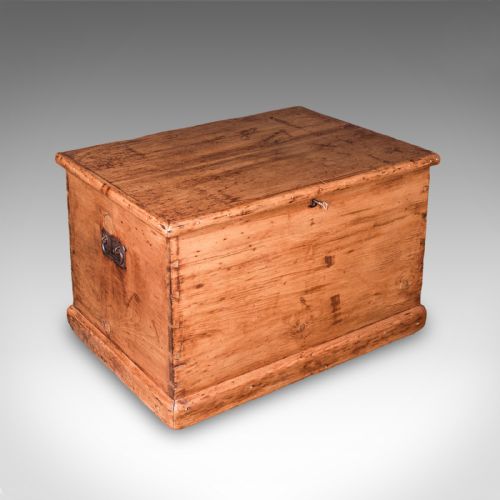
A natural pine storage trunk provides robust utility, originating predominantly from the Victorian and Georgian eras alongside select 17th-century and 18th-century examples. Buyers seek these items for practical domestic storage that doubles as functional furniture.
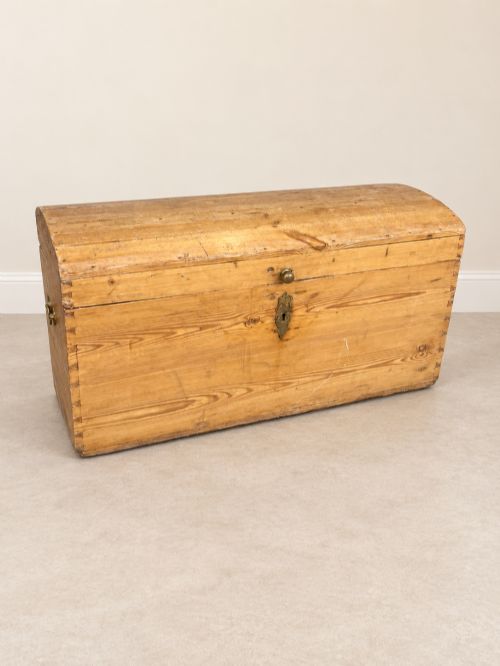
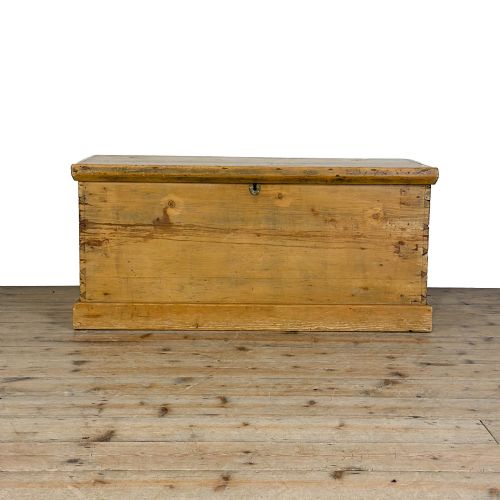
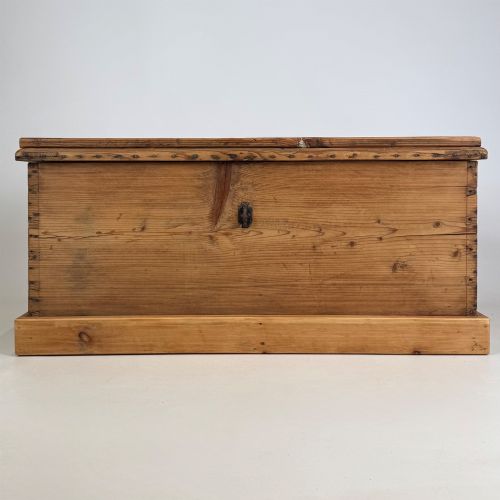
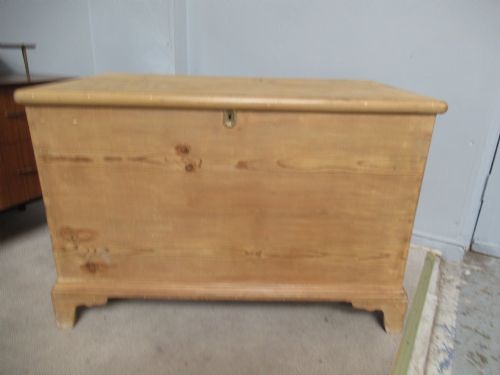
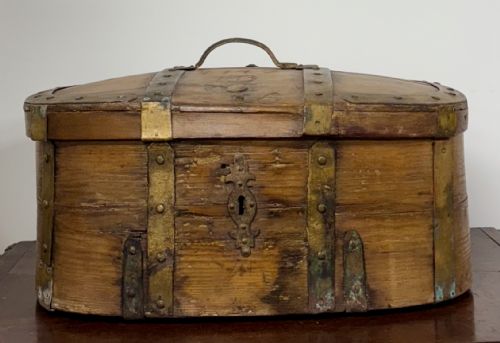
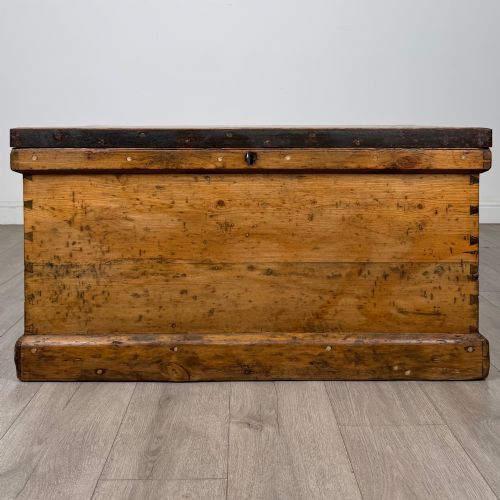
The inventory on this page centres heavily on Victorian blanket boxes, tool chests, and travelling trunks alongside Georgian mule chests and Scandinavian dome top boxes. These functional containers range from simple domestic boxes to fitted chests and low coffee table variants.
Origins span British regional workshops, Welsh makers, and Scandinavian country traditions, reflecting varied rural domestic needs. Most pieces emerge from the 19th century, carrying the marks of prolonged functional use.
What varies in quality
The refinement of the timber preparation and joinery distinguishes simpler utility boxes from finer fitted chests. Thicker boards, hand-cut dovetails, and retained original ironwork elevate a piece above standard utilitarian crates.
Proportions dictate visual balance, moving from squat tool chests to expansive Georgian mule chests with integrated drawers. The survival of original surface patination, whether waxed pine or early painted finishes, determines the integrity of the piece.
Natural Pine Storage Trunk Retail Price Guide 2026
Typical asking prices for natural pine storage trunk among the pieces listed under this phrase on Sellingantiques today, from the lower quarter to the upper quarter. They describe what is for sale here now, not the wider market.
Some trunks crossed borders as travelling chests before settling down as quiet coffee tables.
The Natural Pine Storage Trunk Glossary
- Mule chest
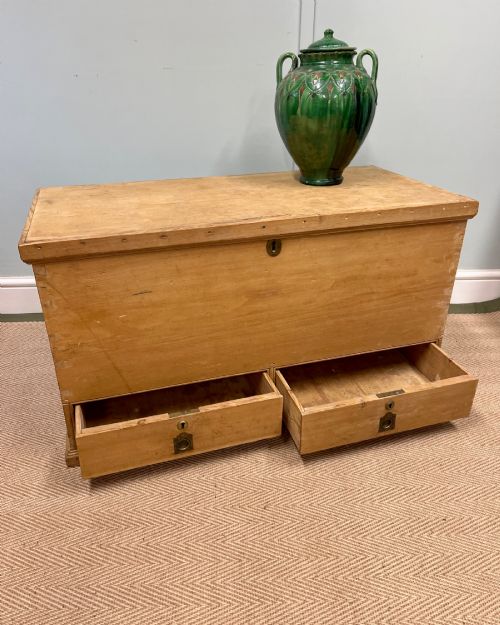
- A storage chest featuring one or more drawers beneath the main compartment. This form emerged during the Georgian period to combine trunk storage with drawer accessibility.
- Domed top
- A curved lid construction designed to shed water during travel and increase internal capacity. These lids frequently appear on 19th-century travelling trunks and Scandinavian chests.
- Tool chest
- A sturdy wooden box internally fitted for specific trades or domestic implements. These pieces often display robust hardware and compartmentalised interiors.
- Waxed pine
- Timber treated with natural wax to nourish the grain and provide a soft sheen. This finish protects the wood while maintaining a tactile, natural appearance.
- Wrought iron
- Iron beaten into shape by hand to create durable hinges, straps, and carrying handles. This material provides structural reinforcement for heavy storage boxes.
Natural Pine Storage Trunk: Frequently Asked Questions
How do I use a pine trunk today?
These trunks serve effectively at the foot of a bed for linens, in hallways for boots, or as a living room coffee table.
Their robust construction accommodates daily domestic demands while concealing clutter within historical proportions.
What is the difference between a blanket box and a mule chest?
A blanket box is a simple lidded compartment designed strictly for textile storage.
A mule chest incorporates one or more drawers beneath the primary compartment, offering hybrid storage utility.
How do I care for a waxed pine finish?
Maintain the timber by applying a traditional beeswax paste periodically using a soft cloth.
Buff the surface gently to preserve the warm sheen and protect the pine from drying out in modern heated rooms.
How can I tell a Georgian trunk from a Victorian one?
Georgian examples often display panelled construction, bracket feet, or integrated drawer configurations typical of 18th-century cabinetmaking.
Victorian pieces lean towards simpler board construction, heavier iron reinforcement, and straightforward domestic utility.