



Pine Wooden Coffee Table Trunk
A pine wooden coffee table trunk is a sturdy utility piece brought into the sitting room to serve as a low surface and deep storage.
Pine Wooden Coffee Table Trunk
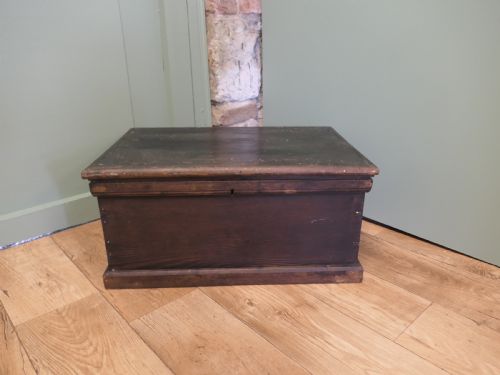
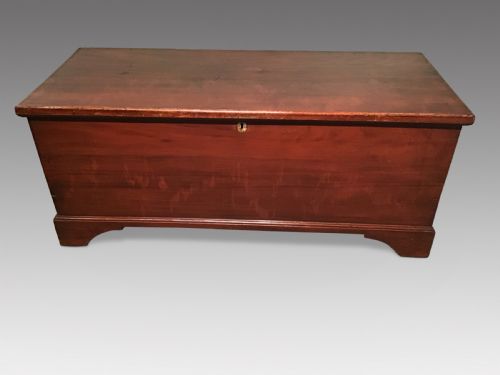
A pine wooden coffee table trunk adapts large nineteenth-century utilitarian chests into low living room furniture. These pieces originate primarily from the Victorian era, spanning dates from eighteen seventy to nineteen twenty, and appear as low and wide storage boxes, blanket chests, and carpenter or ammunition cases.
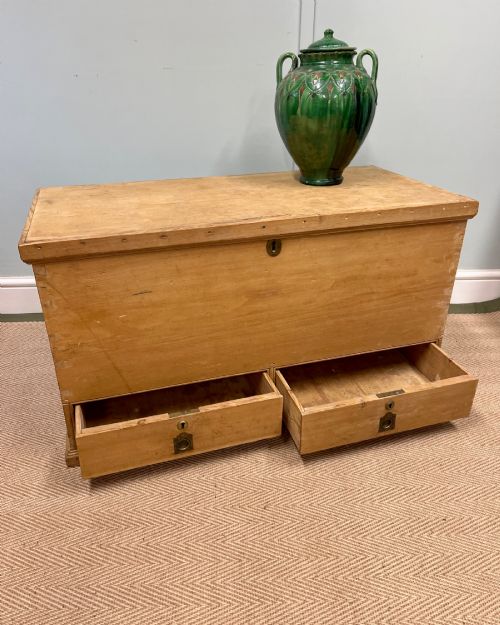
The version most commonly met on this page is the Victorian pine blanket box or trunk, often finished with a waxed surface or left in solid pine. Many of these low forms have been repurposed specifically for use as coffee tables while retaining their original storage function.
Makers and workshops of the period constructed these robust items for heavy daily service, utilising durable softwoods. Today they provide both a surface for the hearthside and hidden compartments for household items.
How they were made
Makers built these chests from solid pine and pitch pine planks, joined with sturdy corner construction to withstand heavy utility work. The external surfaces were frequently treated with wax to protect the timber and bring out the grain.
Iron and brass fittings, including metal binding and corner brackets, reinforced the lids and sides for transit and heavy handling. Certain examples incorporate internal compartments, such as secret drawers concealed within the structure.
Pine Wooden Coffee Table Trunk Retail Price Guide 2026
Typical asking prices for pine wooden coffee table trunk among the pieces listed under this phrase on Sellingantiques today, from the lower quarter to the upper quarter. They describe what is for sale here now, not the wider market.
This site's listings feature nineteenth-century pine, pitch pine, and iron-bound chests in low proportions suited for coffee tables.
What varies in quality
Quality rests upon the integrity of the original pine timber, the survival of the wax finish, and the proportion of the proportions for domestic use. Boxes with low profiles and wide dimensions command attention for living room placement.
The presence of original hardware, such as brass or iron binding, and specialised internal joinery like secret drawers separates standard utility chests from finer vernacular examples.
The Pine Wooden Coffee Table Trunk Glossary
- Pitch Pine
- A dense, resinous softwood commonly utilised for nineteenth-century furniture and heavy-duty storage trunks. It offers a pronounced grain pattern compared to standard softwoods.
- Blanket Box
- A deep chest traditionally used for storing woolen bedding and textiles. In modern settings, these low forms frequently double as coffee tables.
- Waxed Finish
- A traditional protective coating applied to pine furniture to nourish the wood and impart a soft sheen. It highlights the natural knots and tones of the timber.
- Military Utilitarian
- A style of construction focused entirely on function, durability, and transport rather than ornament. Pieces in this category include ammunition cases and campaign boxes.
- Secret Drawer
- A concealed compartment built into a chest behind false panels or removable partitions. These were designed to secure small valuables.
Pine Wooden Coffee Table Trunk: Frequently Asked Questions
What is a pine wooden coffee table trunk?
A pine wooden coffee table trunk is a repurposed nineteenth-century storage chest, such as a blanket box or carpenter's case, brought down to coffee table height.
These pieces combine deep internal storage with a low surface suitable for daily living room use.
How were these trunks originally used?
Many began their lives as blanket boxes, tool chests, or military ammunition cases during the Victorian period. They were built for travel, trade, or domestic storage.
Over time, their sturdy construction and low proportions made them natural candidates for conversion into coffee tables.
How do I identify a Victorian pine trunk?
Victorian pine trunks are defined by solid timber construction, often showing hand-planed surfaces and traditional dovetail or nailed joints. Look for period attributes such as iron or brass binding.
Dates generally span the nineteenth century up to nineteen twenty, featuring wax finishes or painted surfaces.
How do I care for a waxed pine table?
Maintain the surface of a waxed pine trunk by applying a traditional beeswax polish periodically to nourish the wood. Avoid placing hot cups or damp items directly onto the unshielded timber.
Regular dusting with a soft cloth will preserve the vintage finish without harming the patina.