


Natural Pine Refectory Table
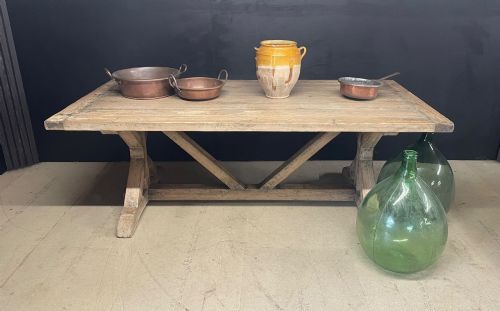
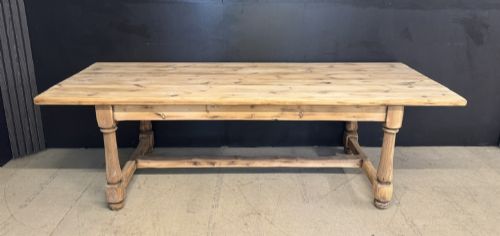
A natural pine refectory table brings sturdy domestic heritage straight into a dining room, offering long timber surfaces built for communal meals.
Natural Pine Refectory Table
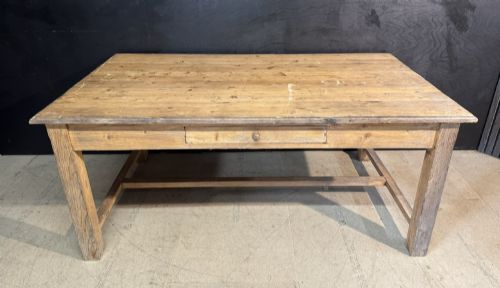
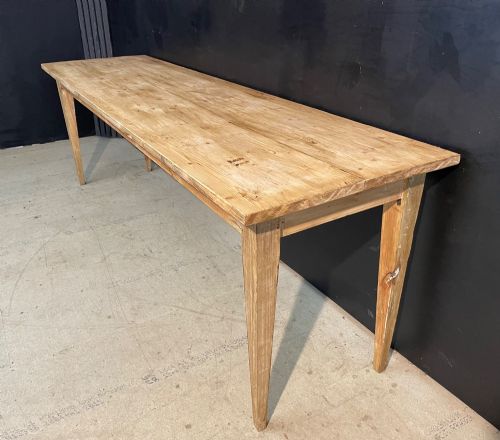
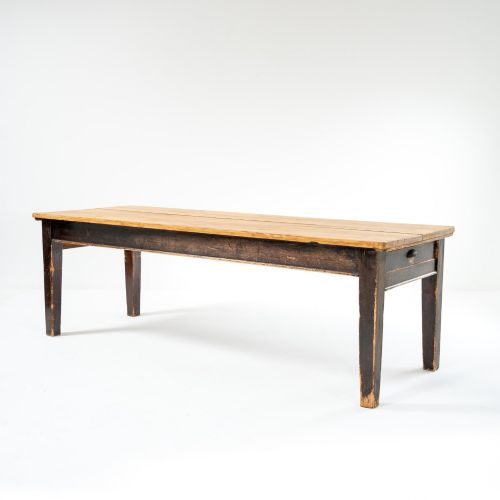
A natural pine refectory table represents robust utility, emerging across nineteenth century periods through to nineteen twenty in vernacular domestic spaces. These dining tables appear in substantial lengths, accommodating large gatherings with scrubbed top surfaces or painted wood supports.
The selection centres on heavy dining tables associated with rustic farmhouse and Welsh vernacular styles. Buyers encounter pieces spanning Victorian origins up to the Edwardian era, often featuring square section supports and considerable timber length.
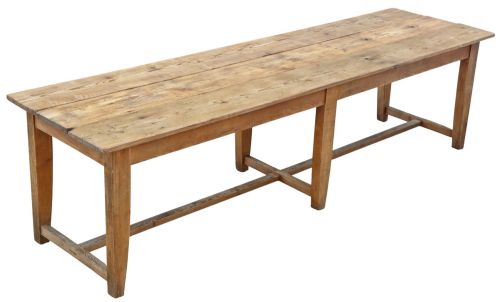
Proportions vary from standard dining dimensions up to massive community harvest tables measuring over twelve feet. The predominant forms showcase straightforward timber construction intended for heavy daily use in kitchens and dining rooms.
Materials and construction methods
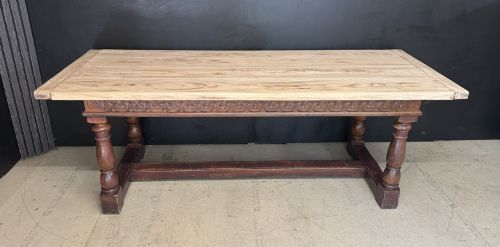
Construction relies primarily on pine and oak timber, sometimes paired with brass details or finished with paint and stained wood treatments. Joinery focuses on stability and weight, supporting long tops upon sturdy upright supports.
Surfaces often show the marks of historical scrubbing and wear, reflecting decades of preparation and dining use. The integration of square section supports provides the necessary rigidity for tables stretching to significant lengths.
One exceptional community harvest table stretches to twelve and a half feet, ready for an enormous feast.
Evaluating the standard of timber and form
Quality rests in the integrity of the main timber top and the balance of the underlying supports. Tables with deep pine boards and substantial framing demonstrate superior structural ambition compared to simpler domestic examples.
The character of the scrubbed surface and the proportional harmony between the long top and the base define the visual distinction. Well proportioned examples maintain stability across extended lengths without excessive sagging.
The Natural Pine Refectory Table Glossary
- Refectory table
- A long dining table traditionally used for communal meals in large halls. These pieces provide expansive timber surfaces resting on sturdy framing.
- Scrubbed top
- A wooden surface cleaned repeatedly with water and scrubbing brushes, removing finishes to leave pale bare timber. This process creates a clean matte texture.
- Harvest table
- A narrow dining table built to accommodate large numbers of workers during seasonal farming gatherings. They frequently measure over eight feet in length.
- Vernacular style
- Domestic building and furniture making traditions tied to local materials and practical needs. These pieces avoid grand academic designs in favour of straightforward utility.
Natural Pine Refectory Table: Frequently Asked Questions
How long are these tables usually?
These dining tables frequently measure eight feet or more, with community harvest variants extending past twelve feet.
Such substantial lengths accommodate large dining spaces and numerous seats effectively.
What periods do these pieces span?
The available pieces originate primarily across the nineteenth century, the Victorian era, and early twentieth century dates up to nineteen twenty.
This timeframe captures the height of vernacular farmhouse table production in England and Wales.
Where were these tables used originally?
Kitchens, large dining halls, and rural farmhouses served as the primary locations for these heavy timber surfaces.
Their robust construction supported daily food preparation and communal family meals.
What does scrubbed pine mean?
Scrubbed pine describes a wooden top cleaned down to the raw timber through traditional washing and scrubbing methods.
This treatment leaves a pale, matte surface free from heavy varnishes or paints.