
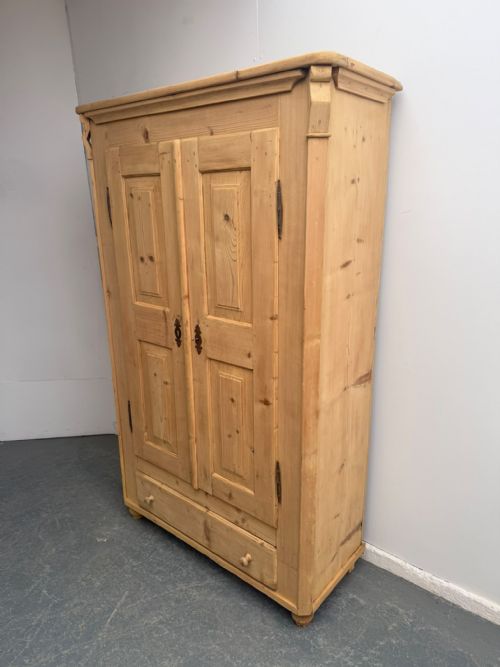
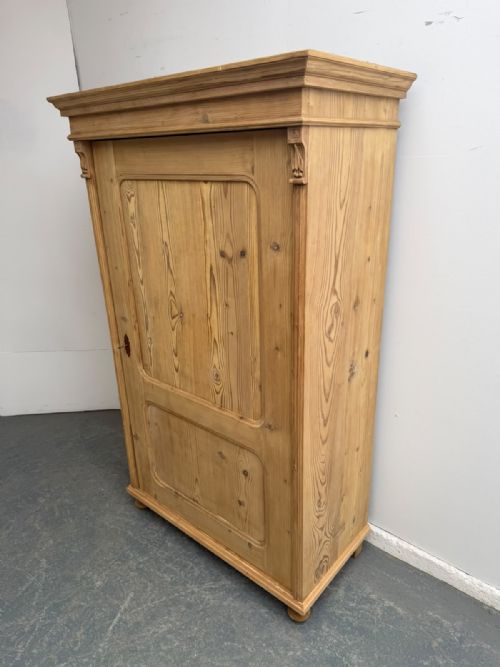
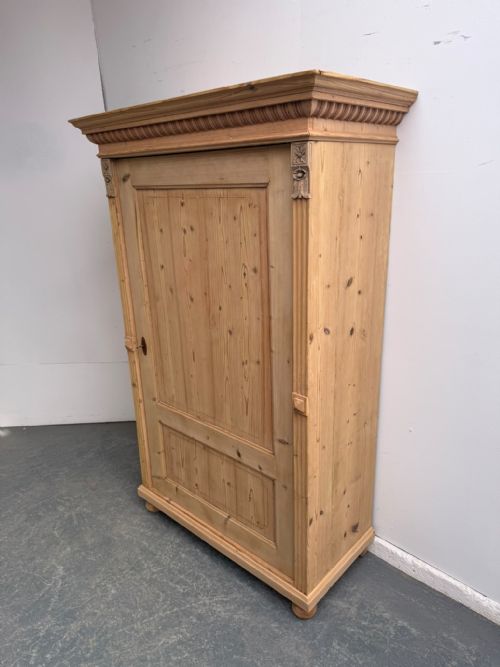
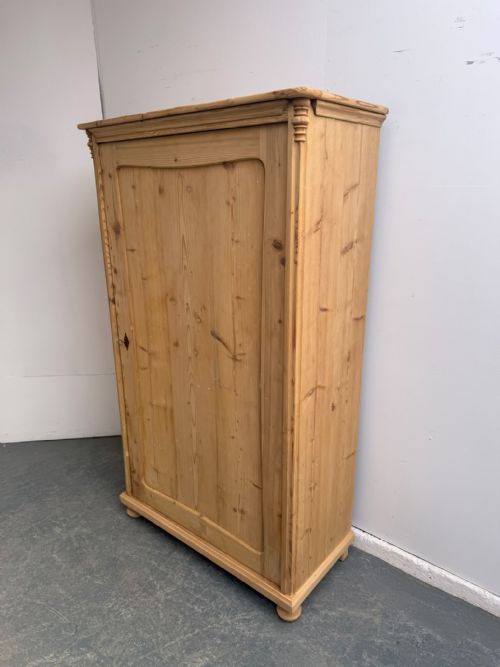
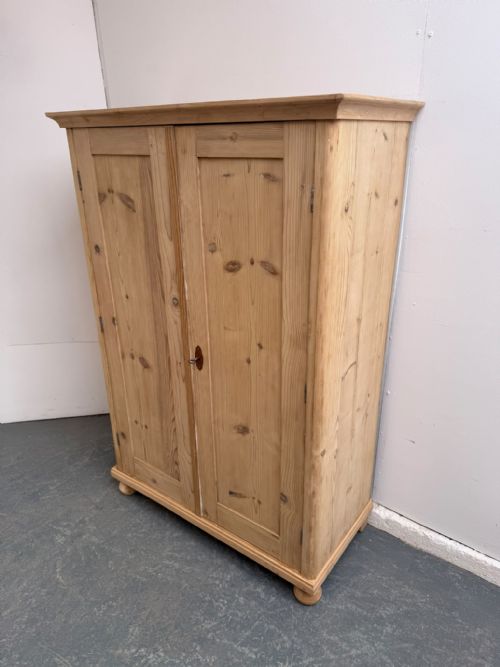


Natural Pine Hall Cupboard
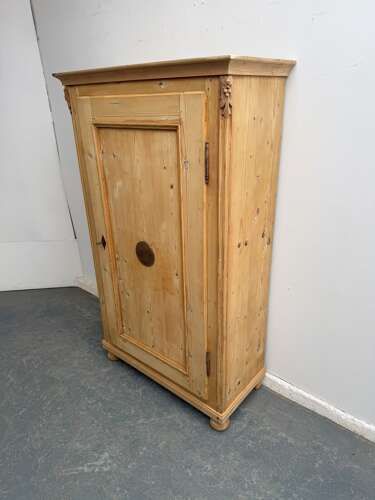
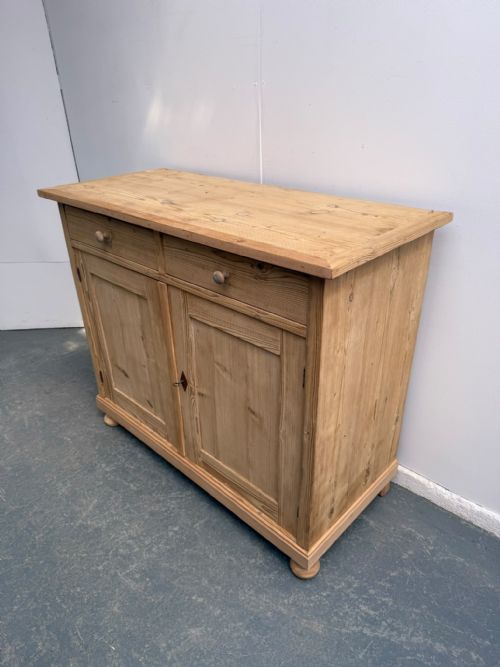
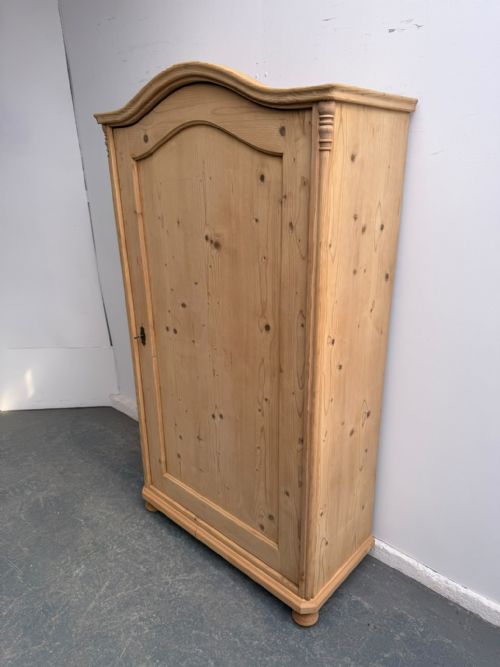
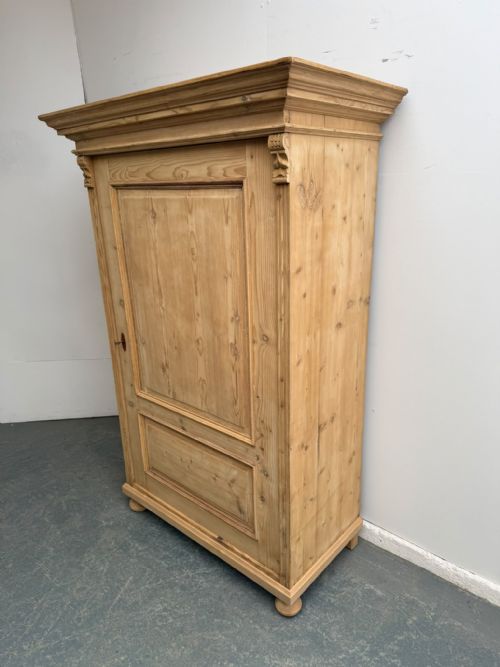
A natural pine hall cupboard brings honest utility and warm timber grain into an entranceway, offering practical storage for coats and boots.
Natural Pine Hall Cupboard
A natural pine hall cupboard is a practical storage piece designed for entryways and narrow spaces, drawing on vernacular domestic traditions. These items surface primarily from the Victorian and Edwardian eras, alongside Georgian pieces and examples from the nineteenth century. The inventory spans single and double door formats, shallow profile cabinets, and narrow wardrobes suited to compact hallways.
Makers shaped these utilitarian storage pieces from soft timber, often finished to highlight the natural grain or prepared for waxing and painting. Styles range from plain Victorian country workshops to rustic European and Eastern European folk traditions. Buyers encounter everything from low wide cupboards to tall single door wardrobes fitted with interior hanging space or shelves.
The utility of these cupboards lies in their straightforward proportions, designed to fit narrow domestic thoroughfares without obstructing movement. Regional variations appear across the periods, showing simple panelled doors, iron hardware, and occasional carved detailing. Each piece reflects the everyday storage needs of past households rather than grand formal furniture design.
Construction and materials
Carpenters constructed these cupboards using solid pine planks joined with traditional methods suited to domestic workshop production. Timber thickness varies across panels and frames, providing stability for daily use in busy hallways. Surfaces display the marks of hand-planing and early tool use beneath the wax or paint finishes.
Iron and brass hardware feature across the doors and drawers, including hinges, latches, and drop handles. Glass and ceramic elements appear occasionally on specific cabinet doors or internal fittings. Construction details such as fielded panels and pegged joints demonstrate straightforward utilitarian craftsmanship.
Listings feature natural pine pieces spanning the Georgian, Victorian, and Edwardian periods, alongside nineteenth century European vernacular examples.
Assessing quality and proportion
Quality in these utility pieces rests on the integrity of the timber joints and the preservation of original proportions. Better examples maintain straight doors that close flush without warping, supported by sturdy internal shelving or hanging compartments. Finer proportioning prevents a tall or shallow cupboard from feeling clumsy in a narrow space.
The condition of the pine surface matters significantly, particularly where timber has aged with an attractive patina or retained its structural soundness. Pieces that avoid excessive alteration keep their original backboards, hardware, and drawer linings intact. Superior construction shows careful attention to edge moulding and panel fitting rather than hurried assembly.
The Natural Pine Hall Cupboard Glossary
- Fielded panel
- A wooden panel with bevelled edges that fit into a grooved frame. This technique allows the timber to expand and contract with seasonal changes in humidity.
- Dresser base
- The lower section of a kitchen or dining storage unit featuring cupboards and drawers. These pieces often serve as standalone sideboards in modern hallway settings.
- Chiffonier
- A compact sideboard or low cupboard developed during the nineteenth century. It typically combines enclosed shelving storage with small top drawers.
- Wardrobe
- A tall piece of furniture designed for hanging garments, often constructed in a single piece for domestic use. Hall variants provide slim profiles for coats and outerwear.
- Pine
- A softwood timber widely utilised in regional furniture making for its accessibility and workability. It accepts wax and paint finishes readily.
Natural Pine Hall Cupboard: Frequently Asked Questions
How do I fit a tall cupboard in a narrow hallway?
Measure the depth of your entranceway carefully and look for shallow profile cupboards specifically noted for narrow spaces. Single door formats and low wide cabinets offer alternative storage without blocking the walkway.
Ensure you check the swing clearance of the door against opposing walls or front doors before placing the unit.
What is the difference between a hall cupboard and a wardrobe?
Hall cupboards generally focus on general storage with multiple interior shelves for household items, boots, and linens. Wardrobes are taller and proportioned specifically for hanging garments on rails or hooks.
Some smaller nineteenth century examples combine both functions with shallow hanging space and internal compartments.
How do I care for antique pine furniture?
Maintain the timber by applying a quality beeswax polish sparingly and buffing it with a soft cloth to protect the grain. Keep the cupboard away from direct heat sources and severe moisture fluctuations to prevent wood splitting.
Clean glass or ceramic handles gently with a damp cloth without using harsh chemical solvents.