
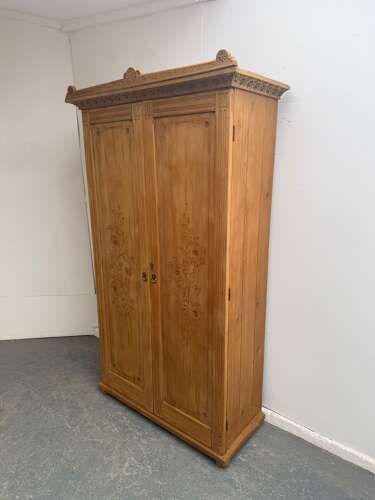
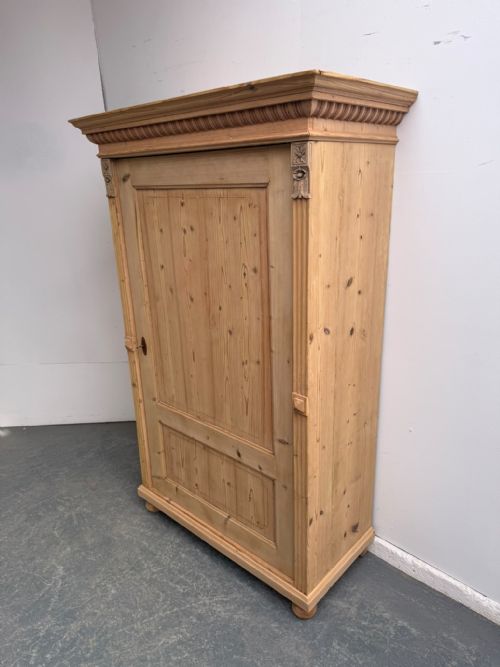
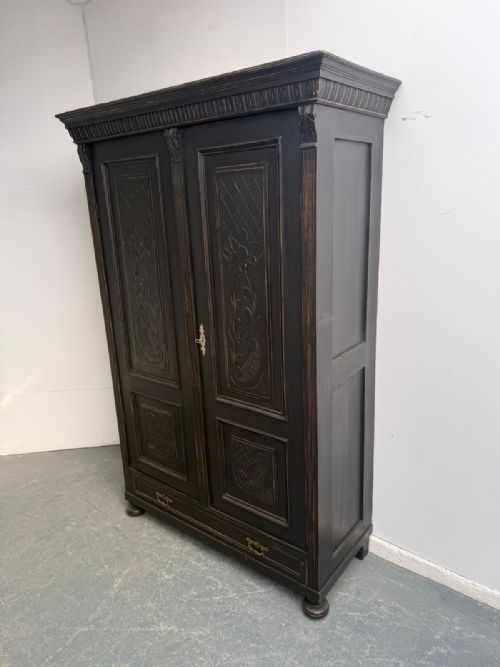
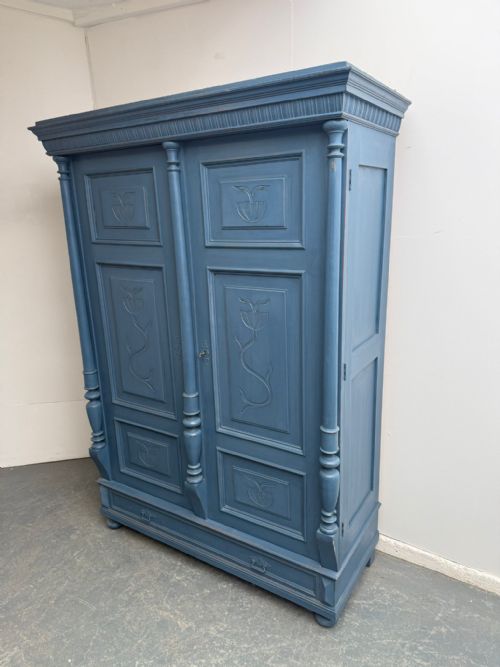

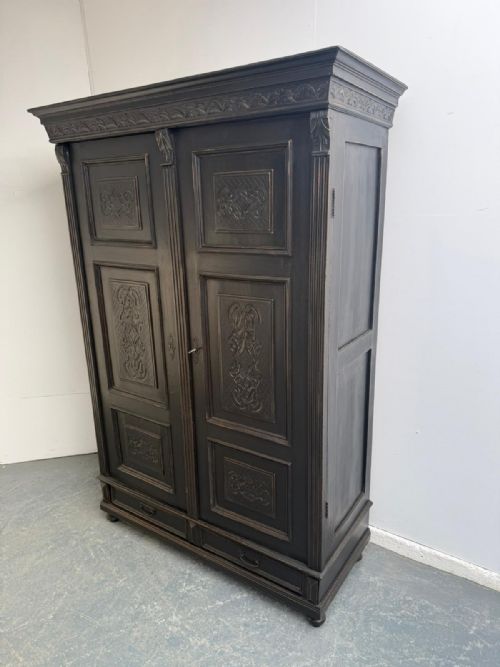


Carved Pine Hall Wardrobe
A carved pine hall wardrobe brings rustic presence and practical storage to an entranceway, combining durable softwood construction with decorative carving.
Carved Pine Hall Wardrobe
A carved pine hall wardrobe provides substantial storage for coats and garments in an entranceway or hallway, utilising vertical space efficiently. These pieces appear primarily from the Victorian era, alongside examples dated around eighteen-eighty, nineteen hundred, and nineteen ten.
Most items on this page are single-door or two-door configurations, often described as cupboards or armoires depending on their exact internal fittings. Origin points span from standard Victorian domestic pieces to Continental Country and Hungarian Folk styles, including painted European folk art variations.
Buyers encounter both waxed finishes that highlight the natural grain of the timber and painted surfaces in black, blue, or grey. Some examples incorporate oak elements or mirrored doors, while others remain ready for the buyer to wax or paint to personal taste.
Construction and materials
These items rely on pine as the primary timber, occasionally supplemented by oak components for added structural durability. Metal and iron hardware, such as hinges and locks, secure the doors, while ceramic details sometimes appear on fittings.
Surface treatments vary between clear wax finishes and historical paint applications in black, blue, or grey. Carving provides the principal ornament, executed directly into the softwood to define panels and cornices.
Styles span Victorian Country, Arts and Crafts, Continental Country, and Hungarian Folk Art, covering wardrobes, cupboards, and storage cabinets.
Assessing quality and character
Quality rests upon the crispness and depth of the carved ornamentation relative to the plain expanses of pine. Finer examples balance robust construction with balanced proportions, whether built as a single piece or designed for easier movement.
The finish significantly influences the character of each piece, distinguishing factory-prepared surfaces from older painted finishes or freshly waxed timber. Original painted surfaces in distinct colours such as blue or black carry particular decorative weight compared to bare or stripped pine.
The Carved Pine Hall Wardrobe Glossary
- Pine
- A softwood timber utilised widely for domestic furniture due to its workability and availability. It takes both wax and paint finishes readily.
- Arts and Crafts
- A design movement valuing handcraftsmanship and simple construction. Pieces from this tradition emphasise honest materials and restrained decoration.
- Continental Country
- A descriptive term for vernacular furniture originating from mainland Europe. These items often feature distinctive regional painted finishes and folk motifs.
- Armoire
- A large standing wardrobe or cupboard used for hanging garments. In antique contexts, the term often applies to European case furniture with substantial depth.
Carved Pine Hall Wardrobe: Frequently Asked Questions
What is a carved pine hall wardrobe?
A carved pine hall wardrobe is a tall storage cabinet designed for hallways to hold outerwear and garments. These pieces are constructed primarily from pine and feature carved wooden ornamentation.
They range from single-door cupboards to two-door armoires, incorporating various finishes from natural wax to traditional painted surfaces.
How do I choose between waxed and painted finishes?
Waxed pine highlights the natural grain and knots of the softwood, offering a warm, traditional timber appearance. Painted surfaces, such as black, blue, or grey, introduce solid colour and reflect regional European folk traditions.
Some pieces are supplied ready to wax or paint, allowing the buyer to match the finish to their specific interior.
Are these wardrobes supplied in one piece?
Many listings specify one-piece construction, meaning the wardrobe is built as a single solid unit rather than dismantling into sections. Buyers should check dimensions and access routes carefully before placement in a hallway.
Single-door variants generally offer a narrower footprint suited to tighter entrance spaces.
What periods do these wardrobes come from?
The available pieces date primarily from the Victorian period, with specific years noted in the listings including eighteen-eighty, nineteen hundred, and nineteen ten. This era encompasses both domestic British furniture and Continental Country workshops.
Stylistic influences include Arts and Crafts and Hungarian folk art traditions.