


Natural Pine Corner Cupboard
A natural pine corner cupboard turns wasted wall space into display storage, offering straightforward timber character for domestic rooms.
Natural Pine Corner Cupboard
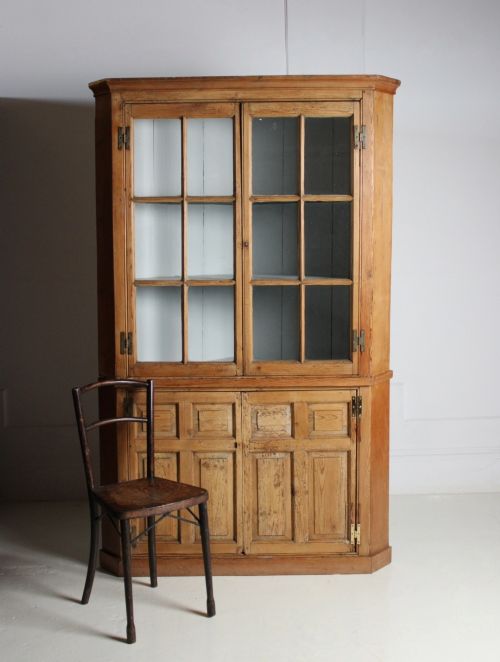
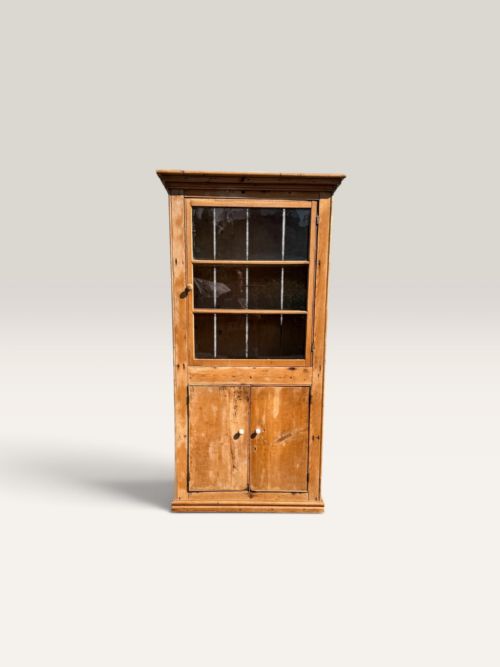
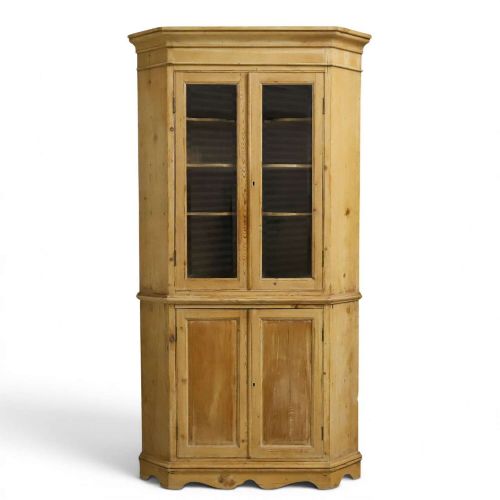
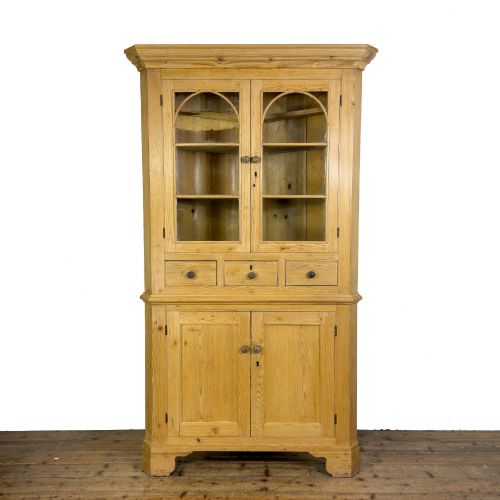
A natural pine corner cupboard provides fitted storage designed specifically to tuck neatly into the right-angle junction of a room. The selection spans Georgian, Victorian, and nineteenth-century eras, taking the form of both single-piece tall cabinets and two-part constructions.
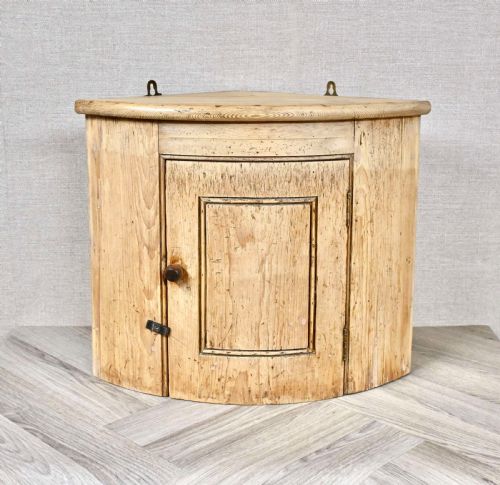
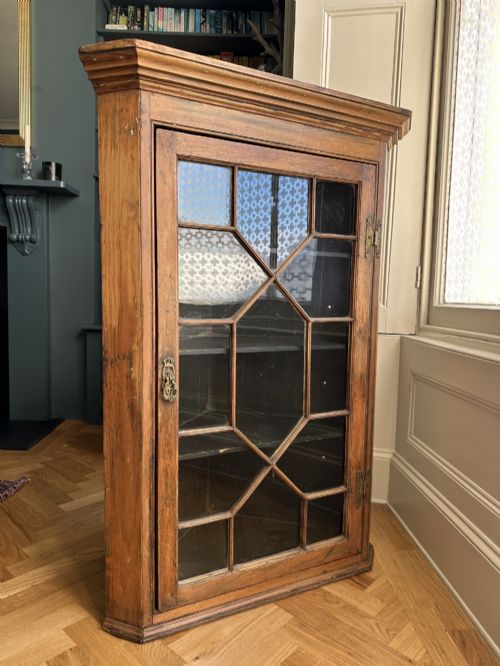
Most examples you encounter here lean towards rustic farmhouse or country styles, often stripped to reveal the pale grain of the timber. Forms range from simple single doors to glazed display fronts, barrel backs, and dome-top fitted interiors.
How they were made
Carpenters built these cabinets primarily from solid pine and pitch pine, selecting softwood timber suited to domestic joinery and painted or stripped finishes. Workshops utilised traditional framing techniques to construct sturdy corner-fitting carcasses that could span floor to ceiling or hang securely.
Glazing bars hold glass panes in glazed door variants, whilst brass and iron hardware provides hinges and latches. Interior details sometimes include original painted surfaces or shaped shelves designed to hold porcelain and glassware.
The listings span from the mid-eighteenth century through the Victorian era up to nineteen-ten, using pine, pitch pine, glass, brass, and iron.
What varies in quality
The architectural ambition of the joinery sets different examples apart, moving from simple rustic farmhouse boxes to sophisticated architectural forms like dome tops and astral glazed barrel backs. Georgian pieces often display finer proportions and more complex internal fitting compared to later nineteenth-century utility work.
The integrity of the timber and the survival of original components such as painted interiors, glass, and metalwork influence the character of each cabinet. Stripped surfaces reveal the clean grain of the pine differently depending on the original finish and subsequent restoration.
The Natural Pine Corner Cupboard Glossary
- Astral glazed
- A door fitted with wooden bars, known as glazing bars, that divide the glass into smaller panes. This technique is frequently seen on eighteenth-century cabinets.
- Barrel back
- A cupboard interior featuring a curved, semicircular rear wall that echoes the rounded shape of a barrel. It creates a soft backdrop for displayed objects.
- Dome top
- A rounded, arched upper section above the main door frame. This architectural flourish appears on mid-eighteenth-century carved cabinets.
- Pitch pine
- A dense, resinous variety of pine timber with a strong grain pattern. It provides a robust material for nineteenth-century storage furniture.
- Two-part form
- A cabinet constructed in separate upper and lower sections stacked together. This method made large corner cupboards easier to transport and install in domestic rooms.
Natural Pine Corner Cupboard: Frequently Asked Questions
How do I fit a corner cupboard?
These cabinets are built with square-angled backs specifically designed to sit flush against two intersecting walls in a room corner.
Larger tall or two-part versions require secure wall fixing to ensure stability, whilst smaller hanging models mount directly onto wall studs.
What is a barrel back cupboard?
A barrel back refers to an interior design where the backboards curve in a semicircle behind the shelves.
This traditional feature creates a polished display space for porcelain and glassware.
Are these cabinets made of solid pine?
The listings consist of solid pine and pitch pine construction, utilised across Georgian and Victorian workshops.
Makers built the carcasses and doors from timber planks, often combining them with glass panels and iron or brass hardware.
How do I tell Georgian from Victorian pine?
Georgian cabinets often showcase more architectural detail, such as dome tops, carved elements, and astral glazed doors.
Victorian and later nineteenth-century examples tend towards rustic farmhouse styles, simpler panel doors, and stripped timber finishes.
What is a two-part corner cupboard?
A two-part cupboard is built as two separate stacked sections rather than a single tall carcass.
This construction method helped makers transport large furniture pieces through domestic doorways during the eighteenth and nineteenth centuries.