
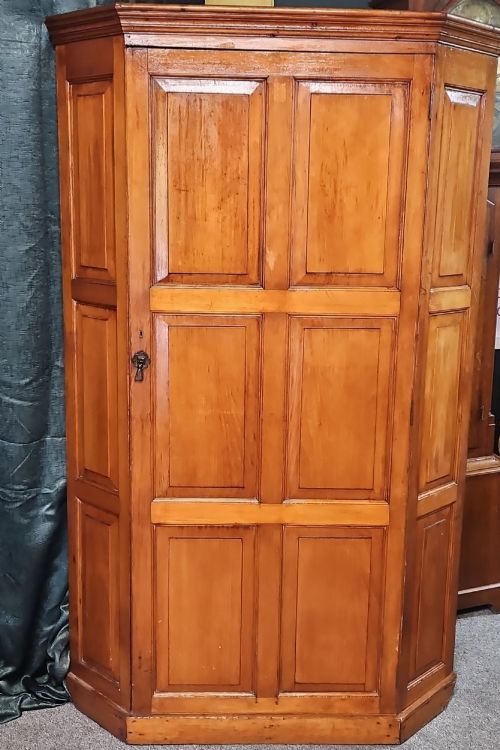


Rustic Wooden Corner Cupboard
These rustic wooden corner cupboard examples bring genuine provincial charm and practical storage to awkward angles, transforming neglected spaces into focal points.
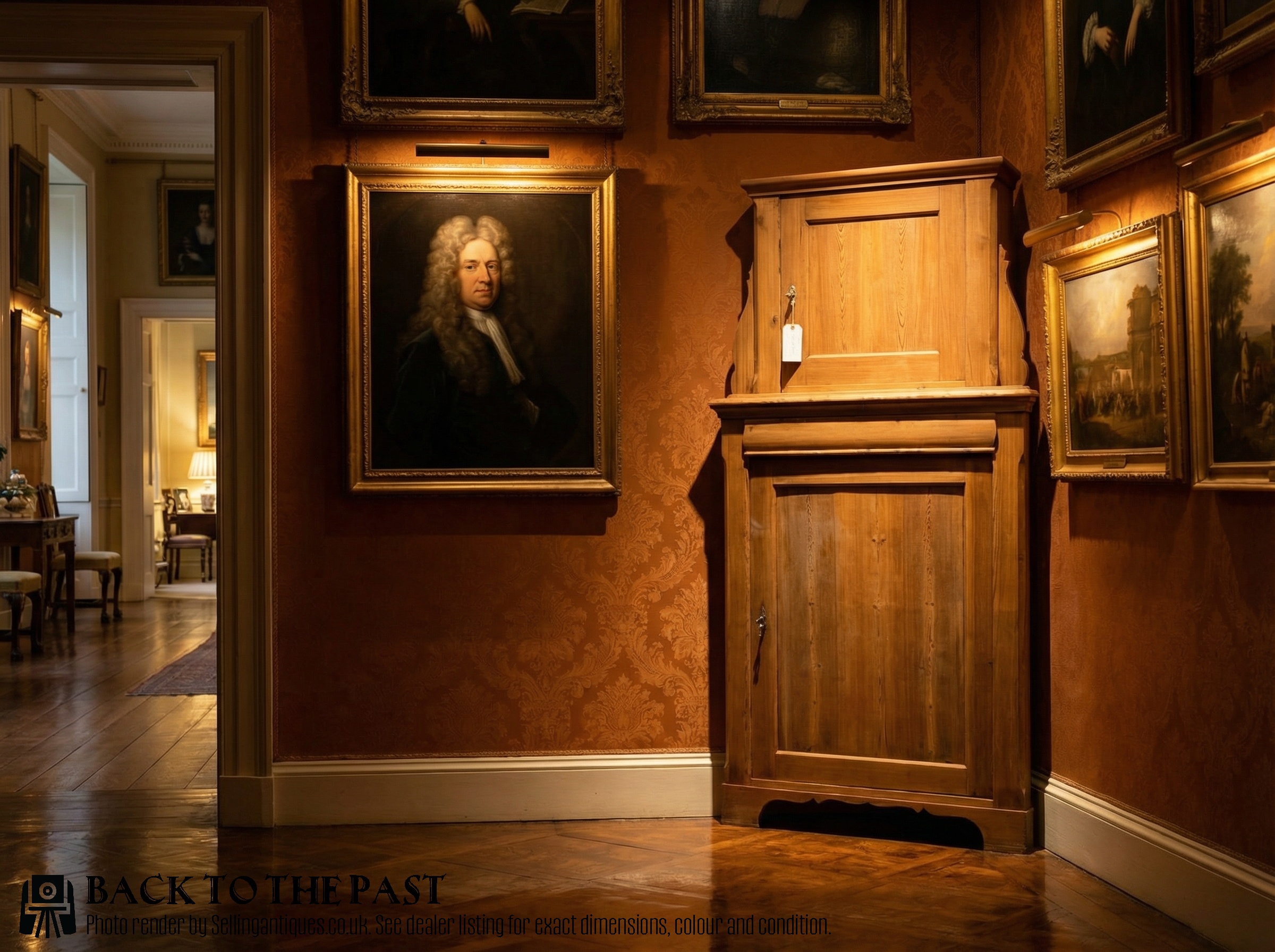
Rustic Wooden Corner Cupboard
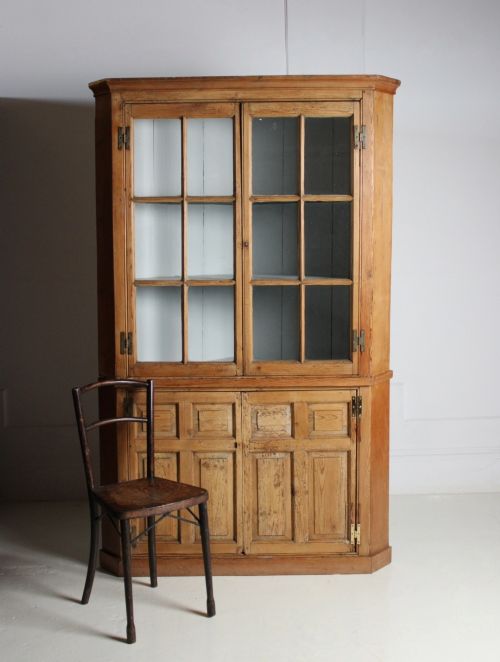
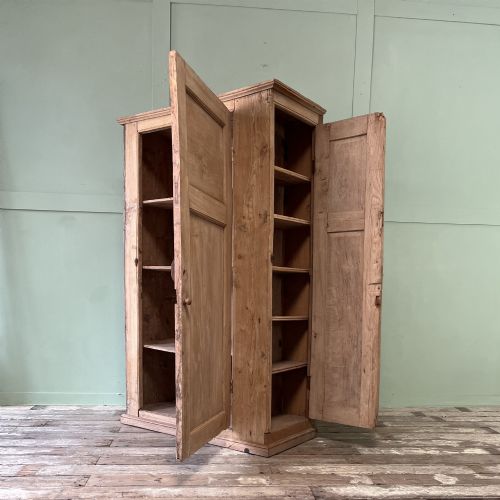
A rustic wooden corner cupboard turns dead angular space into useful storage, putting forgotten room corners to work. These pieces range from compact hanging versions to tall standing furniture designed to fit neatly into domestic interiors.
The selections here lean heavily toward country workshops and provincial makers, rather than urban cabinet makers. Pieces from the eighteenth and nineteenth centuries appear regularly, showing simple forms built for everyday utility.
Oak, pine, and elm dominate the selection, often finished with paint or left with stripped surfaces. Collectors find examples spanning Georgian country styles, Victorian pine utilitarian pieces, and European folk art traditions.
How they were made
Local timbers such as oak, pine, and elm dictate the physical character of these cabinets, shaped by regional carpenters using accessible regional woods. Iron hinges and brass latches secure the doors, reflecting the hardware available in provincial workshops.
Surfaces receive varied treatments, from unadorned timber left to age naturally to hand-painted finishes with decorated interiors. Joinery remains straightforward and robust, relying on pegged joints and panelled doors built to withstand decades of daily use.
Listings feature eighteenth and nineteenth-century periods, alongside materials including pine, oak, elm, mahogany, brass, iron, and glass.
What varies in quality
Build quality rests on the selection of timber and the integrity of the original construction, with thicker planks and untouched backboards marking out better examples. Cabinets retaining original painted surfaces or distinct regional hardware carry greater character than heavily altered pieces.
Proportion and scale also separate standard utility items from more considered provincial commissions, particularly where cornices and panel details show extra care. The survival of interior paintwork or original glass panes adds notable interest to surviving examples.
The Rustic Wooden Corner Cupboard Glossary
- Corner cupboard
- A cabinet specifically constructed with a flat back and angled sides to fit directly into the ninety-degree junction of two walls. These pieces make efficient use of otherwise wasted room layouts.
- Hanging cupboard
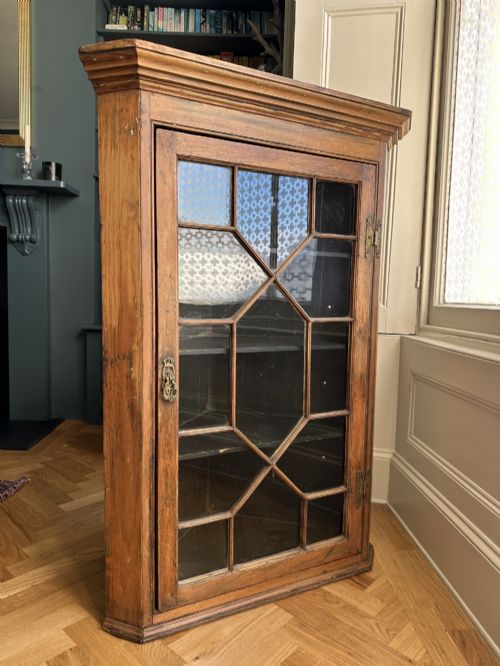
- A smaller cabinet featuring fixing points on the back to allow wall mounting rather than resting on the floor. These versions free up floor space beneath them.
- Vernacular furniture
- Items made by local tradesmen using regional materials and traditional local designs rather than following academic metropolitan pattern books. This category includes much of the country-made furniture found here.
- Bow front
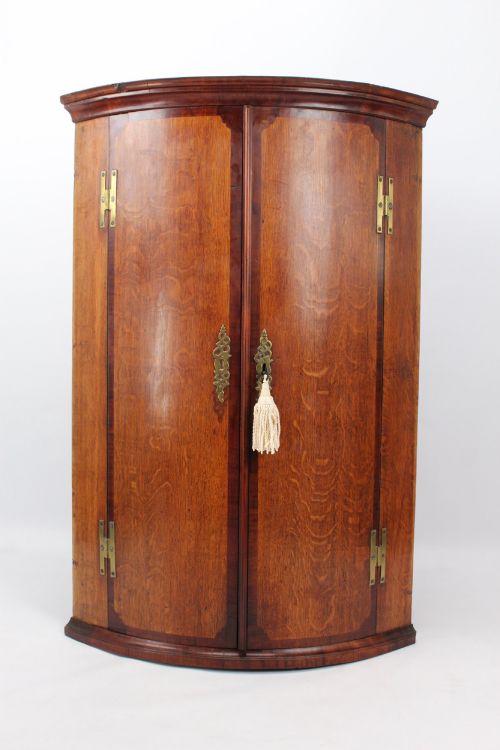
- A cabinet front that curves outward in a convex arc, softening the hard angles of the room. This shape requires skilled woodworking to curve the doors and framing.
- Stripped pine
- Timber furniture from which subsequent layers of paint or dark varnish have been removed down to the raw softwood. This finish highlights the natural grain and knots of the pine.
Rustic Wooden Corner Cupboard: Frequently Asked Questions
Are these cupboards difficult to clean?
Maintenance involves simple dusting with a dry cloth and occasional application of appropriate wax for unpainted wooden surfaces. Painted interiors and exteriors should be wiped gently without harsh modern solvents.
Protecting the timber from direct sunlight and damp environments keeps the wood stable over time.
Can these fit modern homes?
These corner cabinets suit modern rooms by utilising awkward junctions and providing practical enclosed shelving without dominating floor space. They work effectively in kitchens, hallways, and living areas.
Measuring the exact wall depth and door swing space ensures a correct fit before placement.
How do I date an old cupboard?
Dating relies on examining the timber types, construction methods, tool marks, and hardware such as hinges and locks. Eighteenth-century examples often display hand-sawn boards and pegged joinery.
Later Victorian and provincial pieces show machine-cut components and different styles of surface decoration.