


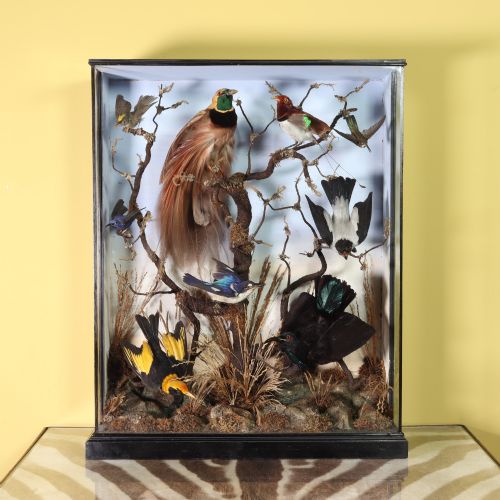


Natural History Taxidermy Case
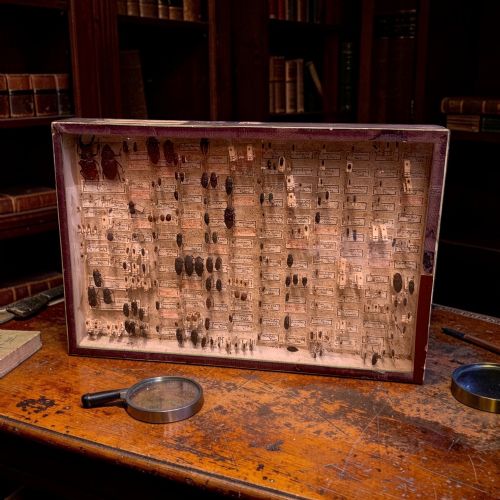
These natural history taxidermy case pieces preserve birds, fish and mammals behind glass, bringing nineteenth-century interior display directly into domestic rooms.
Natural History Taxidermy Case
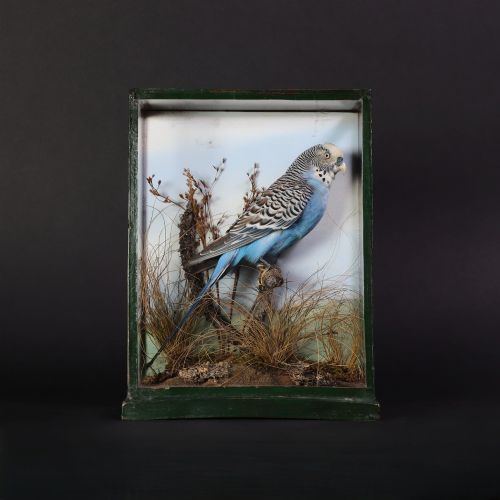
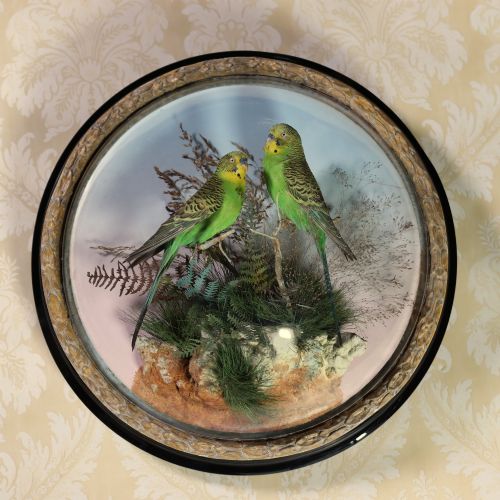
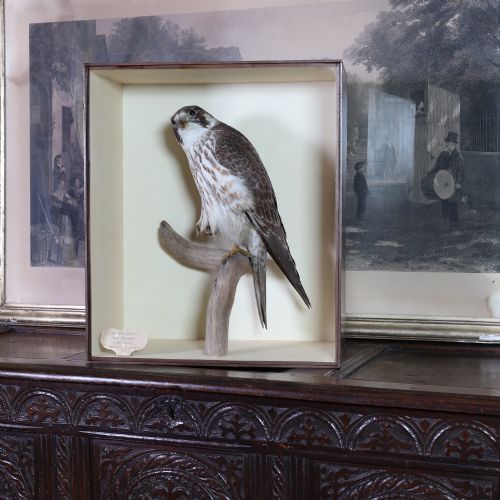
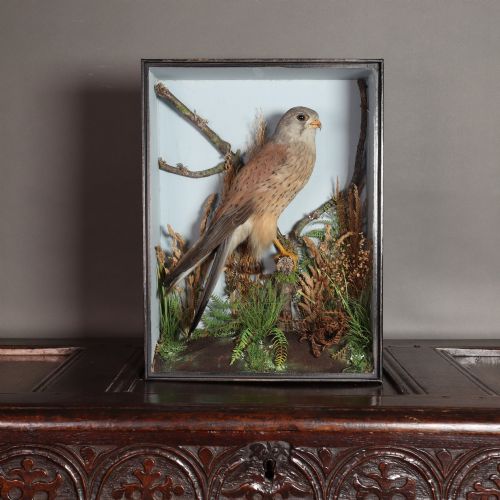
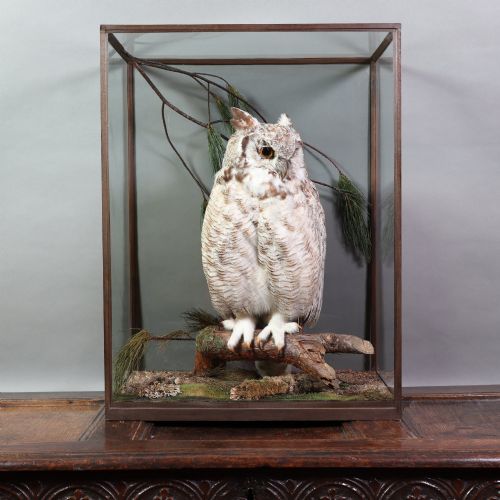
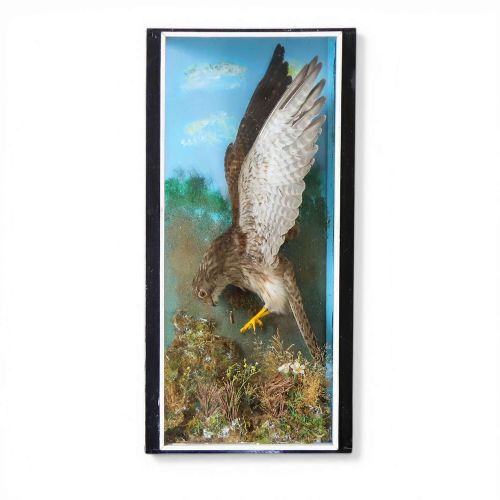
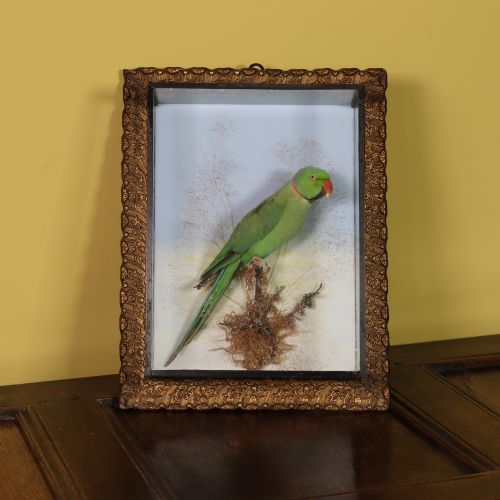
A natural history taxidermy case protects mounted specimens within wood frames and glazed enclosures, ranging from table cabinets to wall-hanging picture frames. The selection centres heavily on Victorian and Edwardian examples produced between eighteen-seventy and nineteen-thirty.
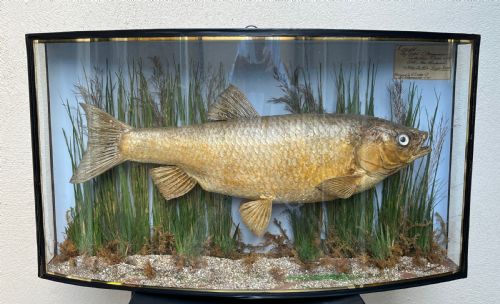
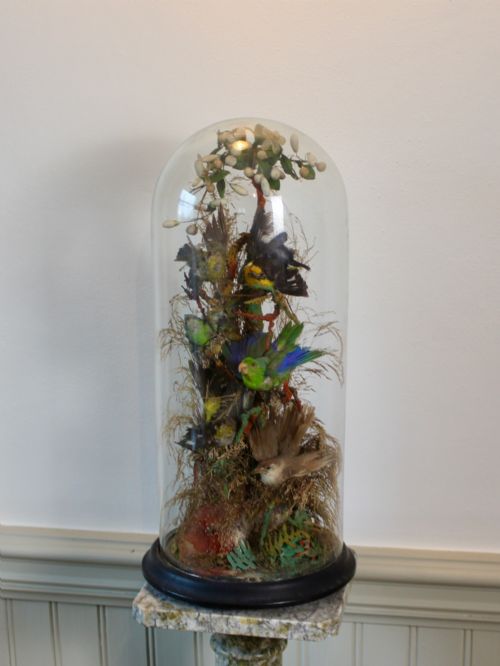
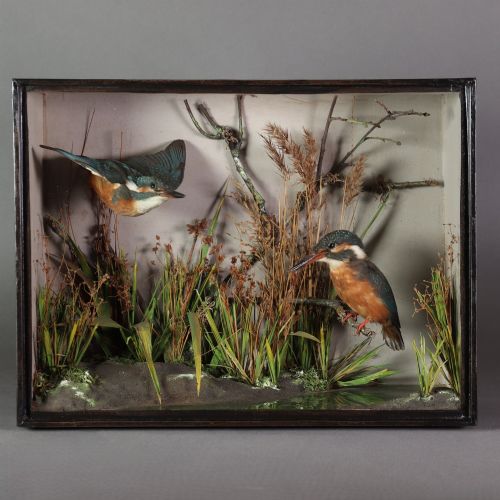
Common iterations span single birds like kingfishers and owls, complex multi-species dioramas, and aquatic scenes containing fish such as roach, tench and pike. Specimens are frequently arranged against painted backgrounds with moss, paper foliage and naturalistic groundwork.
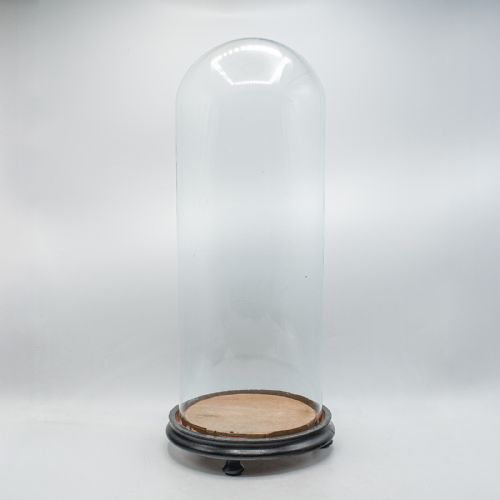
Domes and cloches also appear, enclosing preserved specimens on circular wooden bases under blown glass covers. These domestic pieces reflect nineteenth-century scientific curiosity and sporting pursuits.
Construction and materials
Makers housed preserved specimens within timber frames, frequently utilising ebonised wood or oak alongside clear window glass to seal the interior from dust and insects. Backgrounds were often painted on paper or canvas to suggest natural habitats like snow scenes or riverbanks.
Taxidermists arranged preserved skins and feathers over armature frameworks, incorporating dried moss, twigs and artificial foliage to complete the setting. Fish mounts required careful painting by hand to retain lifelike coloration after preservation.
Natural History Taxidermy Case Retail Price Guide 2026
Typical asking prices for natural history taxidermy case among the pieces listed under this phrase on Sellingantiques today, from the lower quarter to the upper quarter. They describe what is for sale here now, not the wider market.
Listings feature Victorian, Edwardian and early twentieth-century examples utilising glass, wood, feathers and preserved specimens.
Judging quality in taxidermy cases
Quality rests upon the natural posture of the specimen and the skill of the taxidermist in rendering anatomical proportions accurately. The reputation of the maker, such as established London or provincial firms, elevates the standing of an individual piece.
The integrity of the original glass, the complexity of the painted background and the condition of the internal naturalistic setting determine the overall merit of the enclosure.
Little & Co·J Griffiths of Burford·Rowland Ward Ltd·T. E. Gunn·William Bazeley & Sons·S. King·Hutchings of Aberystwyth·James Jones·J. Cooper & Sons·James Gardner·W.F. Homer London·J Dobson
The Natural History Taxidermy Case Glossary
- Taxidermy specimen
- The preserved skin and form of an animal mounted to resemble life. These form the central focus of every display case.
- Ebonised wood
- Timber stained to imitate ebony. This dark finish appears frequently on nineteenth-century frames.
- Diorama
- A three-dimensional scene depicting animals in a simulated natural environment. Painted backdrops add depth to these enclosed compositions.
- Display dome
- A blown glass cover resting on a circular wooden base. These protect delicate specimens while allowing all-round visibility.
- Naturalistic setting
- The arrangement of moss, twigs and groundwork inside the case. This recreates the native habitat of the mounted subject.
Natural History Taxidermy Case: Frequently Asked Questions
Where were these cases displayed originally?
Owners placed these pieces in studies, libraries and drawing rooms as conversation pieces and demonstrations of natural history interest. Sporting cases also hung in billiard rooms and halls.
Today they function effectively as focal points in studies and living spaces alongside other curiosity cabinet objects.
How do I date an antique taxidermy case?
Dating relies on the framing materials, maker labels pasted inside the case, and stylistic conventions of the taxidermy. Victorian and Edwardian examples often feature handwritten notes or trade cards adhered to the backboards.
Comparing the style of the painted backdrop and the framing timber helps narrow the period of manufacture between eighteen-seventy and nineteen-forty.
Are the specimens in these cases original?
The specimens inside nineteenth and early twentieth-century enclosures are contemporary with the manufacture of the case itself. Taxidermists prepared the birds, fish and mammals specifically for these glazed displays.
Subsequent repairs or replacements are uncommon, though makers' labels often confirm the original workshop attribution.