




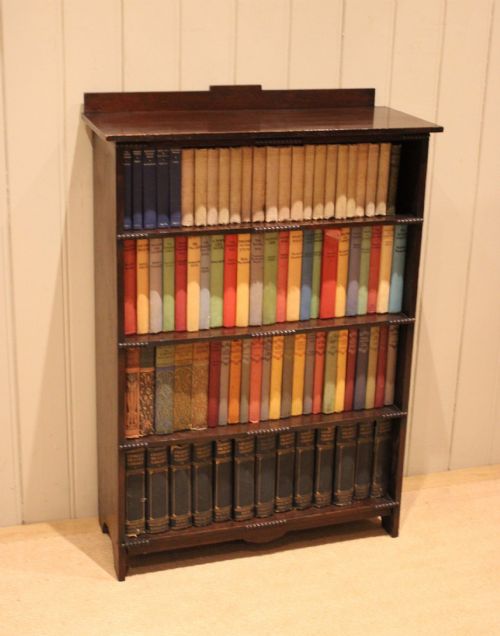
Narrow Wood Shelving
Narrow wood shelving brings vertical utility to compact spaces, offering open display for books and cherished objects across centuries of cabinetmaking.
Narrow Wood Shelving
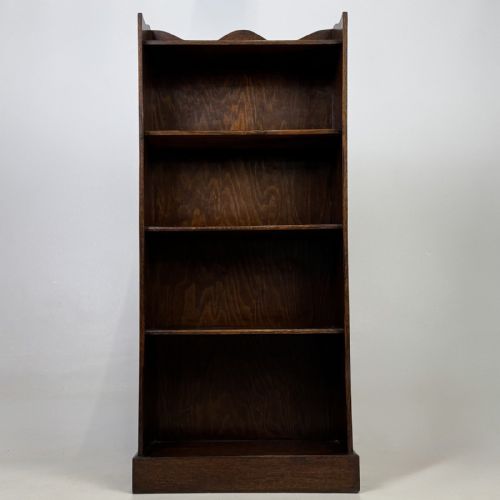
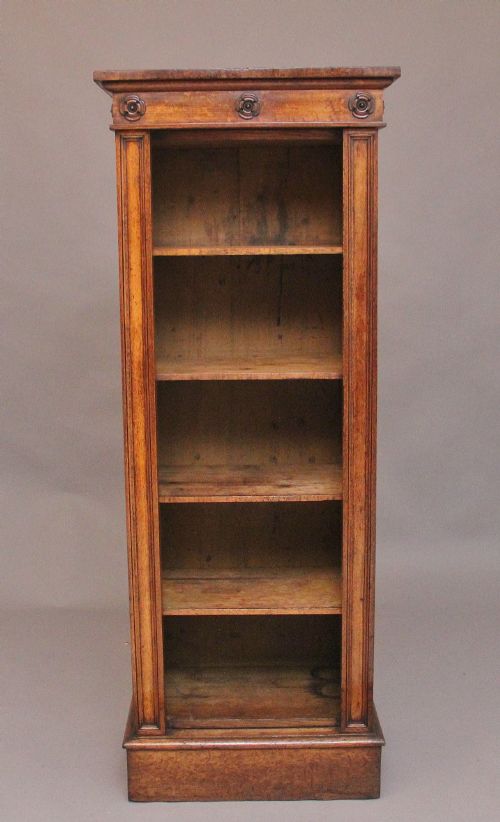
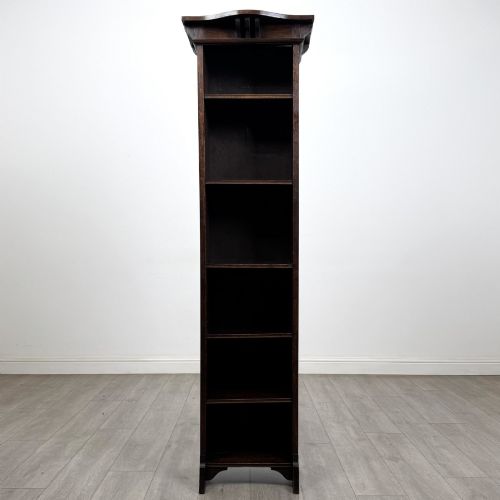
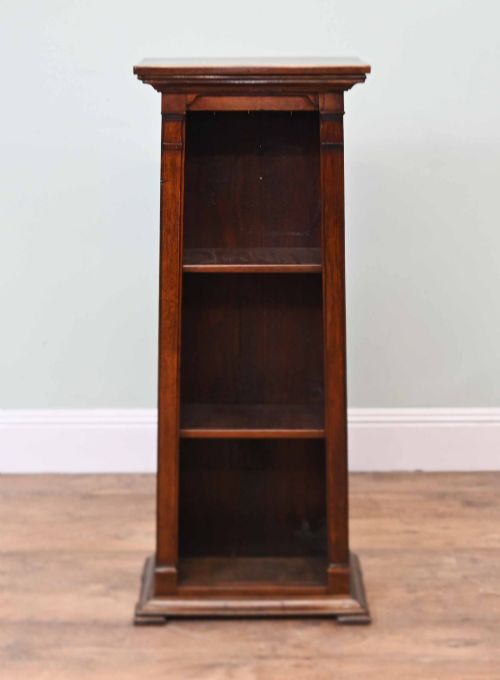
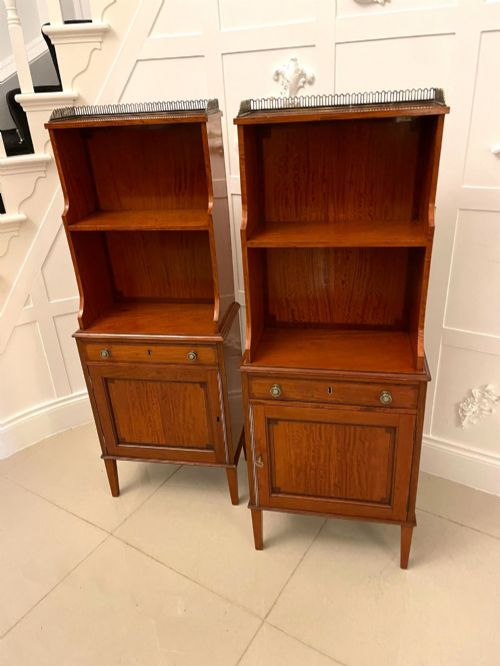
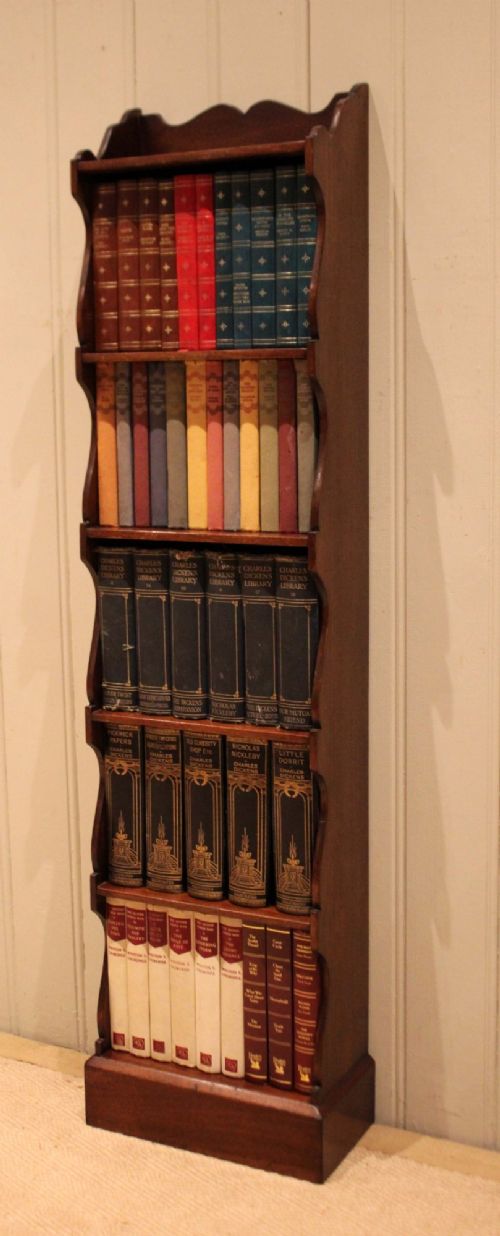
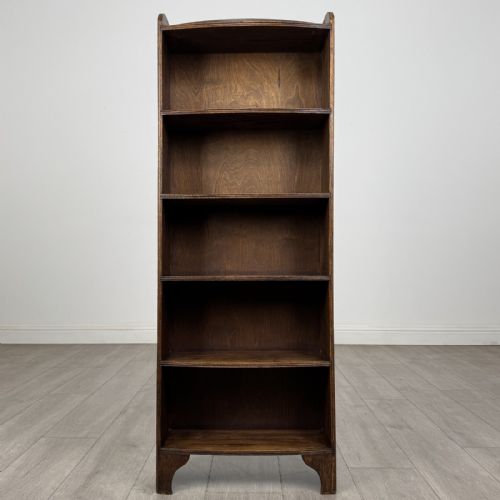
Narrow wood shelving encompasses tall slim bookcases, compact corner cabinets, and tiered display units designed to maximise floor space. These pieces emerge primarily from Victorian, Edwardian, and early twentieth-century workshops, spanning varied stylistic revivals.
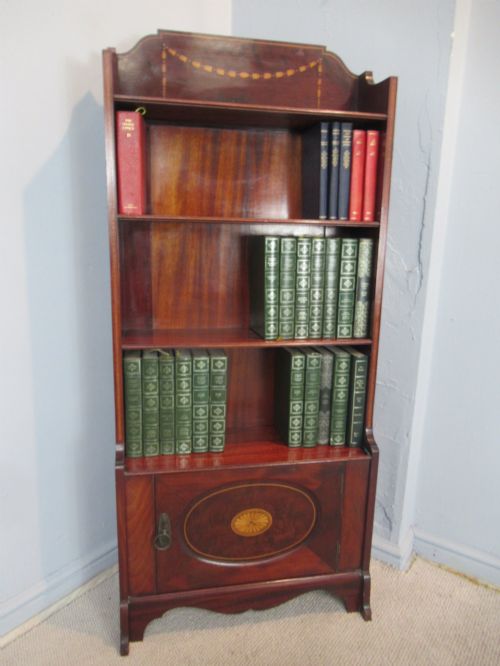
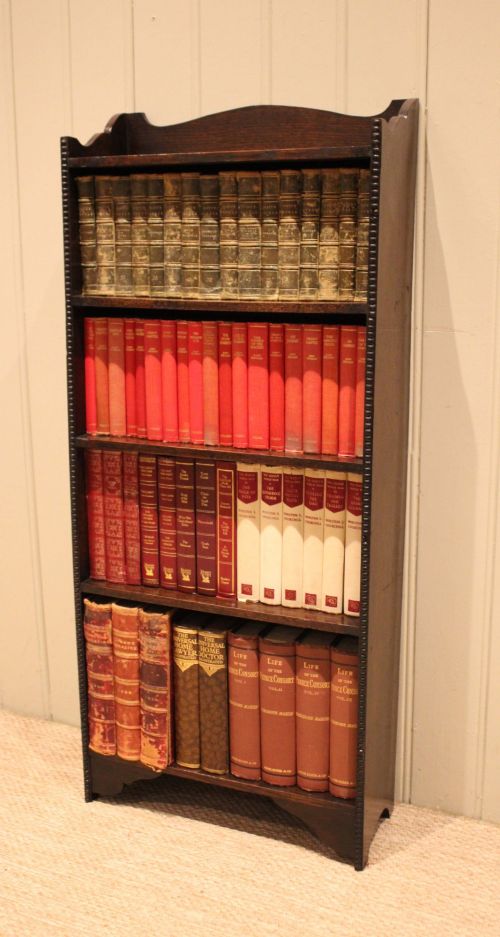
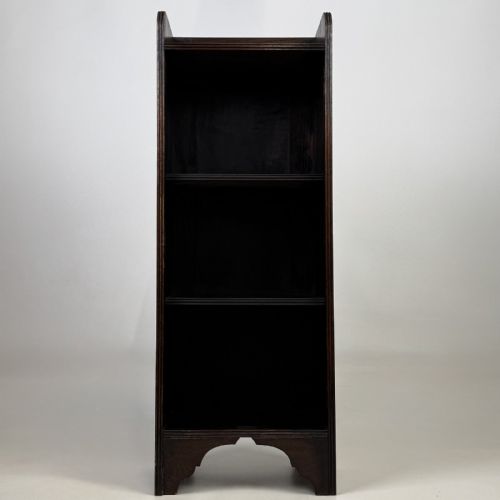
The most common variants on this page are open mahogany and oak bookcases from the Edwardian period and the nineteenth century. Buyers frequently encounter upright proportions featuring adjustable shelves, bracket feet, and occasionally lower drawers or small cupboards.
Materials and Construction
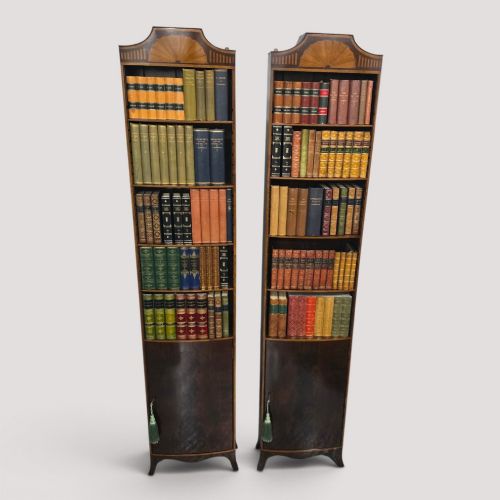
Cabinetmakers utilised dense hardwoods such as mahogany, oak, rosewood, and walnut, often accentuating surfaces with satinwood inlay or ormolu mounts. Timbers were selected for grain pattern and structural stability to support loaded tiers.
Joinery methods included bracket feet, turned supports, and beaded edge detailing along shelf fronts. Certain pieces incorporate functional brass hardware, castors for mobility, and moulded cornices.
Narrow Wood Shelving Retail Price Guide 2026
Typical asking prices for narrow wood shelving among the pieces listed under this phrase on Sellingantiques today, from the lower quarter to the upper quarter. They describe what is for sale here now, not the wider market.
One nineteenth-century shelving stand rolls about on its original castors, ready to follow you from study to parlour.
Distinctions in Execution
Quality rests upon the selection of timber figures, the crispness of carved details, and the refinement of inlaid decoration such as satinwood bands. Superior examples display balanced proportions and thoughtful integration of architectural elements.
Functional adaptability also defines the upper tier, seen in smooth adjustable shelving systems and robust internal construction that prevents sagging under weight.
Gillows·Waring and Gillows·Ercol
The Narrow Wood Shelving Glossary
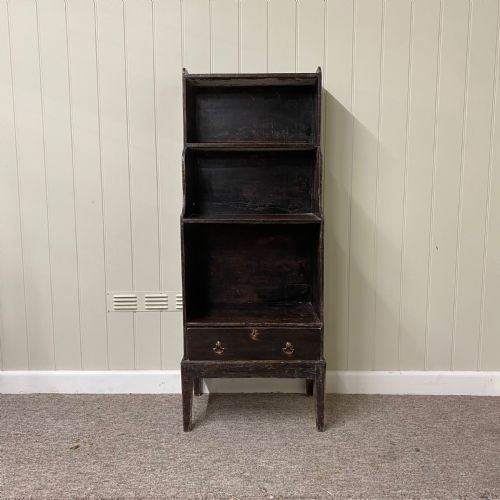
- Waterfall bookcase
- A tiered shelving unit where each successive shelf steps back from the one below, creating a cascading profile.
- Open bookcase
- A piece of furniture designed for book storage featuring unobstructed front access rather than glazed or solid doors.
- Bracket foot
- A simple support foot fitted beneath the corners of cabinet furniture, often shaped with a slight curve or mitred join.
- Satinwood inlay
- Contrasting light-coloured wood inserted into the primary timber surface to form decorative geometric or botanical patterns.
- Ormolu
- Gilt bronze mounts applied to furniture for decorative enrichment, frequently seen on nineteenth-century pieces.
Narrow Wood Shelving: Frequently Asked Questions
Where do narrow wood shelving units work best?
These compact pieces fit easily into alcoves, narrow hallways, and smaller rooms where floor space is limited. Their vertical orientation provides substantial storage without dominating the surrounding interior.
Position them against plain walls to highlight the grain of the timber and the silhouette of the piece.
How should I care for antique wood shelving?
Maintain the finish by dusting regularly with a soft, dry cloth and avoiding direct sunlight that can fade vulnerable timbers like rosewood and mahogany. Occasional application of appropriate wax preserves the sheen of the wood.
Keep shelving away from direct heat sources to prevent the timber from drying and splitting over time.
Are narrow bookcases sturdy enough for heavy books?
Most solid hardwood iterations in mahogany and oak easily support heavy volumes, particularly those featuring fixed or robust adjustable shelving. Distributing weight evenly across the boards ensures long-term stability.
Lighter woods or tiered waterfall designs suit display items and smaller collections rather than dense reference libraries.
How do I identify an Edwardian bookcase?
Edwardian pieces often display lighter timbers, subtle satinwood inlay, and refined proportions characteristic of early twentieth-century revivals. They frequently incorporate simple bracket feet or beaded edge detailing.
Compare the hardware, joinery style, and secondary woods with Victorian precedents to confirm the later production era.