

Narrow Wood Chest
A narrow wood chest solves the perennial problem of floor space while bringing timber grain and period presence to a tight corner.
Narrow Wood Chest
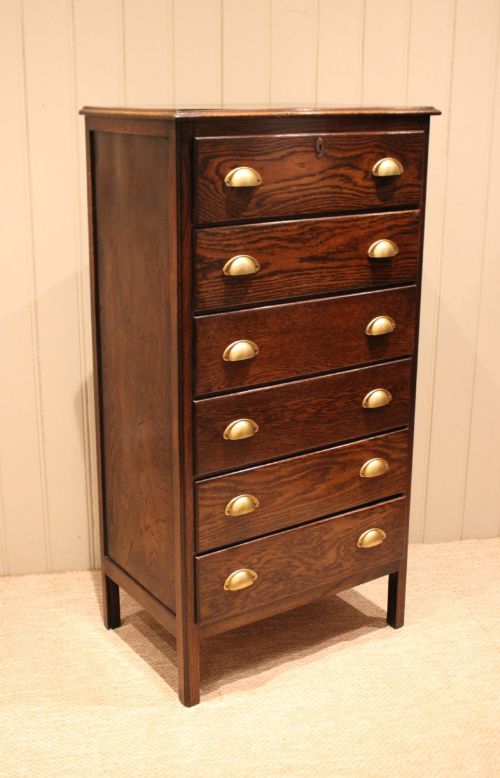
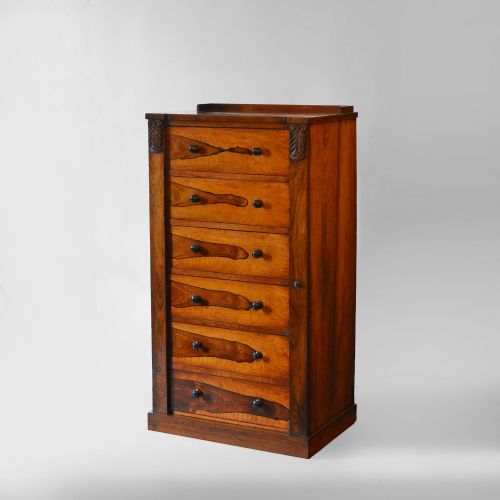
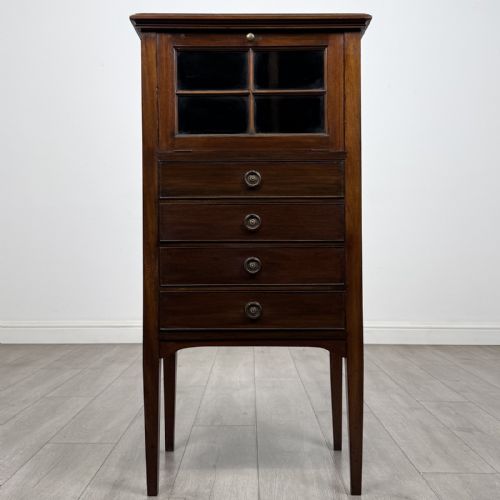
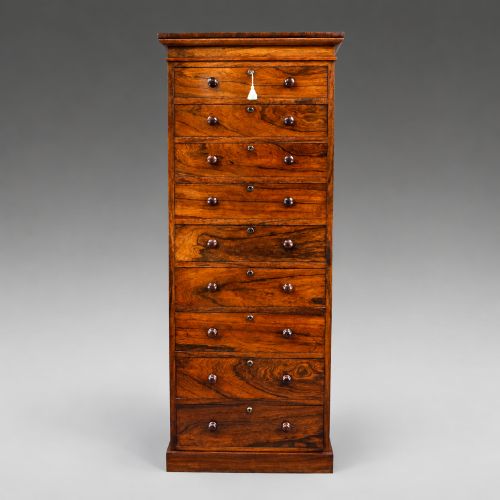
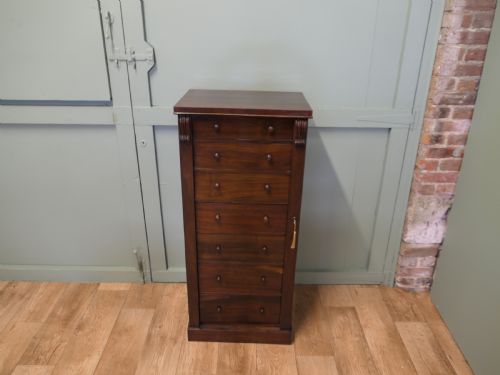
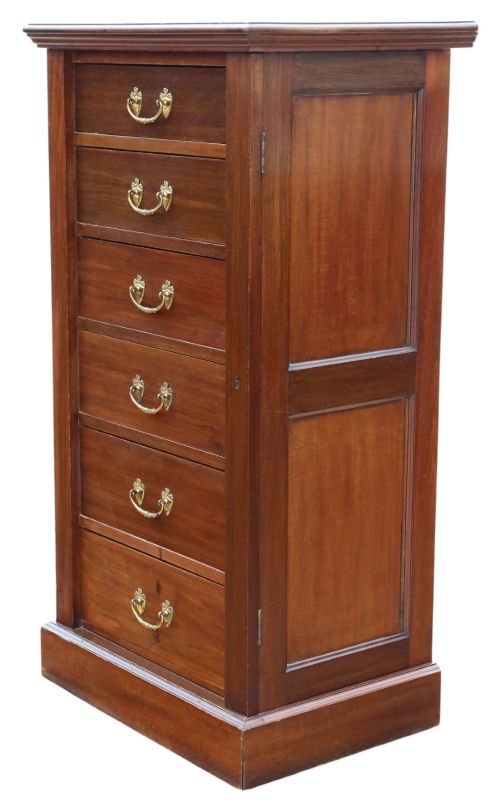
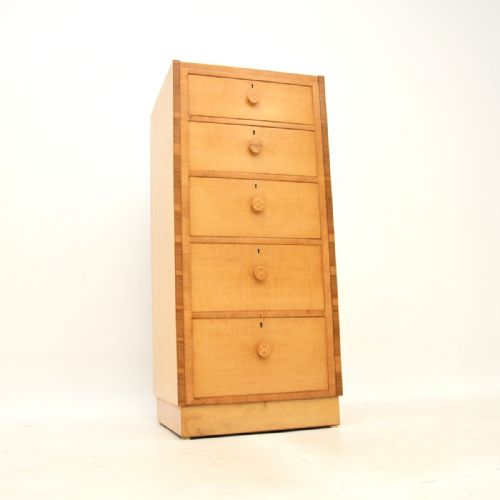
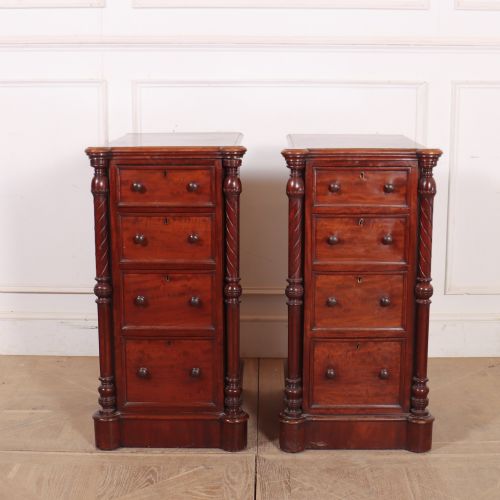
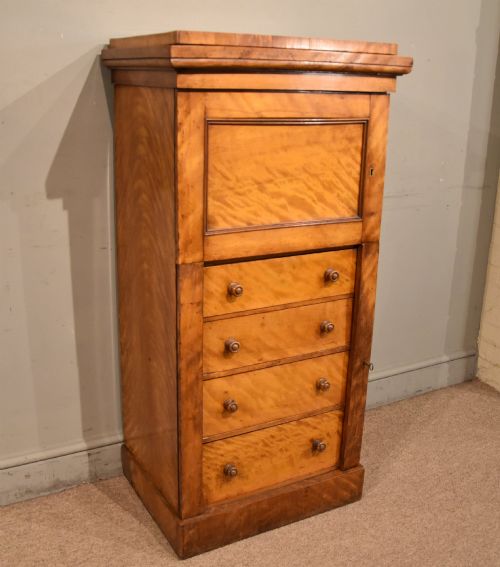
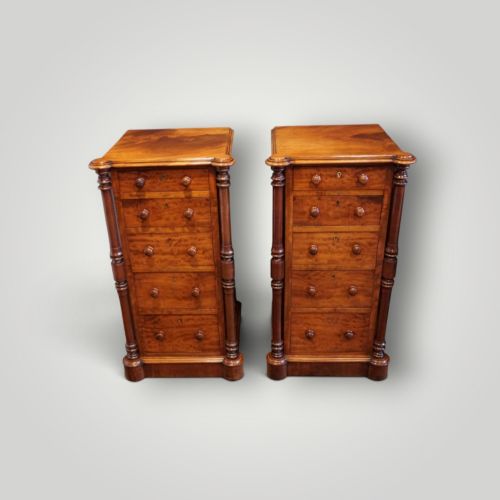
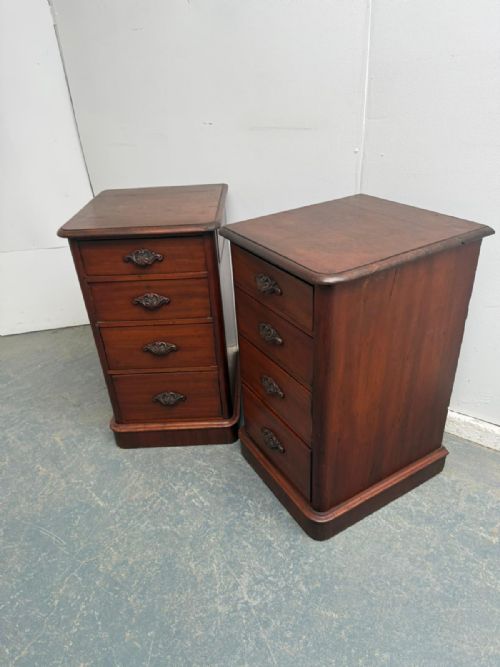
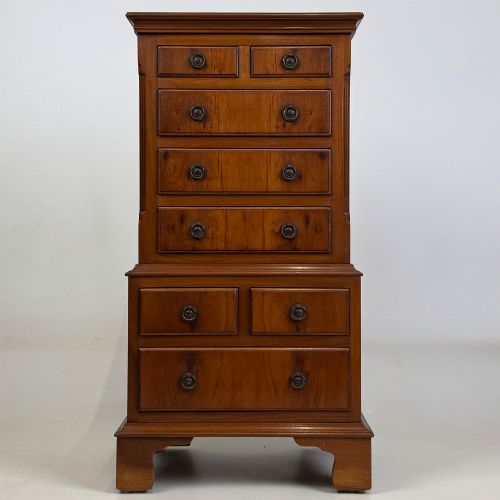
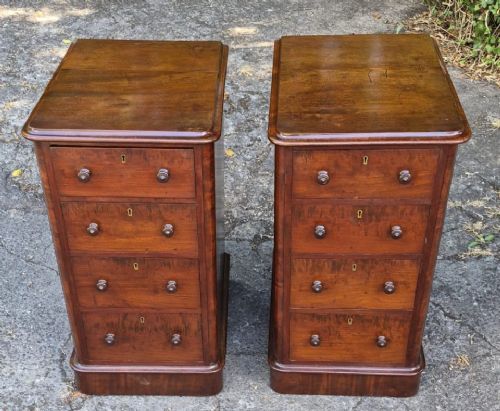
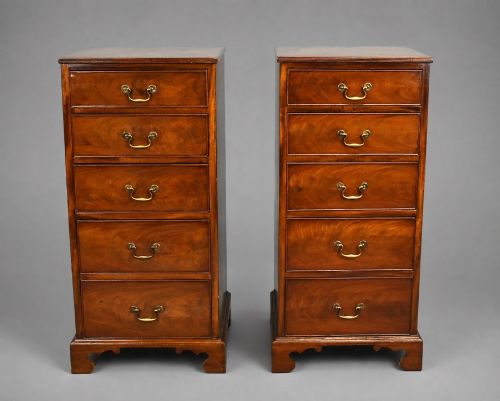
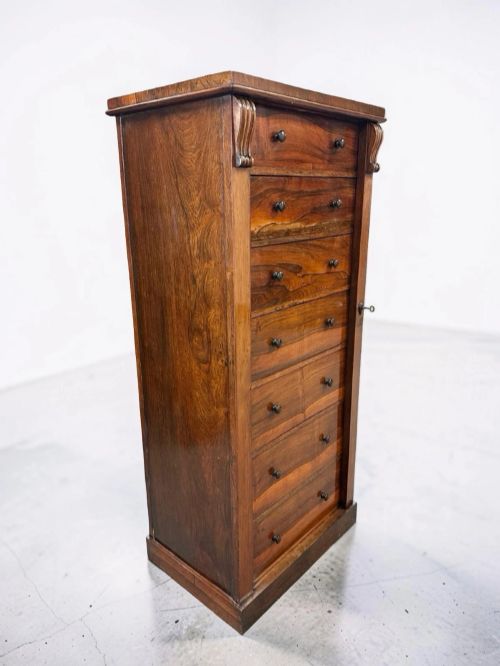
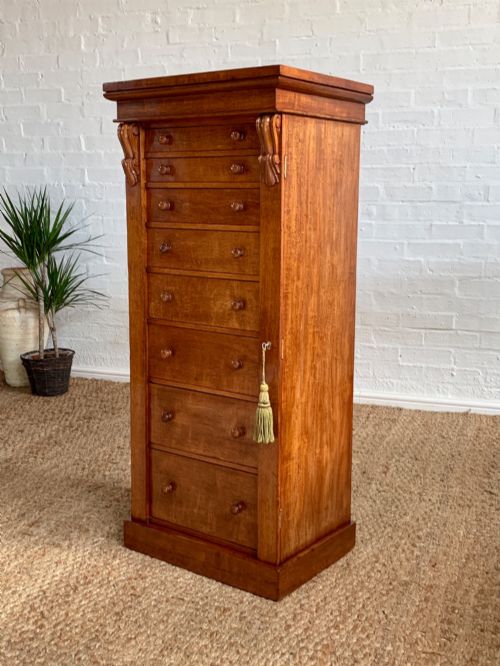
A narrow wood chest primarily takes the form of a vertical Wellington chest, a bedside cabinet, or a tall bedside drawer pedestal designed to fit constrained footprints. These pieces span Victorian, Edwardian, and Georgian periods, alongside Art Deco and French Empire interpretations.
Mahogany and rosewood dominate the listings, frequently appearing alongside walnut, pine, satin birch, and sycamore. The proportions remain slender, prioritizing height or depth over width to accommodate smaller rooms.
Markers of distinction
Figured timber selection dictates visual depth, separating plain boards from highly articulated flame mahogany or rosewood surfaces. Crispness in turned elements, original hardware, and intact locking pilasters signal superior workshop execution.
Maker attribution elevates certain examples, with recorded pieces bearing the marks of firms like Hille, Warings Liverpool, Reprodux, and S. Mordan & Co.
Narrow Wood Chest Retail Price Guide 2026
Typical asking prices for narrow wood chest among the pieces listed under this phrase on Sellingantiques today, from the lower quarter to the upper quarter. They describe what is for sale here now, not the wider market.
Hille·Warings Liverpool·Reprodux·S. Mordan & Co
The Narrow Wood Chest Glossary
- Wellington chest
- A tall, narrow chest of drawers featuring a hinged locking side pilaster that secures every drawer in the stack. This form originated in the nineteenth century for efficient storage.
- Semainier
- A French tall narrow chest traditionally possessing seven drawers, one for each day of the week. These pieces often feature fine veneers and slender vertical proportions.
- Bedside locker
- A compact cabinet or small chest positioned beside a bed for night storage. Victorian examples frequently occur in pairs.
- Fiddleback mahogany
- Mahogany timber displaying a wavy, undulating grain pattern resembling the back of a violin. Cabinetmakers selected this cut for its reflective qualities under light.
- Parquetry
- A geometric mosaic of wood veneers arranged in decorative patterns. It appears on surfaces to create visual texture through contrasting timber tones.
Narrow Wood Chest: Frequently Asked Questions
What is a Wellington chest?
A Wellington chest is a tall, narrow set of drawers distinguished by a locking side pilaster.
This hinged wooden bar swings open to release the drawers and locks shut with a key to secure the contents.
How do I use a narrow wood chest in a modern room?
These chests fit narrow wall spaces, hallways, and alcoves where standard furniture proves too bulky.
Their vertical storage capacity holds small garments, documents, or bedside items without claiming much floor area.
Are these chests usually found in pairs?
Many bedside chests and nightstands survive in matched pairs, particularly from the Victorian and Edwardian eras.
Larger tall chests and Wellington chests generally exist as single independent pieces of furniture.
How do I distinguish Victorian from Georgian chests?
Georgian pieces display the proportions and timber treatments typical of the eighteenth and early nineteenth centuries.
Victorian examples often introduce specialised locking mechanisms, satin birch, or elaborate mahogany figuring.