
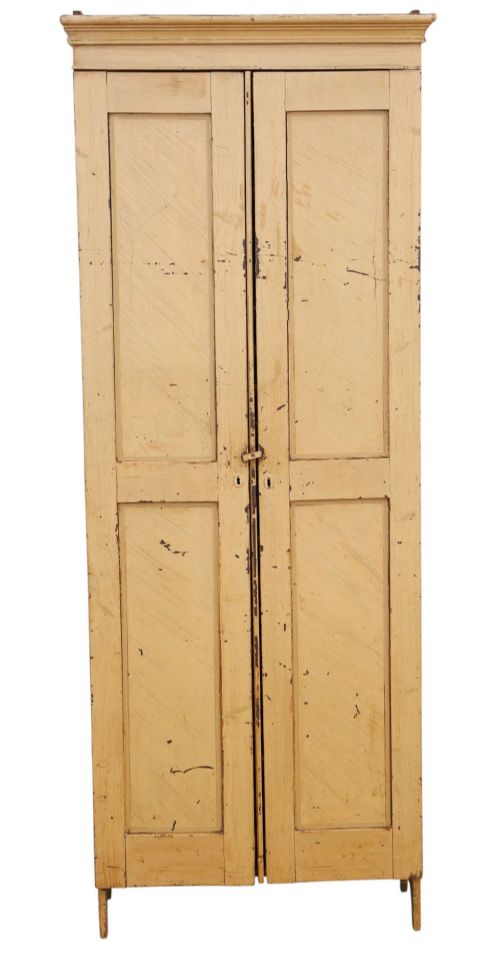
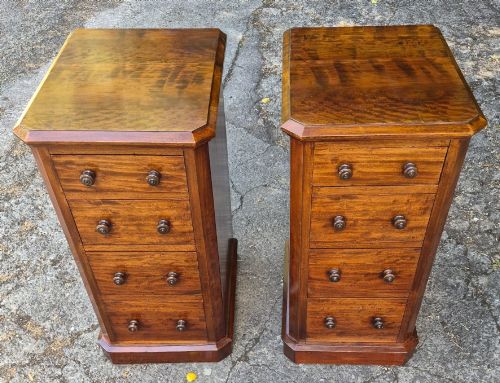
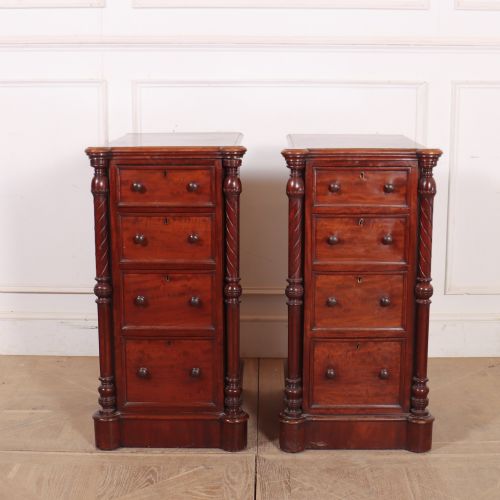
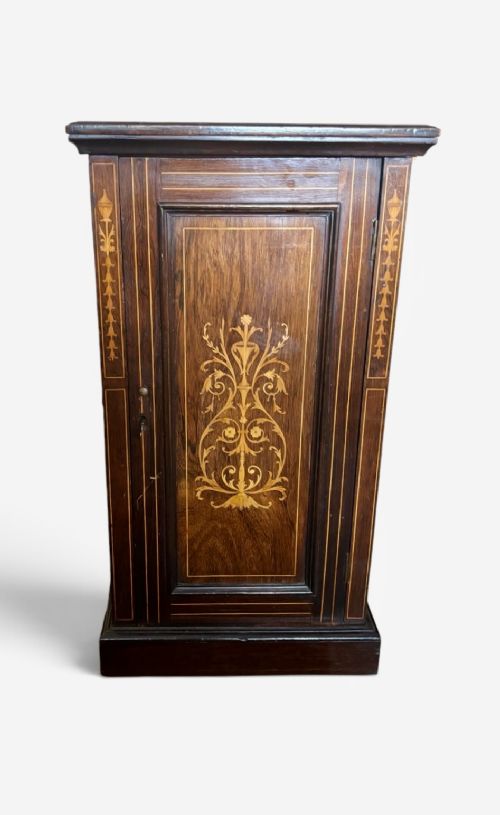


Narrow Victorian Storage Cabinet
A narrow victorian storage cabinet solves spatial problems with vertical timber proportions built for nineteenth-century rooms.
Narrow Victorian Storage Cabinet
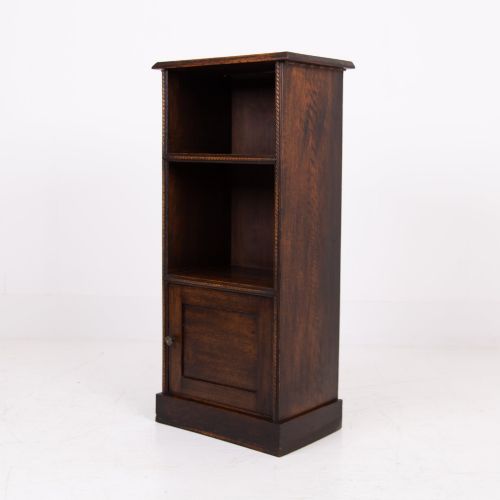
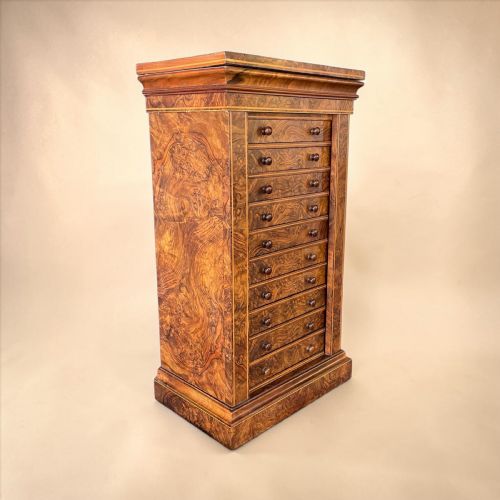
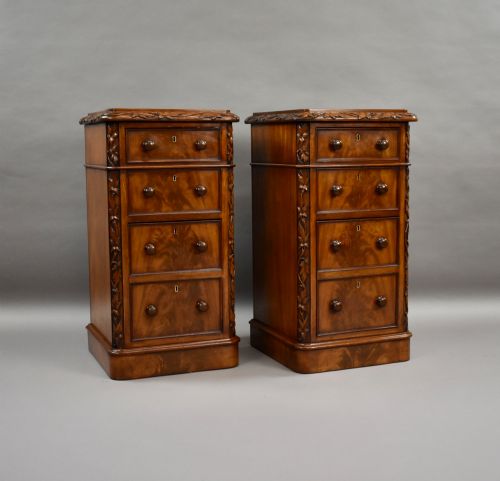
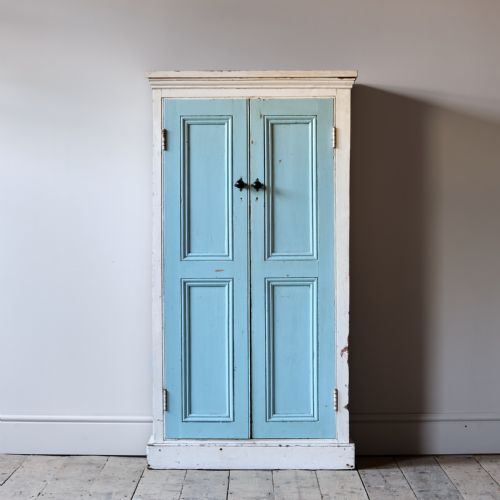
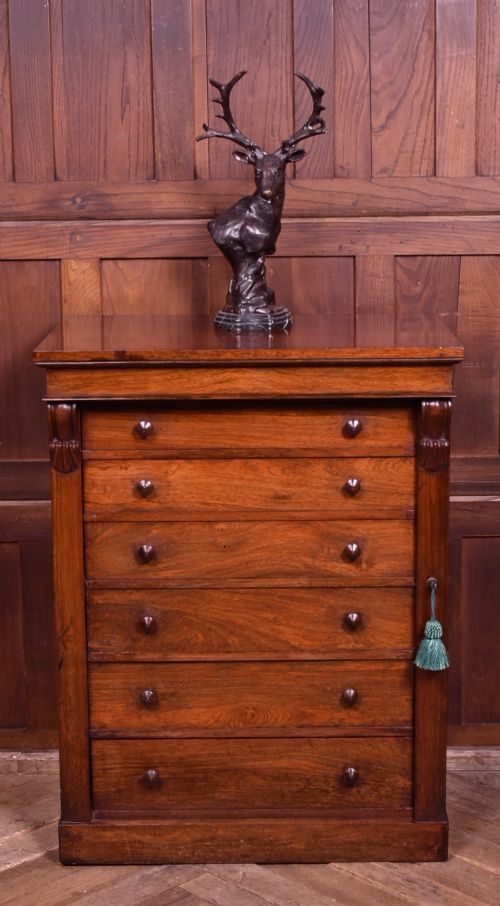
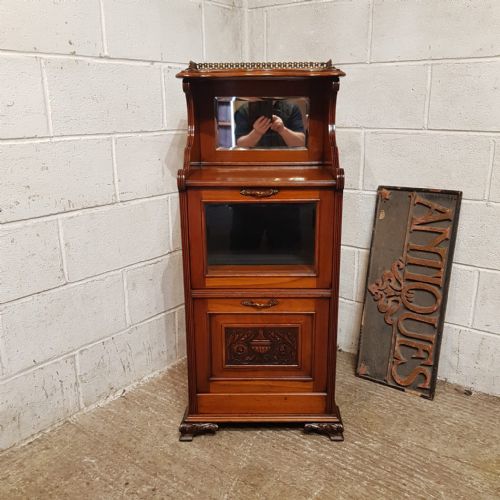
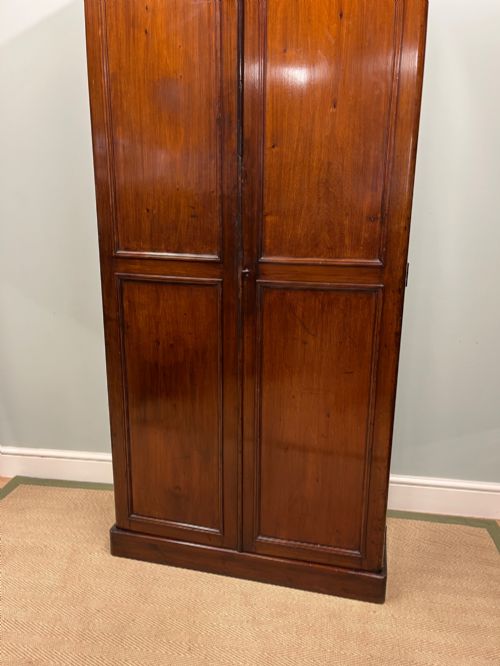
A narrow victorian storage cabinet encompasses tall, compact forms designed to hold books, linens, and personal items within minimal floor space. You will frequently encounter vertical Wellington chests, bedside chests of drawers, and slender cupboards dating from the nineteenth century on this page.
The objects span periods including Victorian, Edwardian, and William IV, reflecting the diverse domestic needs of the era. Makers utilised mahogany, pine, rosewood, oak, and walnut to construct these slender pieces for bedrooms, libraries, and narrow hallways.
How they were made
Cabinet makers relied heavily on dense hardwoods like mahogany, rosewood, walnut, and oak, often highlighting burr walnut veneers or satinwood inlay for decorative contrast. Softer timbers such as pine served utilitarian kitchen and linen cupboards, frequently finished with paint or wax.
Joinery techniques supported tall, narrow proportions, incorporating locking mechanisms on vertical drawer stacks like Wellington chests alongside brass hardware and grilled doors. Timber selection balanced structural integrity with aesthetic grain patterns across various regional workshops.
Tall skeleton cupboards offered early nineteenth-century households modular shelving long before flat-pack assembly existed.
What varies in quality
The calibre of a narrow victorian storage cabinet depends on timber selection, figuration, and the crispness of cabinet-making execution. Highly figured veneers, dense timbers, and refined marquetry inlay distinguish workshop pieces from utilitarian pine furniture.
Original hardware, working locking bars, and intact structural elements elevate the standing of a piece within its period. Workshop attribution to known makers further defines the upper tier of available examples.
Gillows of Lancaster·James Shoolbred
The Narrow Victorian Storage Cabinet Glossary
- Wellington chest
- A tall, narrow chest of drawers secured by a hinged locking stile on one side that fastens with a key.
- Housekeeper's cupboard
- A large storage piece, often tall and narrow, traditionally used in large homes for linens and dry goods.
- Satinwood inlay
- Contrasting light-toned wood embedded into the primary timber surface to create decorative geometric or floral patterns.
- Brass grill
- A protective wirework mesh fitted into cabinet doors, commonly used on bookcases to allow ventilation.
- Burr walnut
- Timber taken from a tree growth displaying intricate, swirling grain patterns highly prized for cabinet veneers.
Narrow Victorian Storage Cabinet: Frequently Asked Questions
What is a Wellington chest?
A Wellington chest is a tall, narrow stack of drawers characterised by a hinged wooden locking bar on the right side that secures all drawers simultaneously.
This design originated in the nineteenth century to provide secure storage within compact floor footprints.
How do I style a narrow cabinet?
Place a narrow cabinet in hallways, alcoves, or beside beds where floor space is restricted but vertical capacity is needed.
Pair wood tones with complementary nineteenth-century furniture to maintain historical context within the room.
What woods were used?
Cabinet makers utilised mahogany, rosewood, walnut, burr walnut, and oak for formal domestic furniture.
Softer timbers like pine appeared in utilitarian painted kitchen cupboards and linen presses.
How do I date a piece?
Examine construction methods, timber choices, and hardware styles to determine whether a piece belongs to the Victorian, Edwardian, or William IV periods.
Secondary woods and drawer dovetailing provide further evidence of nineteenth-century manufacturing techniques.